Exploration Activity Builds Across the Gulf of Guinea
The Gulf of Guinea is once again emerging as a major exploration zone for oil majors, supported by offshore discoveries and regulatory reforms. The renewed activity comes as energy demand remains resilient. Companies are under pressure to replace reserves, with Wood Mackenzie estimating that commercial stocks could be depleted within roughly 20 years at current
Exploration Activity Builds Across the Gulf of Guinea
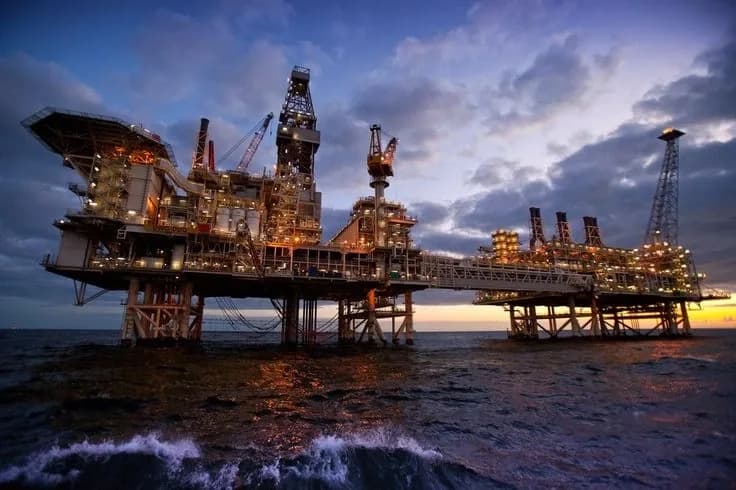
The Gulf of Guinea is once again emerging as a major exploration zone for oil majors, supported by offshore discoveries and regulatory reforms. The renewed activity comes as energy demand remains resilient. Companies are under pressure to replace reserves, with Wood Mackenzie estimating that commercial stocks could be depleted within roughly 20 years at current production rates. The International Energy Agency projects that global hydrocarbon demand could continue through 2050.
Chevron, TotalEnergies, Shell, and Eni are among the majors that have recently secured new exploration blocks from Senegal to Angola. Around 11% of hydrocarbons discovered worldwide since 2020 approximately 8.7 billion barrels of oil equivalent are located along the Gulf of Guinea coast, largely crude oil, according to S&P Global Commodity Insights. This indicates a renewed focus on the region within upstream investment strategies.
Portfolio Rebuilding and Company Activity
The development is mainly because of several years of financial discipline and reduced exploration spending by oil majors. As companies seek to rebuild asset portfolios, attention has turned to underexplored basins. Growth in U.S. shale oil production has begun to moderate, encouraging diversification into conventional offshore plays. The Gulf of Guinea combines geological potential with access to deepwater acreage and export routes.
TotalEnergies has been particularly active, finalising new production-sharing contracts in Nigeria, the Republic of Congo, and Liberia in 2024. Shell has returned to Angola after a 20-year absence, acquiring stakes in two undeveloped offshore blocks. Chevron entered the MSGBC basin spanning Mauritania, Senegal, Gambia, Guinea-Bissau, and Guinea by securing two blocks offshore Guinea-Bissau.
“This simply complements an already strong portfolio of exploration blocks we have along the West African coast, an extremely prolific area,” said Liz Schwarze, Chevron’s vice president for exploration. Azule Energy, the joint venture between Eni and BP, drilled Angola’s first exploration well dedicated specifically to gas, indicating potential of more than 1 trillion cubic feet of gas and up to 100 million barrels of condensate.
Regulatory Adjustments and Namibia’s Discoveries
Regulatory adjustments have also supported activity. In Angola, a presidential decree adopted in late 2024 introduced fiscal and contractual changes aimed at improving returns on mature blocks and encouraging further exploration. The country’s withdrawal from OPEC removed production quota limits. Nigeria approved new fiscal incentives and launched a licensing round for 50 offshore blocks in December 2025.
Offshore Namibia, on the maritime edge of the zone, holds an estimated 6.2 billion barrels of oil equivalent in discovered and recoverable resources, according to S&P Global Commodity Insights. TotalEnergies is developing the Venus project and holds a 40% stake in the Mopane field, estimated at at least 10 billion barrels.