Gulf Conflict Could Raise New Questions for African Mining Supply Chains
The escalating conflict in the Gulf involving the United States, Israel and Iran has raised concerns about potential disruptions to global energy markets and maritime trade routes. While much of the discussion has focused on oil prices and shipping security, the effects could extend further into industrial supply chains. For Africa’s mining sector, which supplies
Gulf Conflict Could Raise New Questions for African Mining Supply Chains
The escalating conflict in the Gulf involving the United States, Israel and Iran has raised concerns about potential disruptions to global energy markets and maritime trade routes. While much of the discussion has focused on oil prices and shipping security, the effects could extend further into industrial supply chains. For Africa’s mining sector, which supplies critical minerals to international markets, a prolonged conflict may influence both operating costs and mineral trade flows.
Mining operations across much of Africa are highly exposed to fuel market fluctuations. In many regions, diesel is not simply an operating input but the foundation of mine logistics, powering haul trucks, drilling equipment and backup electricity systems. If the conflict sustains upward pressure on global oil prices, mining companies could face higher costs across extraction, processing and transport. For operations located far from reliable power infrastructure, fuel price volatility can alter the cost assumptions that underpin project planning.
Maritime Trade Routes and Export Vulnerabilities
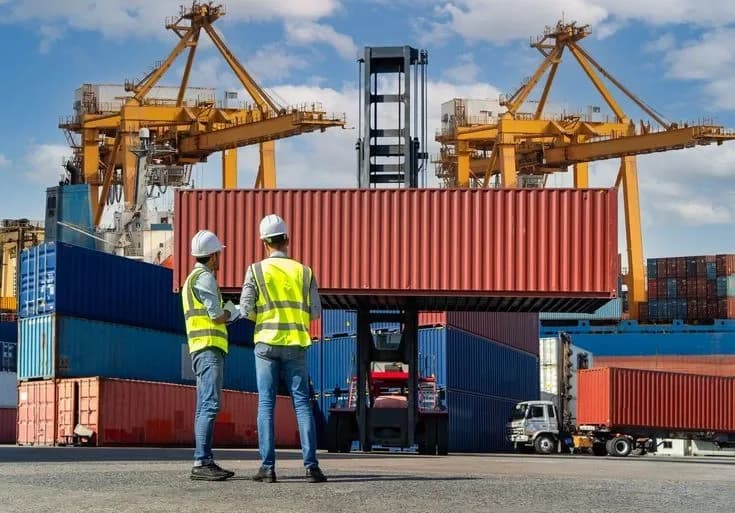
The structure of mineral trade routes introduces further exposure. A large share of African mineral exports moves through maritime corridors linking the Indian Ocean, the Red Sea and the Mediterranean before reaching European and Asian industrial markets. Disruptions along these routes would not necessarily halt exports, but they could lengthen shipping times, increase insurance premiums and raise freight costs. Even modest changes in maritime risk can influence how traders move commodities such as copper, cobalt, manganese and platinum group metals through global supply networks.
Geopolitical tensions bring renewed attention to minerals linked to strategic industries. Defence manufacturing, electrical infrastructure and advanced electronics rely heavily on materials such as copper, rare earth elements and platinum group metals. Africa holds significant reserves of several of these resources, which could reinforce the continent’s role in global supply chains if governments and industries intensify efforts to secure stable mineral supplies.
Supply Security and Demand Uncertainty
Periods of international tension do not automatically lead to stronger demand across the mining sector. Conflicts that disrupt trade and increase financial uncertainty can slow industrial production. If global manufacturing weakens, demand for bulk commodities associated with construction and heavy industry may soften. Minerals such as iron ore and manganese tend to follow these broader industrial cycles and may face more volatile demand conditions.
Another outcome may emerge in how governments and companies rethink supply security. In recent years, policymakers in major industrial economies have focused on reducing dependence on concentrated sources of critical minerals. A conflict that disrupts energy and shipping networks could reinforce this strategy. Under such conditions, African mining jurisdictions with large undeveloped deposits may attract renewed interest as companies look for supply chains that are more geographically diversified.
The implications of the Gulf conflict for African mining are unlikely to move in a single direction. Rising operating costs and shipping risks could place pressure on producers, particularly in energy-intensive operations. At the same time, geopolitical competition for strategic materials may increase the long-term importance of Africa’s mineral reserves within global industrial systems.