The Dawn of Electric Performance: BMW's Quad-Motor M Neue-Klasse Set to Revolutionise the Track by 2027
In a bold leap into the future of high-performance driving, BMW has unveiled details about its upcoming fully electric M models, spearheaded by the M Neue Klasse. This groundbreaking vehicle, expected to hit the roads and tracks in 2027, marks the beginning of a new era for the M division, blending the brand's storied racing
The Dawn of Electric Performance: BMW's Quad-Motor M Neue-Klasse Set to Revolutionise the Track by 2027
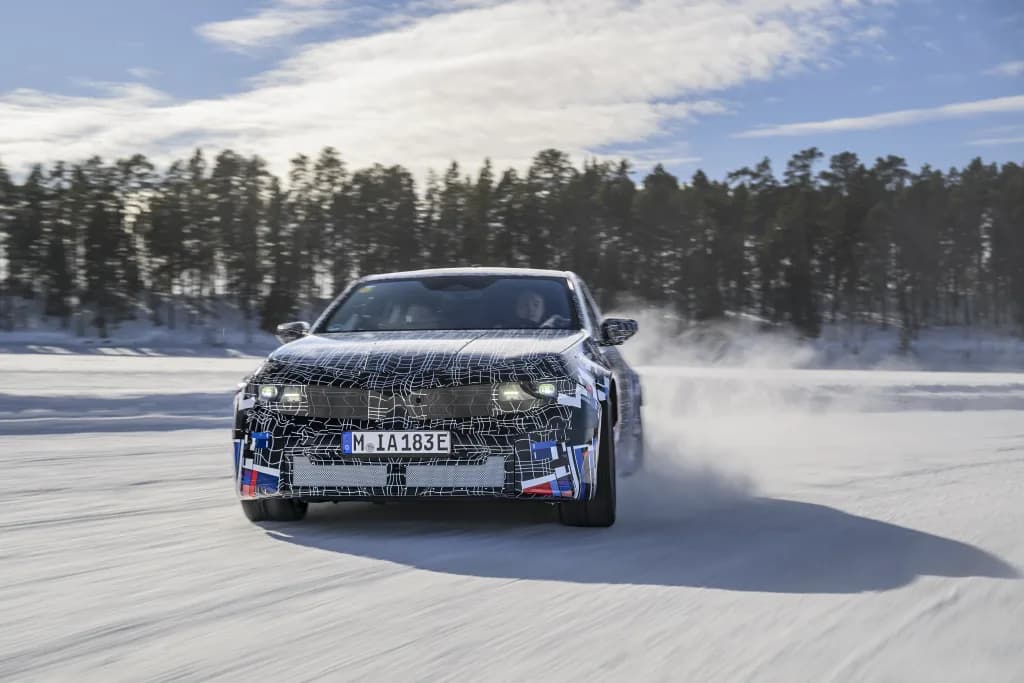
In a bold leap into the future of high-performance driving, BMW has unveiled details about its upcoming fully electric M models, spearheaded by the M Neue Klasse. This groundbreaking vehicle, expected to hit the roads and tracks in 2027, marks the beginning of a new era for the M division, blending the brand’s storied racing heritage with cutting-edge electric technology.
Drawing from the Neue Klasse architecture, the M variant promises to deliver unrivalled dynamics, power, and efficiency. As announced in BMW’s official press release, this shift to electrification doesn’t dilute the M ethos but amplifies it, with Franciscus van Meel, CEO of BMW M GmbH, stating, “The next generation of models are set to establish a new benchmark in the high-performance vehicle segment.” Recent previews and workshops have shed more light on what enthusiasts can expect, positioning this quad-motor beast as a game-changer in the electric vehicle (EV) landscape.
Quad Motor Power Train Unrivalled
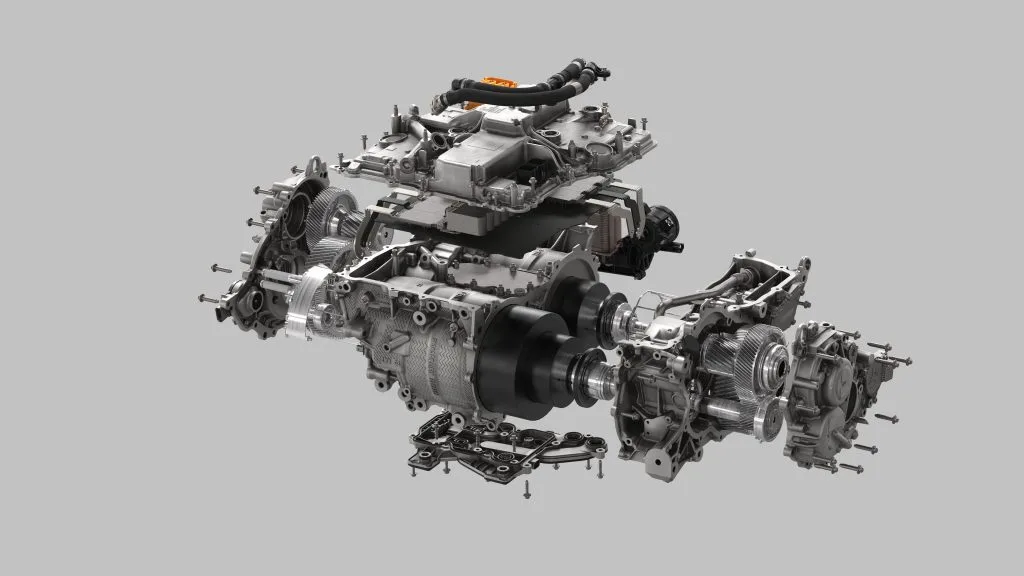
At the heart of the M Neue Klasse is the BMW M eDrive system, featuring four electric motors—one for each wheel. This setup, based on BMW’s Gen6 technology, allows for unprecedented torque vectoring and control. Unlike traditional all-wheel-drive systems reliant on mechanical differentials, the M Neue Klasse uses sophisticated software to manage power distribution instantaneously.
This not only enhances traction and stability but also enables a pure rear-wheel-drive mode by decoupling the front axle, echoing the drift-friendly character of classic M cars. The drivetrain integrates with the ‘Heart of Joy’ dynamic performance control, which optimizes torque between the motors and braking system for seamless energy recuperation right up to the grip limit. Adding to the immersion, BMW plans to include simulated gear shifts and a custom soundscape to evoke the emotional thrill of internal combustion engines (ICE).
Peak Performance Battery Tech
The battery technology underpinning this powerhouse is equally impressive. A high-voltage pack exceeding 100 kWh (with reports specifying 108.7 kWh usable capacity in base Neue Klasse models) supports 800-volt architecture for rapid charging—up to 400 kW DC. BMW has optimized the cell chemistry via a “Design to Power” approach, prioritizing sustained peak performance over maximum range, making it ideal for track sessions. The battery housing doubles as a structural element, enhancing chassis rigidity and integrating with front and rear axles for superior handling. Lightweight natural-fiber composites, derived from motorsport innovations, reduce CO2 emissions by about 40% compared to carbon fiber while maintaining strength. Four high-performance “Superbrains” computers handle everything from driving dynamics to infotainment, enabling over-the-air updates for continuous improvements.
Expect Extreme Performance Numbers
While BMW hasn’t released official performance figures, insiders and previews hint at staggering capabilities. Philipp Brunn, head of the BMW M Neue Klasse project, has teased that horsepower, torque, and acceleration “will reach new heights,” with rumors pointing to over 1,000 horsepower (more than 746 kW)—surpassing the 738 hp of the current XM plug-in hybrid. This would make it the most powerful M model ever. Efficiency improvements from Gen6 tech include 40% reduced losses and 10% weight savings compared to previous generations. Range estimates for the performance-oriented M version are around 500-600 km, though optimized for track use rather than long-haul cruising. Acceleration is expected to dip below 3 seconds for 0-100 km/h, with top speeds potentially exceeding 300 km/h, thanks to the instant torque delivery of the quad motors.
Evolutionary Jump From Previous M Models
Comparing this electric marvel to previous M models highlights the evolutionary jump. The current G80 M3, powered by a 3.0-liter twin-turbo inline-six delivering 503 hp and 479 lb-ft of torque, achieves 0-60 mph in about 3.4 seconds with a top speed of 180 mph (electronically limited). It’s a benchmark for balanced handling, but its ICE nature means slower torque response and higher emissions. The latest M5, a plug-in hybrid with 717 hp, hits 0-60 in around 3.0 seconds, blending electric assist with V8 muscle for explosive performance.
However, the M Neue Klasse’s quad-motor setup promises superior traction and agility, eliminating turbo lag and enabling finer control in corners—potentially lapping tracks faster than its predecessors. Unlike the XM’s 738 hp hybrid system, which weighs in at over 2495 kg due to its SUV form, while the sedan-based M Neue Klasse should be lighter and more nimble, redefining M’s “ultimate driving machine” mantra in an electric context. Where older M models excel in auditory drama and gear-shifting tactility, the new EV compensates with simulated experiences and silent, seamless power delivery.
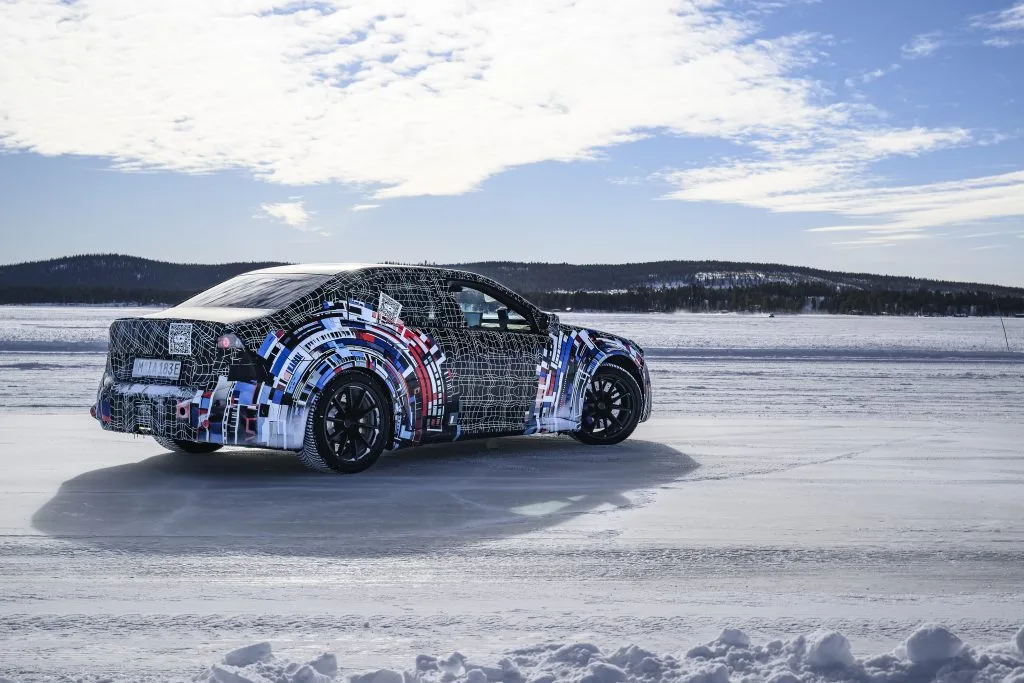
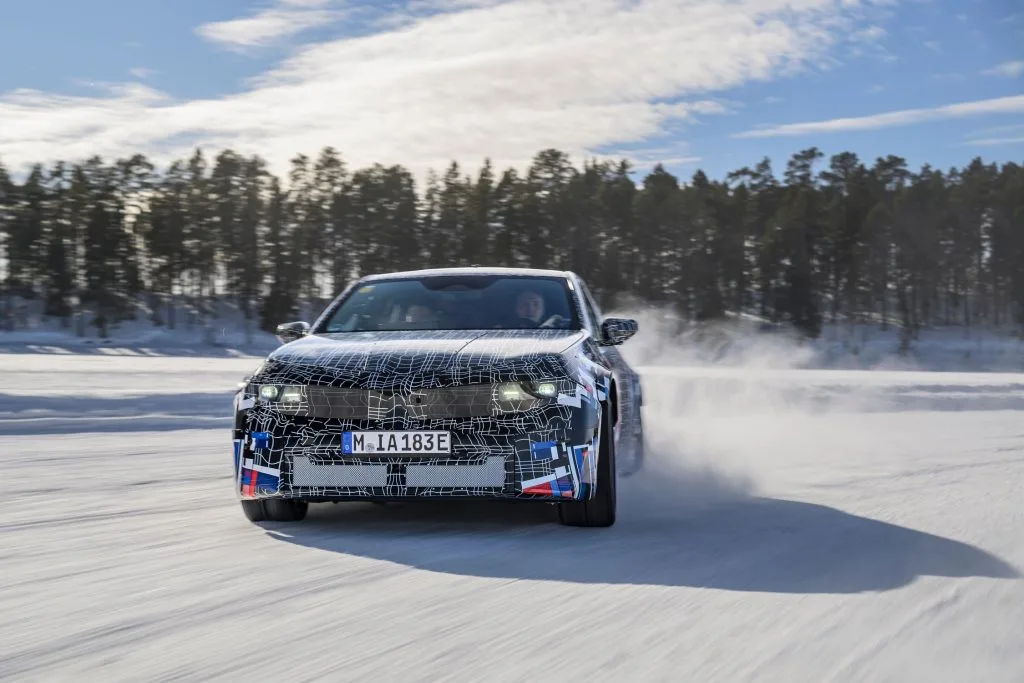
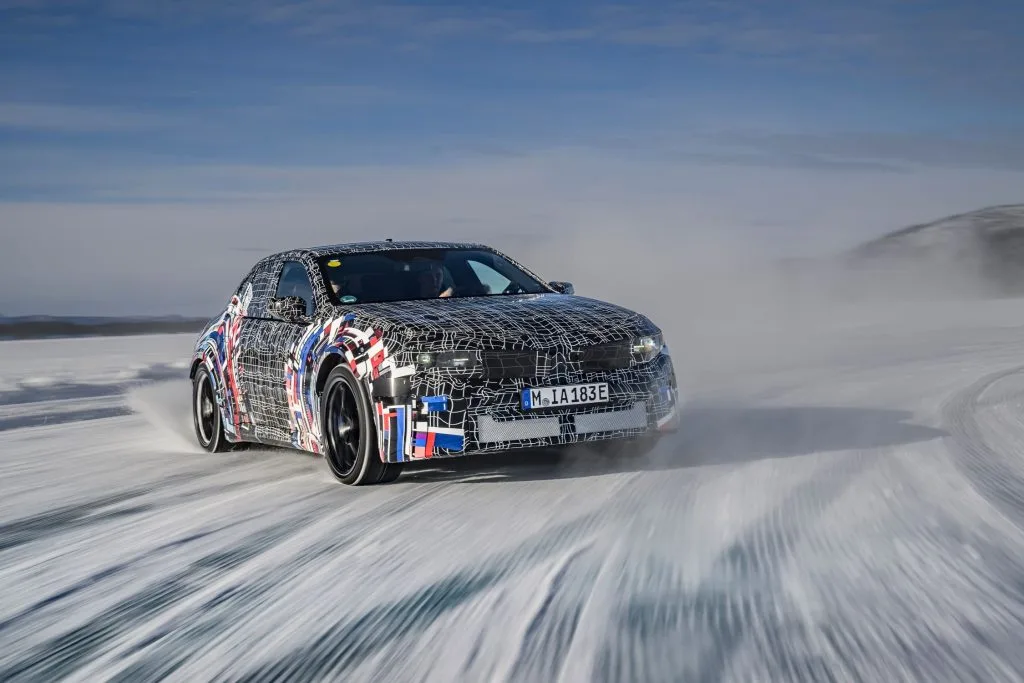
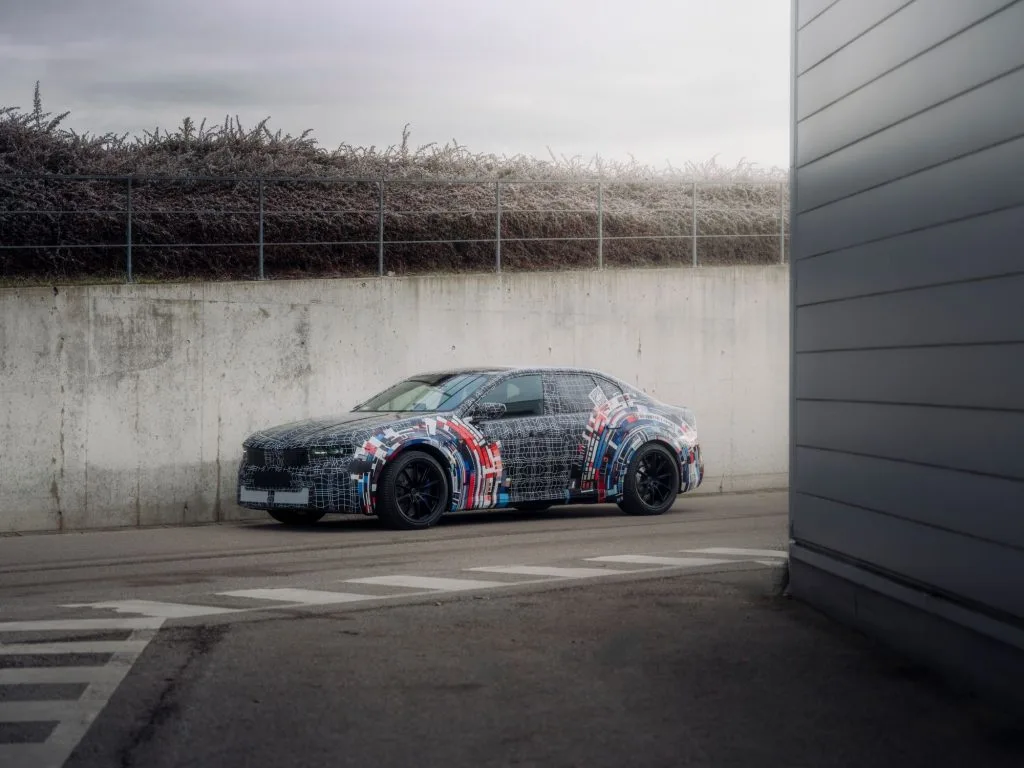
Market Comparison
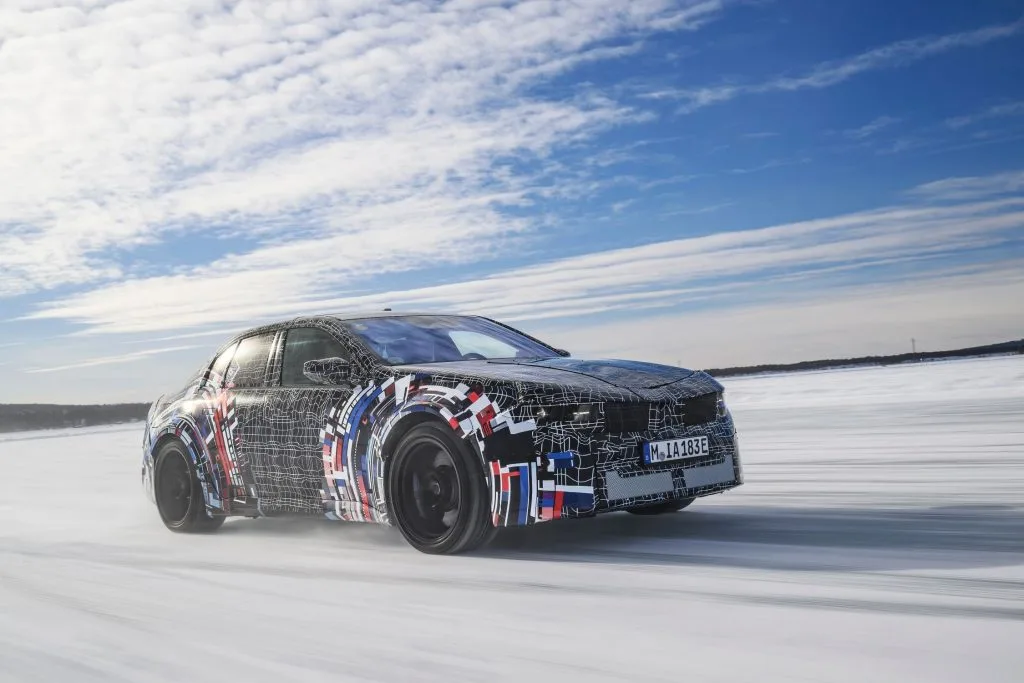
Beyond BMW’s lineage, the M Neue Klasse enters a competitive arena of high-end electric performance vehicles. The Rimac Nevera, a Croatian hypercar launched in 2021 and still a pinnacle in 2026, boasts 1,914 hp from its quad motors, rocketing to 60 mph in 1.85 seconds with a quarter-mile time of 8.6 seconds and a top speed of 258 mph. Priced at over $2 million, its limited production and exotic nature make it less accessible than BMW’s offering. The M Neue Klasse, expected to start around $100,000-$150,000, could undercut the Nevera while delivering comparable dynamics on public roads.
Another rival is the Lucid Air Sapphire, introduced in 2023 with updates through 2026 enhancing its tri-motor setup to 1,234 hp. It achieves 0-60 in 1.89 seconds, a quarter-mile in 8.95 seconds, and a top speed of 205 mph, backed by a 118 kWh battery for over 400 miles of range. The Sapphire’s luxury sedan form factor mirrors the M Neue Klasse’s, but BMW’s M-specific tuning and rear-drive mode might edge it in handling purity, though Lucid’s superior range (427 miles EPA) highlights trade-offs in BMW’s performance bias.
Tesla and Porsche Comparison
Tesla’s Model S Plaid, refreshed in 2025, remains a benchmark with 1,020 hp from three motors, hitting 60 mph in 1.99 seconds and covering the quarter-mile in 9.23 seconds at 155 mph trap speed. Its 100 kWh battery yields about 396 miles of range, and over-the-air updates keep it evolving. However, the Plaid’s focus on straight-line speed and autonomy contrasts with BMW’s emphasis on racetrack prowess and driver engagement—areas where the M Neue Klasse’s quad motors and “Superbrains” could shine brighter.
Finally, the Porsche Taycan Turbo GT, launched in 2024 with 2026 refinements, delivers 1,092 hp (peak) from dual motors, accelerating to 60 mph in 2.1 seconds with a top speed of 190 mph. Its 93.4 kWh battery offers around 345 miles of range, and Porsche’s Weissach package optimizes it for circuits like the Nürburgring, where it set records. The Taycan’s precise steering and balanced chassis make it a direct competitor, but BMW’s four-motor independence could provide more granular torque control, potentially outpacing it in variable conditions.
Statement of Future Intent
In summary, the BMW M Neue Klasse isn’t just an electric M car—it’s a statement of intent, fusing heritage with innovation to dominate both streets and tracks by 2027. With power eclipsing predecessors and rivals alike, it challenges the notion that electrification dulls performance. As BMW continues to refine this quad-motor masterpiece, it paves the way for a thrilling, sustainable future in motorsport. (Word count: 1,128)