Green Bonds and the Capital Realities of Africa’s Energy Transition
The central constraint in Africa’s energy transition lately has not been technology, but funding. Expanding electricity access to hundreds of millions of people while moving toward cleaner power sources will require capital at a scale few national budgets can sustain. That financing gap is precisely where green bonds are beginning to gain traction and feature
Green Bonds and the Capital Realities of Africa’s Energy Transition
The central constraint in Africa’s energy transition lately has not been technology, but funding. Expanding electricity access to hundreds of millions of people while moving toward cleaner power sources will require capital at a scale few national budgets can sustain. That financing gap is precisely where green bonds are beginning to gain traction and feature more prominently.
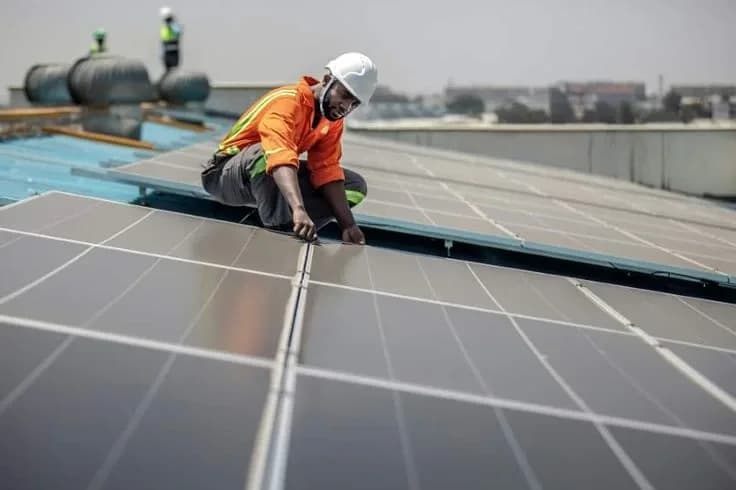
Designed to raise capital specifically for climate-aligned projects from solar and wind generation to grid upgrades and battery storage green bonds are moving beyond policy rhetoric into practical funding strategies. As governments balance energy access, industrial growth and emissions constraints, green-labelled debt is increasingly viewed as a tool to attract long-term capital rather than a symbolic sustainability gesture.
The urgency is clear. Africa contributes only a small share of global greenhouse gas emissions, yet it faces acute climate exposure. At the same time, nearly 600 million people still lack reliable electricity. Meeting that demand without locking in high carbon infrastructure requires sustained investment in renewables, transmission networks and climate-resilient systems. Public budgets alone cannot carry that burden, which reinforces the need for market-based financing channels.
Structure, Scale and Market Reality
Green bonds respond to that need through structure. They are not conventional debt with a different name. Proceeds are ring-fenced for defined environmental projects, and issuers must report on measurable impact. For investors, this reduces uncertainty about capital deployment. For African borrowers, it provides access to global funds increasingly mandated to meet environmental criteria.
Several sovereigns, municipalities and financial institutions have already entered the market. South Africa has seen municipal and corporate issuances tied to renewable energy and infrastructure upgrades. Yet the overall scale remains modest when compared to the continent’s broader energy financing requirements.
Market Realities and Constraints
The limitation is less about investor appetite and more about risk pricing. High borrowing costs, currency volatility and shallow domestic capital markets weaken the cost advantages green bonds can offer in advanced economies. In many cases, any pricing benefit is offset by broader sovereign risk.
Execution capacity adds another layer of complexity. Institutional investors expect credible project pipelines, transparent disclosure and verifiable environmental outcomes. Weak reporting standards or inconsistent governance frameworks undermine confidence and restrict repeat issuance.
Risk-sharing mechanisms can help close part of this gap. Blended finance structures, partial guarantees and multilateral support reduce early-stage risk and attract private capital. Over time, deeper domestic institutional participation and clearer regulatory standards could support larger and more consistent issuance.
Green bonds will not finance Africa’s energy transition on their own. Public spending, concessional lending and private equity will remain essential. Even so, where governance standards are clear and reporting is disciplined, green bonds can channel long-term capital into infrastructure projects with verifiable environmental performance.
Read about green Energy HERE