Tanzania’s $2.9 billion power project could give businesses more room to grow
Tanzania has spent about $2.9 billion on the Julius Nyerere Hydropower Project. With a capacity of 2,115MW, the dam gives the country a much bigger power supply to work with. It was fully commissioned in March 2025, while President Samia Suluhu Hassan is expected to officially inaugurate it on 22 August 2026. The interesting part
Tanzania’s $2.9 billion power project could give businesses more room to grow
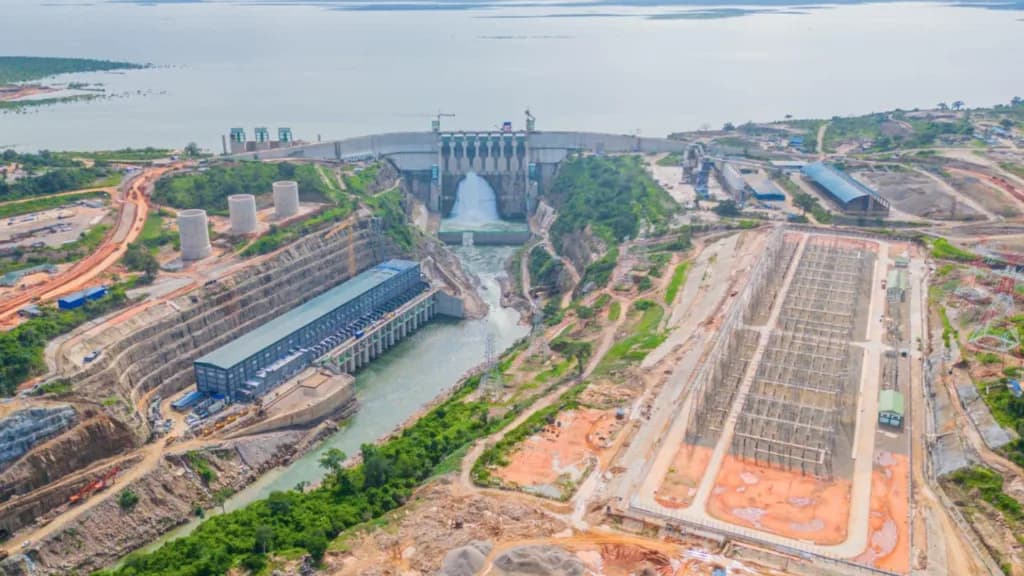
Tanzania has spent about $2.9 billion on the Julius Nyerere Hydropower Project. With a capacity of 2,115MW, the dam gives the country a much bigger power supply to work with. It was fully commissioned in March 2025, while President Samia Suluhu Hassan is expected to officially inaugurate it on 22 August 2026. The interesting part for Tanzania now is what happens outside the dam. More electricity could make a difference to factories, mines, shops and smaller businesses that have had to deal with an unreliable power supply.
Businesses feel the cost when the power goes off
An outage can stop production at a factory. Supermarkets can also run into problems when refrigeration goes down, while a mine may have expensive equipment sitting idle. Smaller businesses deal with the same problem on a different scale. Restaurants need fridges and freezers, workshops rely on equipment, and offices need power for computers and internet services. Many businesses turn to generators when the grid cannot be relied on. That means spending more on diesel, servicing and repairs. Getting more electricity from JNHPP onto the national grid could help some businesses cut those costs. The problem is that the transmission network has not always been able to carry everything the dam can produce. Earlier this year, reports said JNHPP was operating at around 40% of its capacity, with about 800MW being transmitted because of restrictions in the grid. Tanzania therefore has a power plant capable of producing much more electricity, but the network still needs work. TANESCO is building new 400kV transmission lines, including the Chalinze-Dodoma route and another connection between Chalinze, Kinyerezi and Mkuranga. The Chalinze-Dodoma line is expected to be completed in 2026.
Mining and manufacturing need dependable power
Tanzania is trying to grow its mining and manufacturing industries, and both sectors need reliable electricity. A company considering a new factory needs to know that its machinery can keep running without constant power interruptions. Mining companies face a similar issue, particularly when they process minerals rather than simply extract them. A better electricity supply could make it easier for companies to expand existing operations or consider new investments. It could also reduce some of the money businesses spend keeping generators running.
Small businesses could benefit too
The same problem shows up in smaller businesses. Salons need power for their equipment, shops use electricity for lighting and refrigeration, while welding businesses cannot operate without it. When the power goes off, an owner has two choices: stop working or pay for backup power. For a small business operating on tight margins, those costs add up. A more reliable grid will not fix every problem these businesses face, but it could remove one expense that many have to deal with every month. There is another possibility if Tanzania produces more electricity than it needs at certain times. The country could sell some of that power to neighbouring markets. Tanzania and Kenya have already been working on stronger electricity trade between the two countries. That could give Tanzania another source of revenue from its investment in power generation. The same transmission problem applies here, though. Tanzania needs enough capacity to move electricity across its borders before it can become a serious regional supplier.
The $2.9 billion project needs to show up outside the dam
The Julius Nyerere project is a huge investment, but businesses are unlikely to care much about the size of the dam itself. They will care about whether the lights stay on. If factories can run more consistently, mines can increase production and small businesses can spend less on generators, the project starts having a wider effect on the economy. Surplus electricity could also become another source of revenue if Tanzania can sell it to neighbouring countries. For now, the country has added a large amount of generating capacity. The next job is making sure that electricity reaches the businesses and households that need it.