Starlink has landed in Uganda – and African businesses are the target
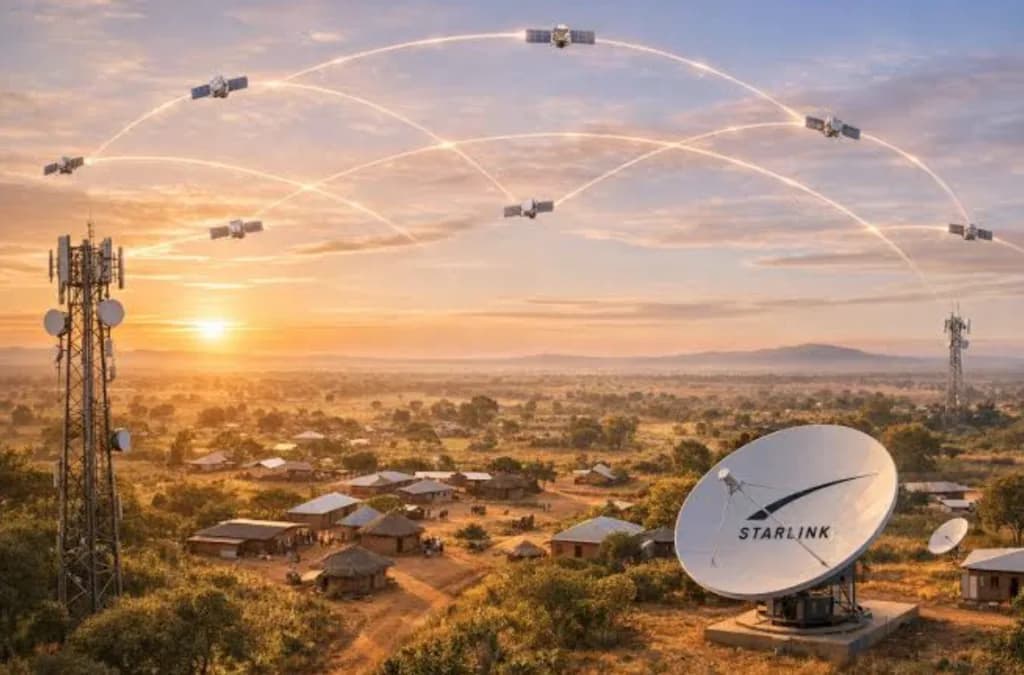
Starlink has officially entered Uganda, but the bigger story is not another country being added to its African footprint. It is what the service could mean for businesses operating far away from the major cities. Paratus Uganda has launched Starlink services in the country, giving businesses another way to get online without relying entirely on
Starlink has landed in Uganda – and African businesses are the target
Starlink has officially entered Uganda, but the bigger story is not another country being added to its African footprint. It is what the service could mean for businesses operating far away from the major cities. Paratus Uganda has launched Starlink services in the country, giving businesses another way to get online without relying entirely on fibre or traditional mobile infrastructure. And that matters because some of the businesses that need reliable internet the most are not necessarily sitting in Kampala.
The internet problem looks different outside the cities
A business in Kampala can choose between fibre, mobile networks and several other connectivity providers. A mining operation cannot make the same choices. Neither can a farm operating in a remote area, a construction company working on a temporary site or a logistics company running a depot far from a major town. These businesses still need internet for almost everything. They need to communicate with head offices, process payments, access cloud systems, track vehicles and equipment, manage employees and keep operations running. The problem is getting a reliable connection to the place where the business actually operates. Starlink offers another way of doing that.
This is where satellite internet starts to make sense
Building fibre is expensive. It makes sense when there are enough homes and businesses in an area to justify the investment. That becomes harder when a company is operating hundreds of kilometres from a major urban centre. A mine, for example, cannot move closer to a city simply because the internet infrastructure is better there. The same applies to agriculture, energy, tourism and logistics. Satellite internet changes the equation because the business does not have to wait for a fibre network to be extended to its location. That could make Starlink particularly useful for companies operating in parts of Uganda where conventional connectivity remains limited.
For businesses, this is not really about having faster internet so employees can browse the web. Connectivity has become part of how companies operate. A logistics company needs to track vehicles. A mining company needs to move data between remote sites and its headquarters. Agricultural businesses increasingly rely on connected equipment and digital systems. Even a small business in a remote area may need online banking, digital payments, cloud accounting and communication tools. When the internet goes down, the business does not simply lose access to social media. It can lose part of its ability to operate.
Starlink is not replacing fibre
There is also no reason to think Starlink will suddenly replace fibre networks in Uganda. Fibre remains the better option in areas where the infrastructure already exists and where there are large numbers of users. The satellite service is solving a different problem. It is useful when connecting a location through traditional infrastructure is too expensive, too slow or simply not practical. That is why the commercial opportunity is interesting. Starlink does not need to win Kampala. It needs to connect the businesses that are outside the reach of conventional networks.
Cost will be the big question
The biggest issue will be whether businesses can justify the cost. A large mining company may have little problem paying for a reliable satellite connection if it keeps operations running. For a small business, the calculation is different. The equipment, installation and monthly subscription all have to make sense against what the business earns. Local providers such as Paratus could therefore be important in making the service useful to businesses, particularly if satellite connectivity is bundled with other network and support services.
Africa still has a long way to go when it comes to reliable internet access. The problem is that economic activity is not limited to the places where telecoms infrastructure is easiest to build. Businesses are moving into new areas, mines are operating in remote locations, farms are becoming more connected and logistics networks are stretching further across the continent. They still need to be online. Starlink will not fix Africa’s connectivity problems on its own, and it is not meant to replace fibre or mobile networks. But it can fill some of the spaces they cannot easily reach. For Uganda’s businesses operating outside the main cities, that could be more important than the Starlink launch itself.