South Africa’s Stalled Economy: A Long-Term Crisis Demands Urgent Accountability
Today’s release of South Africa’s Q1 gross domestic product (GDP) figures came out slightly higher than expected with a growth of 0,5% in the first quarter of 2026, following an increase of 0,4% in the fourth quarter of 2025. The growth was primarily driven by a large upswing in the agriculture, forestry and fishing industry,
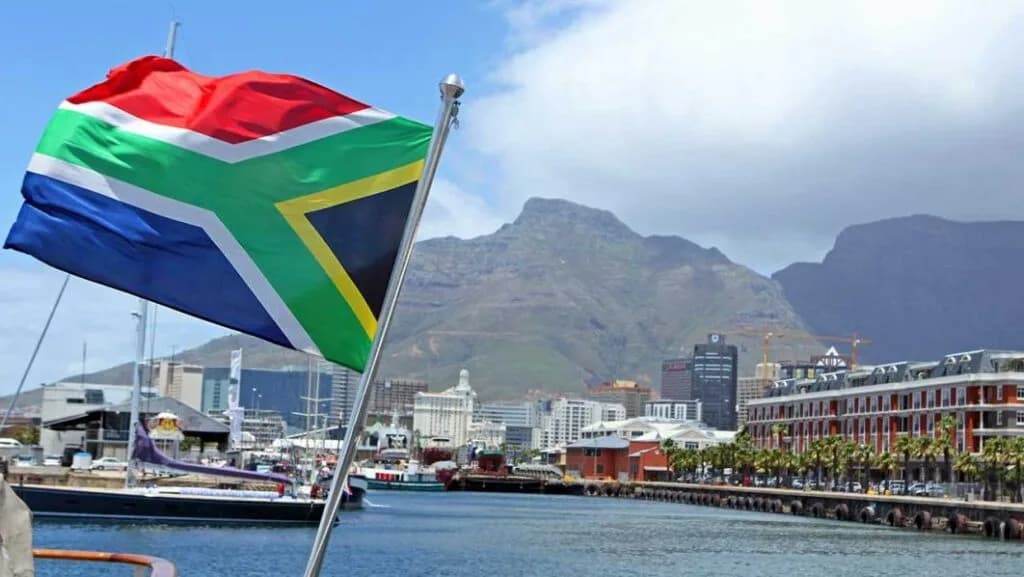
South-African Economy Shrinking
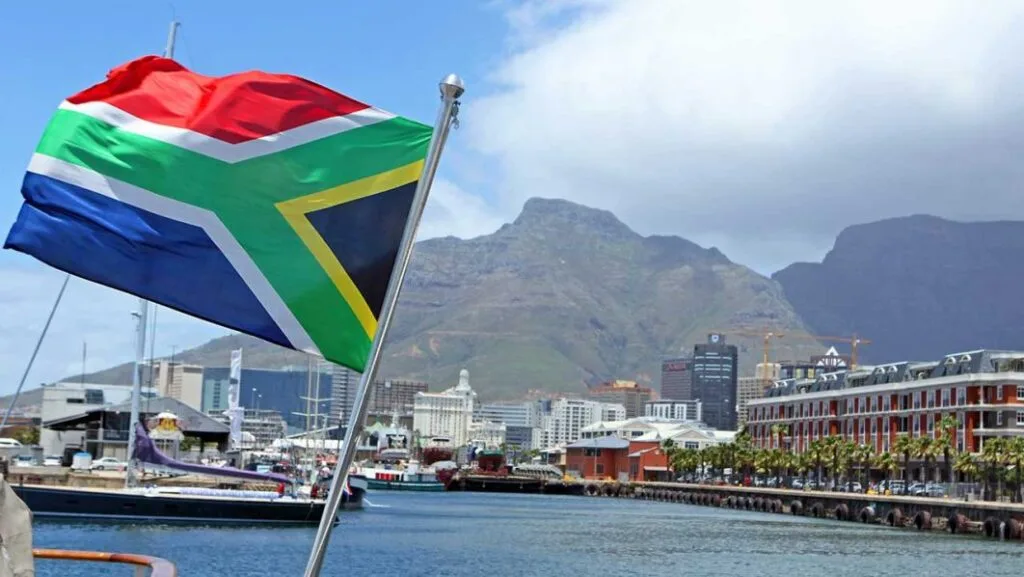
Today’s release of South Africa’s Q1 gross domestic product (GDP) figures came out slightly higher than expected with a growth of 0,5% in the first quarter of 2026, following an increase of 0,4% in the fourth quarter of 2025.
The growth was primarily driven by a large upswing in the agriculture, forestry and fishing industry, which increased by 3,9%, contributing 0,1 of a percentage point to overall GDP growth for the quarter. This was primarily due to increased economic activities reported for field crops and horticulture products.
While any improvement is welcomed there are multiple sectors still having negative growth. The manufacturing industry decreased by -0,8%, contributing -0,1 of a percentage point. Alarming is the fact that five of the ten manufacturing divisions reported negative growth rates. This points to a concerning reality that the longer-term stagnation of Africa’s largest economy is still here.
For over a decade, South Africa has failed to generate meaningful, sustained acceleration with GDP hardly moving above the 1% mark while there are multiple African economies showing robust growth figures over the same period. This is not a temporary dip it is a structural malaise rooted in policy choices, chronic underinvestment in infrastructure, and a business environment increasingly hostile to growth.
Systemic Issues Holding Back Economic Growth
The consequences are visible across key sectors. Manufacturing, once a pillar of the economy, has been crippled by unreliable and expensive electricity. Load shedding and high Eskom tariffs have driven up costs, reduced competitiveness, and has forced companies to scale back or relocate. Mining expansion has slowed to a crawl despite South Africa’s rich mineral endowment. The steel industry, critical for construction and manufacturing, is fighting for survival. Meanwhile, the automotive sector — long a success story — is losing ground. Nissan’s decision to shift production to Egypt and Morocco’s emergence as Africa’s largest vehicle producer are painful symbols of South Africa’s declining industrial competitiveness.
These are not isolated failures. They reflect deeper systemic issues. Poor infrastructure investment has created bottlenecks in ports, rail, and energy. Regulatory uncertainty, particularly around B-BBEE, labour laws, and taxation, has increased the cost and risk of doing business. Recent signals from government — including further restrictions on private solar generation, blocking investments such as SpaceX satellite infrastructure, and persistent talk of expropriation without compensation (EWC) — are sending exactly the wrong message to both local and international investors.
At the heart of the crisis is a persistently high unemployment rate that remains among the worst in the world. For millions of South Africans, especially the youth, economic opportunity feels increasingly out of reach. This is not just an economic statistic, it is a social and political time bomb.
What Needs to Be Done
Reversing this trajectory requires honest recognition that the current policy mix is not working. South Africa must prioritise the fundamentals that drive growth:
- Energy security and affordability: Fast-track private sector participation in generation, remove barriers to solar and other renewables, and stabilise Eskom’s operations.
- Infrastructure overhaul: Aggressively modernise ports, rail, and roads through genuine public-private partnerships with credible execution.
- Regulatory reform: Simplify labour laws to encourage hiring, review B-BBEE to focus on genuine broad-based participation rather than elite enrichment, and create policy certainty that attracts rather than repels investment.
- Investment openness: Stop blocking quality international investors and create a genuinely welcoming environment for capital and technology transfer.
- Fiscal discipline: Control spending, reduce wasteful expenditure, and shift resources toward growth-enabling investments.
Importantly, economic policy must move away from ideology toward pragmatism. Evidence from peer countries shows that removing economic strangleholds, maintaining policy consistency, and focusing on execution delivers results. Mauritius, Botswana, and Rwanda offer instructive examples within Africa.
Time for Accountability
South Africans have every right to demand better. Decades of poor governance, cadre deployment, corruption, and ideological rigidity have produced one of the weakest growth performances among major emerging markets. The “No Free Lunch” principle applies here: you cannot continuously undermine the foundations of a productive economy and expect different outcomes.
It is time for stronger voices, from business, civil society, and ordinary citizens, to call out these failures clearly and consistently. Cosmetic adjustments and rhetorical promises are no longer sufficient. Without a fundamental shift in approach, South Africa risks becoming a permanent economic underperformer on a continent that is otherwise showing pockets of dynamism and reform.
The low Q1 GDP print expected today is not just another disappointing number. It is another data point in a long pattern of underperformance. The real question is whether South Africa’s leadership will finally acknowledge the depth of the problem and pursue the difficult but necessary reforms — or continue down a path that has already cost the country dearly in jobs, investment, and opportunity.
The economy has all but stalled. The time for excuses is over.