South Africa's Q4 2025 GDP Release: A Sobering Signal for Economic Recovery
Statistics South Africa (Stats SA) released the Gross Domestic Product (GDP) figures for the fourth quarter of 2025 this morning (10 March 2026), painting a picture of an economy that has stalled far short of expectations. The data, released amid rising global oil prices and domestic pressures, highlights the challenges facing "Team SA" in achieving
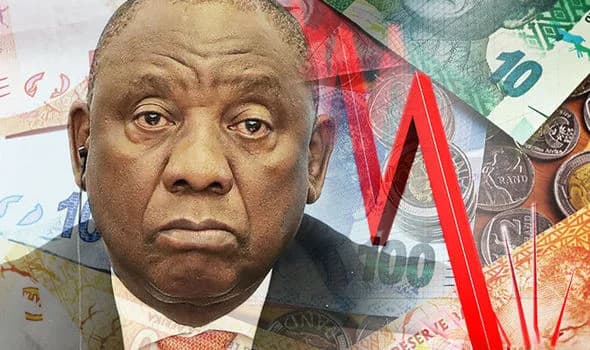
South Africa's Q4 2025 GDP Release: A Sobering Signal for Economic Recovery
Statistics South Africa (Stats SA) released the Gross Domestic Product (GDP) figures for the fourth quarter of 2025 this morning (10 March 2026), painting a picture of an economy that has stalled far short of expectations. The data, released amid rising global oil prices and domestic pressures, highlights the challenges facing “Team SA” in achieving sustainable growth.
While the annual GDP expansion for 2025 came in at a modest 1.1%, an improvement on 2024’s 0,5% growth it was well below the Finance Minister’s forecast of a 1.4% GDP growth figure. This should also be measured in relation to the massive impact of load-shedding in 2024 and preceding years, while the 2025 year was almost free of major electric power interruptions, as well as an inflation rate of around 3.5% in 2025, resulting in an effective decrease in economic output for the year.
Momentum Lacking
The quarterly performance highlights a lack of momentum across key sectors. This outcome not only tempers optimism but also raises urgent questions about catalysts for revival, particularly as fuel prices spike due to Middle East conflicts, exacerbating cost pressures on consumers and businesses.
The Q4 2025 GDP grew by just 0.3% quarter-on-quarter (QoQ) on a seasonally adjusted basis, a sharp deceleration from the 0.5% expansion in Q3 and well below economists’ consensus estimate of 0.5-0.6%. Year-on-year (YoY), the economy expanded by 0.9%, reflecting the cumulative drag from earlier quarters. These figures contribute to an annual growth rate of 1.1% for 2025, falling short of the National Treasury’s November 2025 Medium-Term Budget Policy Statement projection of 1.4%. Stats SA noted minor revisions to prior data, with Q3 growth adjusted downward from an initial 0.9% to 0.5% QoQ, further dampening the overall narrative.
No sector delivered major advances, with the report highlighting a broad-based slowdown. Manufacturing, a cornerstone of South Africa’s industrial base, contracted by -0.8% QoQ, marking its second consecutive quarter of negative growth. This decline was attributed to supply chain disruptions from global trade tariffs and domestic energy constraints, resulting in a -0.1 percentage point subtraction from overall GDP. The trade, catering, and accommodation sector managed a meager 0.2% growth, supported by marginal tourism recovery but offset by consumer spending weakness. Agriculture eked out 0.4% expansion, aided by favorable weather in some regions, but this was insufficient to offset broader headwinds. Finance, real estate, and business services, the economy’s largest contributor, grew by 0.5%, adding 0.1 percentage point, driven by digital services but hampered by high interest rates stifling credit demand.
Multiple Sectors With Stalled Growth
Utilities and construction fared poorly, with utilities shrinking by -0.2% due to ongoing maintenance at Eskom plants, and construction flat at 0.1% amid delayed infrastructure projects. Mining saw a slight 0.3% uptick from higher commodity prices, but this was muted by production halts. Transport and communication grew by 0.4%, benefiting from e-commerce, yet logistics bottlenecks limited gains. Overall, the data reveals an economy operating below potential, with per capita GDP continuing to decline as population growth outpaces output.
The release comes at a precarious moment, as fuel prices surge in response to escalating tensions in the Middle East. Brent crude has climbed above $98 per barrel, pushing local petrol prices toward R25 per liter—a 15% increase from December 2025 levels. This spike amplifies inflationary pressures, with the Consumer Price Index (CPI) already edging toward 5% in early 2026. For an economy reliant on road transport and energy-intensive industries, higher fuel costs could shave 0.2-0.3 percentage points off 2026 growth forecasts, according to economists at Nedbank and Standard Bank. Combined with the stalled GDP, this risks entrenching a low-growth trap, where weak demand suppresses investment and job creation.
Growth Inhibiting Environment Persists
Industry shoulders much of the blame in public discourse, but the data points to systemic issues beyond business control. High interest rates, held at 11.75% by the South African Reserve Bank (SARB) to combat inflation, have constrained consumer spending on household consumption, which accounts for 60% of GDP, which grew by only 0.4% in Q4. Elevated borrowing costs have hit mortgages and vehicle sales hard, with retail trade volumes contracting 0.2%. Meanwhile, government spending rose by 0.6%, but fiscal constraints limited stimulus. Stats SA highlighted that net exports contributed positively (0.2 percentage points) due to stronger commodity shipments, but this masks underlying vulnerabilities.
The real culprit, as many analysts argue, lies in government’s failure to deliver on infrastructure. Decades of underinvestment in roads, ports, and energy have created bottlenecks, costing the economy an estimated R1 trillion in lost output over the past decade, per World Bank estimates. Eskom’s load-shedding, though reduced in 2025, still shaved 0.5% off annual growth. Public-private partnerships (PPPs) remain underutilized, and corruption scandals have deterred foreign direct investment (FDI), which fell 12% YoY to R152 billion in 2025.
What are Potential GDP Growth Catalysts
Where does this leave South Africa? The economy is in a holding pattern, with 2026 growth projections now revised downward to 1.2-1.4% by the International Monetary Fund (IMF) and local banks. Unemployment remains stubbornly high at 31.9% (Q4 2025), with youth joblessness exceeding 45%, fueling social tensions. The stalled recovery risks widening inequality, as low-income households bear the brunt of fuel and food price hikes, with food inflation hitting 6.2% in January 2026.
Yet, all is not lost. Realistic catalysts for growth and job creation exist, however these require bold, coordinated action.
First Priority – Infrastructure
The South African administration must prioritise infrastructure revitalisation and accountable spending on these developments. The government’s National Infrastructure Plan 2050 targets R1.6 trillion in spending by 2030, but acceleration is the key. Fast-tracking PPPs in renewable energy could add 1.5% to GDP over five years, creating 250,000 jobs, according to a PwC analysis. Investments in rail and ports could boost export competitiveness, particularly for the mining, automotive and agriculture sectors.
Second Priority – Interest Easing
Monetary policy relief is essential. With inflation moderating, the SARB could cut rates by 50-75 basis points in 2026, easing consumer burdens and stimulating credit growth. This could unlock R200 billion in household spending, as per Absa estimates.
Third Priority Investment Incentives
The country could foster industrial revival through targeted incentives. The Automotive Masterplan 2035 has shown success, with vehicle exports up 8% in 2025 despite global tariffs. Extending similar frameworks to manufacturing—via tax breaks for local content and skills training—could reverse the -0.8% contraction. Digitizing SMEs via AfCFTA protocols would enhance competitiveness, potentially adding 1 million jobs by 2030.
Fourth Priority – Skills Development
There is a great need to address skills mismatches in the economy to boost wider job creation. Upskilling programs, like the Presidential Employment Stimulus, have created 1.5 million opportunities since 2020; expanding to tech and green sectors could yield more. Public-private academies in AI and renewables would align education with demand, reducing youth unemployment.
Fifth Priority – Seek Regional Trade and Manufacturing Harmonisation
Finally, leverage regional integration. AfCFTA’s Phase II, rolling out in 2026, offers access to a $3.4 trillion market. By harmonising rules of origin, South Africa can export more processed goods, boosting manufacturing by 15%, per UNCTAD.
Wake-up Call on GDP Growth Requires a Definitive Response
The Q4 2025 GDP release is not simply another economic data release, rather it should be viewed as a wake-up call for South Africa. While the figures certainly disappoint, they also highlight actionable paths forward. With a now confirmed 8.76% increase in electricity tariffs from 1 April, on top of a massive increase in fuel prices expected, growth in South Africa could slide sideways rapidly.
By tackling the hurdles facing Africa’s largest economy, and ensuring that there are sufficient catalysts to accelerate growth, will ensure that the Government of National Unity is not just marking time until the next general election, but taking proactive and accountable steps towards ensuring reelection in 2029. Failure to act risks prolonged stagnation and potentially the ousting of a moribund administration. Success could position “Team SA” for a resilient rebound. As Finance Minister Enoch Godongwana prepares to implement the 2026 budget, the focus must shift from excuses to execution.
While there have been many positive signs of recovery in the South African economy recently, such as the removal of the country from the FATF “Grey List”, and a budget surplus (mainly due to a commodity super-cycle), there are major concerns that the administration is lagging in policy reform and accountability measures for its members. This must now be rectified as globally there are sufficient rain clouds on the horizon without having broken umbrellas at home.