South African National Budget Summary – 21 May 2025
South African National Budget Summary – 21 May 2025 There was not much wiggle room left in the tax department for Finance Minister Enoch Godongwana, and this has resulted in a situation, where in his third attempt at setting the national budget down in a passable form, the finance minister appears to be simply kicking
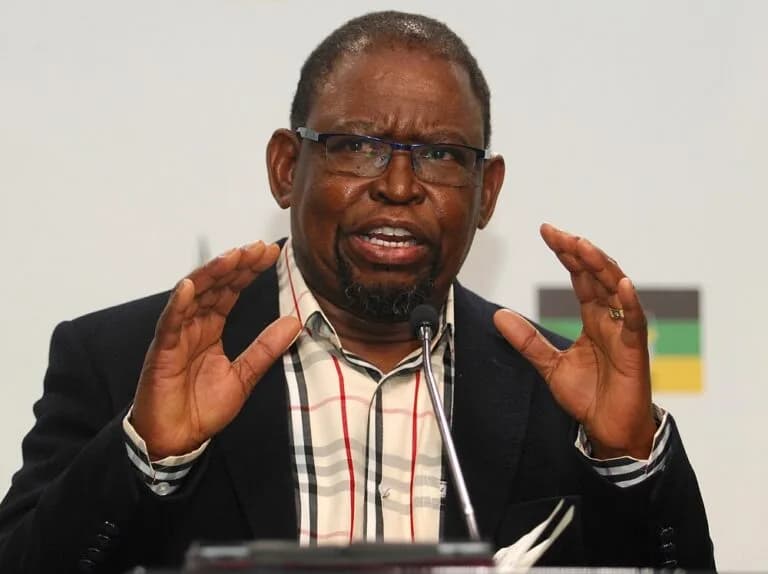
Enoch Godongwana has tabled his third attempt at a national budget
South African National Budget Summary – 21 May 2025
There was not much wiggle room left in the tax department for Finance Minister Enoch Godongwana, and this has resulted in a situation, where in his third attempt at setting the national budget down in a passable form, the finance minister appears to be simply kicking the “deficit can” down the road, rather than addressing the key issues of overspending and a mushrooming pile of debt in the country.
Tax Adjustments Not Consumer Friendly
The government plans to focus on improved tax collection, and there will be no adjustments to income tax brackets to account for inflation, resulting in bracket creep as incomes are adjusted for inflation.
In essence, this will increase personal taxes for most PAYE taxpayers as this is the second consecutive year no adjustments have been made.
While consumers will not be seeing VAT increases, there will be additional fuel taxes applied, and this is likely to drive the cost of goods and transport higher across the spectrum. The so-called “sin taxes” on alcohol and tobacco products are set to be increased.
The Minister has also indicated that, If required by the treasury, additional taxes may be added in 2026.
SARS will be allocated additional budget to facilitate greater tax collection efforts that have improved significantly in recent years.
Infrastructure Spending
R1.03 trillion will be spent over 3 years on key infrastructure projects, including roads, water, and the electricity grid infrastructure.
The Government also plans to establish a new team, which will be set up to improve the planning and coordination of big infrastructure projects and hopefully start reducing project overspend and manage delivery expectations.
Economic Growth Projections
The economy is expected to grow more slowly than previously projected by the Finance Ministry, and the target is now set at 1.4% to 1.8% per year.
This is above market analyst projections that are between 1% and 1,4% over the next two years
Government Spending and Revenue
Government plans to spend R2.58 trillion in 2025–26 and collect R2.2 trillion in income. This will result in a budget shortfall of 4.8% of GDP. However, the Finance Ministry believes that this could shrink in the near-term period.
Debt Level Projections
Government debt is expected to stabilize at a disturbing level of 77.4% of GDP next year, which is around 2% higher than originally projected. Government borrowing will stay high in order to make up initial budget shortfalls, but this will also impact the budget required to service debt, which is already the largest budget item.
The government says that it has plans in place to reduce its risk from having to repay old loans at higher interest.
Budget Cuts Slim and More Spending
Total government spending will still be increasing however, this is now set to be at a lower rate than previously indicated in the previous budget.
There have, however, been a few marginal cuts made to early retirement programs, with additional spending on rail infrastructure, health and education services, as well as additional cuts to the defence budget.
The elephant in the room – the bloated government salary bill and social grants such as the COVID-19, R350 monthly social grant for unemployed people, which is still being given to millions, and are the key budget sectors draining the country dry, have not been addressed at all.
The initial plans to increase social grants have been dropped.
Market Response:
The rand has dropped marginally against the US dollar but has maintained its level at just below the R18.00 mark and is currently trading at R17.90.