Is “Smart Mining” Just a Cost-Cutting Tool Disguised as Innovation?
“Smart mining” has become a common phrase in mining, especially across African mining investments and operations, almost to the point of becoming a mantra. Companies repeat it consistently in presentations, pilot projects, and investor briefings, usually alongside automation, sensors, and data systems promising better performance. The language around it is familiar efficiency, optimisation, and real-time
Is “Smart Mining” Just a Cost-Cutting Tool Disguised as Innovation?
“Smart mining” has become a common phrase in mining, especially across African mining investments and operations, almost to the point of becoming a mantra. Companies repeat it consistently in presentations, pilot projects, and investor briefings, usually alongside automation, sensors, and data systems promising better performance. The language around it is familiar efficiency, optimisation, and real-time visibility. What remains less clear is how much of this advancement genuinely improves mining operations in a balanced way, and how much of it still centres on a narrower objective: reducing costs.
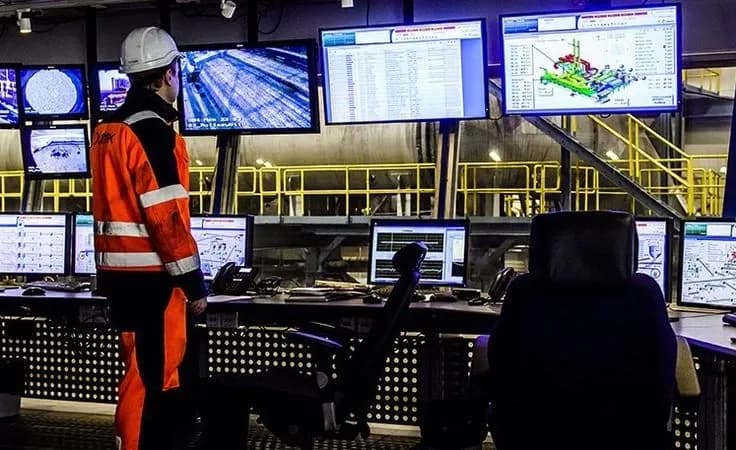
In practice, smart mining brings together technologies that allow operators to monitor and control operations more closely. Fleet management systems track equipment movement and fuel use. Sensors measure vibration, temperature, and output across processing plants, while software platforms combine that data to identify where operations lose time, energy, or materials. In well-managed operations, these systems reduce downtime, improve recovery rates, and make planning more precise.
The Hidden Trade Off Behind Efficiency
There is also the question of what could be described as an efficiency paradox. As mining operations become more optimised, they can also accelerate production in ways that shorten the productive lifespan of a mine. Faster drilling, more precise extraction, reduced downtime, and tighter operational control all improve output, but they can also compress timelines that would previously have stretched over longer periods. For some operators, that simply reflects the pressure to remain competitive in a tougher market. But it also raises a broader question around whether smart mining is extending long-term operational value, or simply bringing production forward at a faster rate.
Efficiency, Optimisation and the Real Motive
As the early excitement around rapid technological change and the fourth industrial revolution begins to settle, a more direct question continues to surface: does smart mining genuinely improve how operations run, or does the industry increasingly use it as a more polished form of cost reduction disguised as innovation? The benefits are visible, but so are the concerns, particularly around employment, local participation, and how operations evolve over time.
In many cases, companies see the first gains in areas directly tied to cost. Operators use equipment more intensively, maintenance teams schedule repairs before breakdowns occur, and companies reduce or redefine certain labour roles. From a business perspective, this makes sense. Mining operations work under tight financial pressure, and even small efficiency gains can noticeably improve profitability.
The bigger question is what companies leave out of that calculation. When businesses introduce technology mainly to improve margins, skills development and local capability often receive less attention. Some companies implement systems without long-term plans to train local teams, while analysts process operational data elsewhere, limiting how much technical understanding remains inside the operation itself. Over time, some mines risk concentrating technical knowledge within a small group of specialists, creating dependency rather than broader capability across the workforce.
Where the Technology Is Actually Going
Scale also shapes how companies prioritise these technologies. Larger mining companies can deploy automation and monitoring systems across entire operations because efficiency gains justify the investment at scale. Smaller operators usually introduce these systems more selectively, focusing first on areas where they can quickly improve fuel use, output, or downtime. In both cases, companies generally prioritise technologies that deliver the clearest operational and financial returns first.
That said, dismissing smart mining as nothing more than cost-cutting would also ignore clear operational improvements. Automated drilling and remote-controlled equipment reduce the need for workers to enter high-risk areas, while monitoring systems identify potential failures earlier and help prevent unplanned shutdowns. These improvements extend beyond financial performance and directly affect safety and operational stability.
Ultimately, the real difference comes down to how companies introduce these systems and what they expect from them. Mines that use automation mainly to reduce fuel use, limit downtime, or lower labour costs will naturally see gains in those areas first. But when companies combine the same technologies with operator training, local technical support, and stronger decision-making on-site, the impact extends beyond efficiency alone. Over time, that changes how teams retain knowledge, solve operational problems, and build technical capability inside the operation itself.
Technology already sits at the centre of many African mining operations, and the perception that the sector still relies heavily on outdated mining methods no longer reflects the scale of what is happening on the ground. The bigger question now is what mining companies ultimately want these technologies to achieve. In many operations, the clearest gains still sit around efficiency, output, and cost control. The challenge for the sector is whether companies will continue using these systems mainly to tighten operations, or whether they will also use them to strengthen technical capability, safety, operational resilience, and broader ESG outcomes around the mine itself.