SAPVIA Calls for More Clarity in Mini Budget
Mini Budget must fund IRP ambition with concrete fiscal and financial mechanisms, says SAPVIA. The South African Photovoltaic Industry Association has called on the Minister of Finance, Enoch Godongwana, to use the Medium-Term Budget Policy Statement (MTBPS) this week to provide clear fiscal and strategic pathways for financing the massive solar PV build-out outlined in
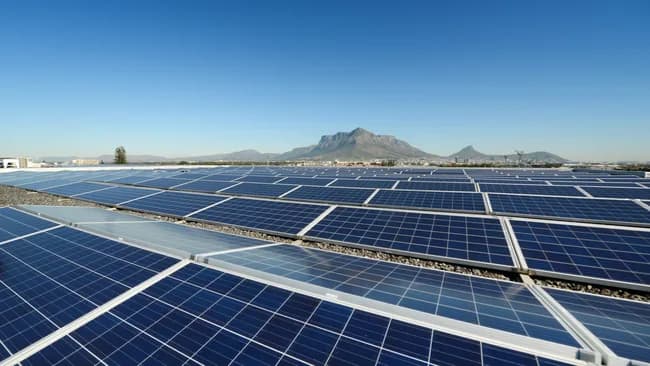
City-of-Cape-Town-Awards-Tender-for-First-Solar-Plant-to-Combat-Load-Shedding
Mini Budget must fund IRP ambition with concrete fiscal and financial mechanisms, says SAPVIA.
The South African Photovoltaic Industry Association has called on the Minister of Finance, Enoch Godongwana, to use the Medium-Term Budget Policy Statement (MTBPS) this week to provide clear fiscal and strategic pathways for financing the massive solar PV build-out outlined in the new Integrated Resource Plan (IRP).
The industry requires confirmation of financial commitments and innovative funding vehicles that can leverage the required private sector investment, especially for critical transmission and distribution infrastructure.
Commenting ahead of the speech, Mr Sim Khuluse, Technical and Policy Manager of SAPVIA, said that the mini budget must translate energy policy into financial reality.
“The recently released IRP confirms solar PV’s central role in South Africa’s energy security and economic recovery,” said Mr. Khuluse.
“However, this multi-gigawatt pipeline of projects demands immediate, targeted fiscal support and a transparent funding model for the next three years. We need to see how the government will strategically allocate resources to support this aspiration, particularly for the grid upgrades that are currently the single largest bottleneck to connecting new capacity.”
Collaboration and Innovation Needed to Find a Solution
SAPVIA acknowledges the significant fiscal constraints facing the country, with debt-servicing costs limiting state spending. The association stresses that this challenge necessitates collaborative, innovative solutions, aligning with its past calls for streamlined regulation and policy certainty.
“Given the persistent fiscal pressures, the solution lies in a blended finance approach. We require explicit clarity in the MTBPS on the ring-fencing of transmission funding, enhanced investment incentives for private generation, and the swift deployment of financial instruments that de-risk projects for local and international capital,” Mr. Khuluse added.
“Policy certainty and streamlined regulatory timelines remain the most powerful, non-fiscal tools the Minister can confirm to unlock most of the trillions required to build this new energy system. The mini budget must serve as a credible blueprint for action, ensuring that we move beyond planning to rapid implementation.”
SAPVIA says it remains committed to working with the National Treasury and the Department of Electricity and Energy to ensure that the required finance, skills development, and local manufacturing components are secured to realise a sustainable, lower-carbon future for all South Africans.