Reframing Africa's Mineral Wealth in 2026
Africa's mineral extraction landscape has been a longstanding cornerstone of the continent's economy, contributing significantly to GDP, exports, and employment. Africa hosts an estimated US$29.5 trillion in mine-site mineral value, representing about 20% of global mineral wealth, yet captures only a fraction of the economic value embedded in this endowment. However, according to a new
US Must Revamp Africa Policy, Emphasizing Critical Minerals, Says USIP Report
Africa’s mineral extraction landscape has been a longstanding cornerstone of the continent’s economy, contributing significantly to GDP, exports, and employment. Africa hosts an estimated US$29.5 trillion in mine-site mineral value, representing about 20% of global mineral wealth, yet captures only a fraction of the economic value embedded in this endowment.
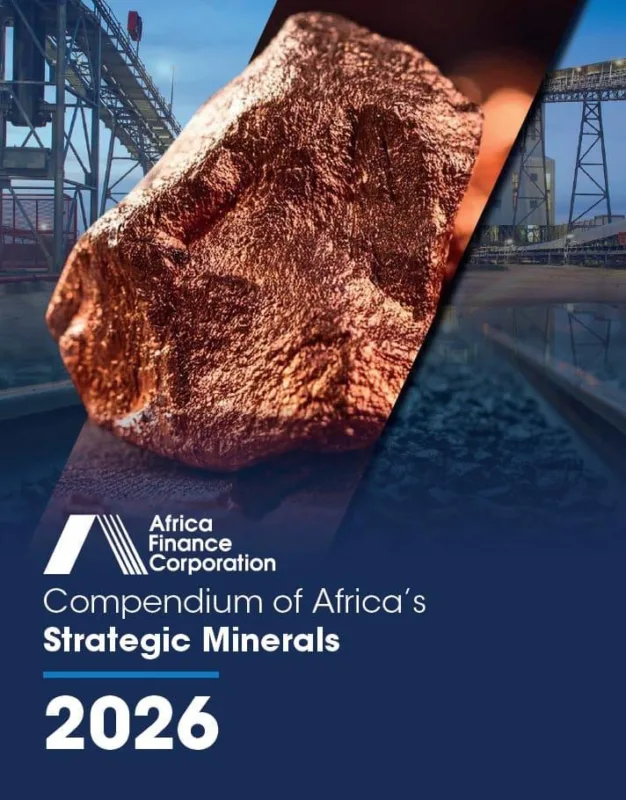
However, according to a new study – the “Reframing Africa’s Mineral Wealth in 2026” produced by the Africa Finance Corporation (AFC) there is a pivotal shift in narrative, urging a continental move beyond raw extraction toward integrated value chains that align with Africa’s development priorities.
This inaugural report is strategically important as it reframes minerals not as mere commodities for global export but as strategic assets for domestic infrastructure, food security, and industrialisation. Analytically, it exposes structural misalignments in Africa, where resource endowments, infrastructure, and demand fail to converge with the resulting loss in economic value estimated at trillions of dollars.
The Evolving Mineral Extraction Landscape in Africa
Over the past five years (2021-2025), Africa’s mineral extraction industry has shown resilient growth despite widespread global volatility. Growth in the sector has been driven by demand for critical minerals in the energy transition and other major tech developments. According to World Bank and UNCTAD data, the sector’s output value expanded from approximately $480 billion in 2021 to over $620 billion in 2025, reflecting a compound annual growth rate (CAGR) of about 6.5%. This growth outpaced global averages (4-5%), fuelled by rising commodity prices post-COVID and investments in battery metals. However, challenges like supply chain disruptions in 2022-2023 tempered gains, with a dip to 3% growth in 2023 before rebounding to 7-8% in 2024-2025.
Key growth drivers included cobalt and copper production in the Democratic Republic of Congo (DRC), which surged 25% from 2021 levels to reach 220,000 tons of cobalt in 2025, and lithium exploration in Zimbabwe and Namibia, where output tripled from negligible bases. South Africa’s platinum group metals (PGMs) maintained steady 4-5% annual growth, while gold production in Ghana and Sudan grew 8-10% amid artisanal expansions. Overall, the industry added over 150,000 jobs continent-wide, with formal employment rising from 1.2 million in 2021 to 1.4 million in 2025.
Growth Figures Over the Last Five Years
The following table summarizes annual production value growth (in USD billions) and key contributors:
(Source: World Bank, UNCTAD, Afreximbank estimates; values approximate based on commodity outputs and prices.)
Graphically, if visualized, the trend would show a steady upward curve with a slight plateau in 2023 due to global economic slowdowns, accelerating in 2024-2025 as energy transition demand kicked in
Dominant markets include South Africa’s gold, PGMs, iron ore; with around 25% of continental output, DRC producing cobalt, copper; 20% of continental output, Ghana – gold; 10% of continental output, and Botswana – diamonds; 5% of continental output.
Major players are global giants like Glencore (DRC copper/cobalt), Anglo American (SA PGMs), and Barrick Gold (multiple sites), alongside state-linked firms like Gécamines (DRC) and emerging Chinese operators (e.g., CMOC in DRC cobalt). Exploration is most active in West Africa (Ghana, Mali for gold/lithium), East Africa (Tanzania, Kenya for rare earths), and Southern Africa (Namibia, Zimbabwe for lithium/uranium), with over $2.5 billion in exploration spending in 2025, up 15% from 2021.
Recent Spikes in Critical Minerals and Global Shift to African Sourcing
The past two years (2024-2025) have seen dramatic price spikes in critical minerals, with accelerating global sourcing shifts toward Africa. Lithium prices have surged over 180% in early 2026 to exceed $2,000 per ton of spodumene concentrate, driven by electric vehicle (EV) battery demand and supply constraints from Australia and China.
Cobalt quotas in the DRC stabilised prices at $30,000-35,000 per ton after a 2025 dip, while copper hit $10,000 per ton driven by energy transition supply needs. These spikes—lithium up 188% since October 2023 lows—stem from oversupply corrections, geopolitical tensions (e.g., U.S.-China trade wars), and EV sales growth (global 18 million units in 2025).
This has pivoted focus to Africa, home to 30% of global critical reserves. The DRC supplies 70% of global cobalt supply, Zimbabwe and Namibia ramped up lithium extraction tripling output from 2021-2025, while Zambia and the DRC are driving copper supply growth from the continent with 4.2 million tons alone in 2025. Investments like U.S.-backed Orion Consortium’s DRC deals and China’s Ganfeng Lithium expansions highlight this shift, positioning Africa as a “reliable node” for tech (semiconductors) and green industries (batteries, renewables). However, ethical sourcing demands (e.g., traceability) add layers of complexity that still need to be traversed.
Key Opportunities
The Compendium study identifies transformative opportunities by linking minerals to infrastructure. Value chain expansion could multiply mine-gate values exponentially, e.g., $2.8 trillion iron ore to $25.4 trillion in processed steel, with the potential to unlock $8.6 trillion in undeveloped reserves.
Regional clusters have the potential to offer synergies: North Africa’s phosphates for green industrialisation plugged into an estimated $13 billion market by 2030, or West Africa’s gold for regional aggregation. East Africa’s exploration upside in rare earths and Central Africa’s shared infrastructure for giant endowments provide massive growth potential.
Southern Africa’s EV/battery ecosystems via DRC-Zambia SEZ plus phosphates/potash for food security, and uranium restarts in Namibia/Malawi for energy, and AI-driven discoveries e.g., KoBold’s Zambia copper promise high returns and downstream processing can unlock jobs and economic growth potential. PPPs and funds like SA’s Junior Mining Exploration Fund (R400 million, 2024-2025) could catalyze $155 billion annual infrastructure investments, fostering jobs and resilience.
Key Challenges
Despite endowments, structural misalignments hinder progress: resources, infrastructure, and demand rarely align, leading to raw exports and processed imports, costing Africa trillions in “perverse” trade mechanics (paying twice for logistics). Infrastructure bottlenecks—energy constraints (outages raise costs 50%), fragmented rail/ports, and water scarcity (North Africa)—exacerbate issues. Data gaps and underexploration (East/Central regions) limit AI/ML applications, while informal artisanal mining (ASM) causes value loss (gold smuggling doubled 2012-2022). External dependence exposes markets to global cycles (e.g., Chinese steel downturns hitting manganese), compounded by brain drain and political instability (Sahel conflicts). The report warns of procyclical shocks without integrated planning.
Key Developments
Recent developments signal momentum with uranium restarts in Namibia (2024) and Malawi (2025) for energy security, new facilities like Zimbabwe’s lithium sulphate plant (2025) and Tanzania’s small-scale copper/graphite operations. Policy advances are also encouraging and include export bans/local content mandates such as seen in Tanzania/Zimbabwe to retain value, and funds like SA’s exploration initiative.
AI integration is accelerating: KoBold’s Mingomba discovery (2024), Botswana Diamonds’ AI program (2024), and calls for harmonized geoportals. Regional initiatives like SADC’s “smart corridors” (North-South upgrades) and emerging clusters (DRC-Zambia EV SEZ) foster connectivity. These align with AFC’s call for data-sharing and investment platforms to bridge gaps.
Encouragingly, momentum is emerging across the continent:
- Angola is developing one of the world’s largest and highest-grade magnet metal rare earth deposits;
- Mozambique has become a key feedstock anchor for graphite and anode materials;
- Battery-grade manganese sulphate projects are advancing in Southern Africa; and
- Uranium production has resumed in Namibia and Malawi over 2024-25.
In the final analysis, the Compendium analytically positions Africa’s minerals as engines for agency-driven transformation, however success in a challenging global trade environment demands coordinated action on infrastructure, energy, manufacturing and trade policies.
Africa has the opportunity to position itself for rapid development and economic gain if there is a clear path with multiple players coordinating policy and infrastructure growth. With global demand surging, 2026 could mark a turning point if the continent’s leaders, corporations and infrastructure developers, earnestly start addressing misalignments.