Prescient Investment Management marks a decade of clean energy and infrastructure investment
Marking ten years of the Clean Energy and Infrastructure Fund, CEO of Prescient Investment Management, Cheree Dyers, used the firm’s 10-year milestone to reflect on what has changed and what still needs to happen. The Clean Energy and Infrastructure Fund, she explained, was built on a simple idea: Africa cannot grow without infrastructure. A decade
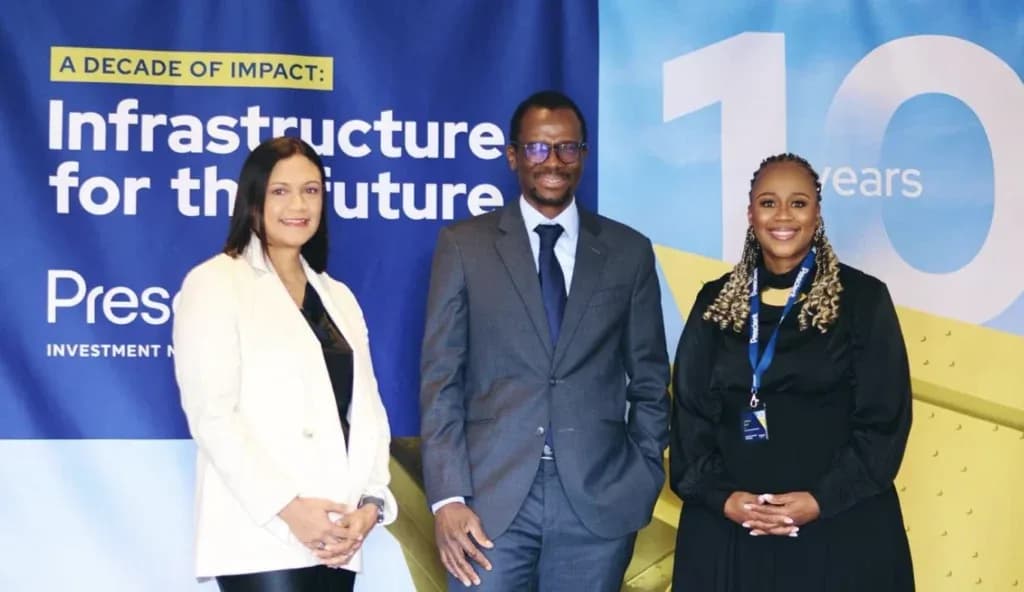
Prescient Investment Management marks a decade of clean energy and infrastructure investment
Marking ten years of the Clean Energy and Infrastructure Fund, CEO of Prescient Investment Management, Cheree Dyers, used the firm’s 10-year milestone to reflect on what has changed and what still needs to happen.
The Clean Energy and Infrastructure Fund, she explained, was built on a simple idea: Africa cannot grow without infrastructure. A decade ago, however, that belief was not widely backed by capital. Raising funds for infrastructure projects was difficult, and the frameworks needed to support public-private partnerships were still taking shape.
At the core of the fund’s origin was a simple but powerful realization: infrastructure is not optional for Africa it is foundational. Frameworks for public-private partnerships were still underdeveloped, and the investment path was unclear. Inspired by successful models in Asia, the fund’s founders recognized that once these frameworks matured, the opportunity would be immense.
That turning point came with the introduction of supportive local regulatory frameworks, enabling the launch of the fund. Over the past ten years, the results have validated that early conviction. Beyond financing projects, the fund has supported renewable energy generation, strengthened transmission systems, and contributed to diversifying South Africa’s energy mix, enhancing resilience in a constrained energy environment.
Cheree emphasized that the real achievement lies not just in completed projects, but in the willingness to take a long-term view. Infrastructure investment requires patience, scale, and belief in future impact—qualities that defined the fund’s strategy from the outset.
Infrastructure as a Core Asset Class and Economic Driver
The broader significance of infrastructure is increasingly recognized. Globally, institutional investors, including pension funds, now allocate between 5% and 15% of their portfolios to infrastructure. This shift reflects its dual value: delivering stable, inflation-linked returns while driving economic growth. Research suggests that infrastructure investment has a multiplier effect of approximately 2.5 times, creating jobs, boosting productivity, lowering business costs, and improving service delivery.
Despite progress, South Africa faces a substantial infrastructure funding gap, estimated to exceed R4 trillion over the next decade. While government has committed over R1 trillion toward infrastructure development, public funding alone is insufficient. Bridging this gap requires stronger alignment between policy and private capital, with institutional investors playing a critical role.
Government Reforms and the Growth Imperative
That thread carried directly into the keynote address by Deputy Minister of Finance Dr David Masondo, who framed infrastructure as central to South Africa’s growth trajectory.
“No country can grow faster than the infrastructure that carries its ambition,” he said, pointing to electricity, logistics, digital networks and water systems as the backbone of economic activity. For more than a decade, he argued, South Africa has underperformed not because of a lack of resources, but because structural constraints have limited growth.
Operation Vulindlela, now in its second phase, is designed to address these constraints. In the energy sector, reforms have opened the market to private generation, resulting in thousands of megawatts of new capacity in development. This is beginning to stabilise supply and improve investor confidence.
In logistics, the focus is on reversing declining rail performance and port congestion. New reforms allow private sector participation in freight rail and port terminals, aimed at restoring export competitiveness in key sectors such as mining and agriculture. Digital infrastructure has also seen progress, with spectrum allocation accelerating broadband rollout, reducing data costs, and supporting the growth of the digital economy. Meanwhile, reforms in water and municipal infrastructure are focused on strengthening governance and ensuring reliable service delivery.
Investment Trends, Financing Tools and the Role of Capital
While reform momentum has improved, Masondo acknowledged that investment levels remain weak. Gross fixed capital formation grew by just 1.4% in the fourth quarter of 2025 and declined by 2.2% over the year. At around 14% of GDP, investment remains well below the National Development Plan target of 30%.
The infrastructure financing gap remains equally stark, estimated at around R2 trillion between 2024 and 2040, rising to R2.15 trillion when broader development goals are included.
To close this gap, government is working to crowd in private capital. The public-private partnership framework has been overhauled, with 63 projects currently in the pipeline. The Budget Facility for Infrastructure has received proposals worth R474.3 billion, with R22 billion already approved for support.
In addition, South Africa has issued its first sovereign infrastructure bond, raising R11.8 billion, while the forthcoming Infrastructure Finance and Implementation Support Agency (IFISA) will consolidate project preparation and financing functions to improve delivery. The agency will oversee a pipeline that includes 26 blended finance projects valued at R130.8 billion.
The Minister also highlighted that the role of institutional investors is critical. South Africa’s financial system manages trillions of rand in long-term savings, and regulatory changes now allow up to 45% allocation to infrastructure under Regulation 28.
“The question is not whether capital exists,” he noted, “but whether it is mobilised effectively.”
The discussion later followed with a panel of speakers from different institutions, where industry leaders and investors explored how these reforms translate into real investment decisions, and what still stands in the way of scaling infrastructure across South Africa.