Opinion: Treasury’s Funding Freeze on Municipalities – Desperation or Discipline? Taxpayers Foot the Bill Again
The South African National Treasury’s decision to withhold additional support funds from poorly performing municipalities marks a significant, if belated, escalation in the battle against local government maladministration. According to recent reports, the move targets entities where Municipal Public Accounts Committees (MPACs) have failed dismally to enforce financial standards, with the Auditor-General repeatedly highlighting billions
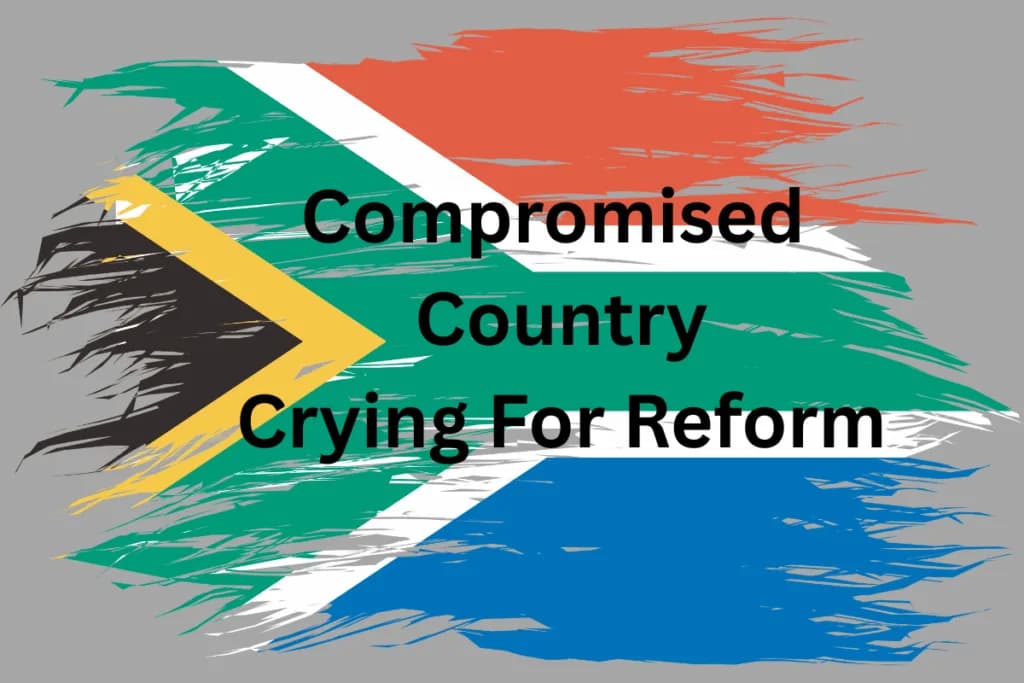
South African Flag
The South African National Treasury’s decision to withhold additional support funds from poorly performing municipalities marks a significant, if belated, escalation in the battle against local government maladministration. According to recent reports, the move targets entities where Municipal Public Accounts Committees (MPACs) have failed dismally to enforce financial standards, with the Auditor-General repeatedly highlighting billions in irregular, unauthorised, and fruitless expenditure.
National Treasury data paints a staggering picture: between 2021 and 2026, municipalities accumulated R145.21 billion in irregular expenditure, R118.13 billion unauthorised, and R24.12 billion fruitless and wasteful expenditure.
This is not abstract accounting, rather, it is real money extracted from the same taxpayers who already pay a “second tax” through private security, solar installations, boreholes, private healthcare, and education, while watching infrastructure crumble. The Treasury’s action is framed as a mechanism to force compliance, but it risks becoming another blunt instrument that ultimately punishes the productive middle class and businesses who fund the system, while the root causes of political impunity, weak consequence management, and a culture of entitlement, remain largely untouched.
The Scale of Municipal Failure
Municipalities are supposed to be the coalface of service delivery. Instead, many have become black holes for public funds. Despite spending billions annually, a shocking number fail to produce acceptable financial reports. MPACs, tasked with oversight, have largely become toothless, with findings ignored even when deep corruption is exposed. The result is a vicious cycle: poor governance leads to service collapse, which forces citizens to self-fund alternatives, while the fiscus continues bailing out failing entities like Eskom, Transnet, and dysfunctional municipalities.
Treasury’s warning that municipalities should have prepared for the funding freeze rings hollow. If these entities have consistently ignored MPAC reports, Auditor-General findings, and previous interventions, why would an advance notice suddenly trigger competence? This feels less like strategic policy and more like pre-election optics — an attempt to signal toughness on corruption ahead of local government polls. The people who will feel the pinch first are often the very communities least able to absorb further disruption, while the politically connected elite continue with relative impunity.
The Taxpayer’s Double Burden
South Africa’s working middle class and formal businesses already carry a disproportionate load. They pay high personal and corporate taxes, VAT, fuel levies, and a myriad of other fees — only to fund private substitutes for failing public services. Roads are maintained by community contributions or tolls. Electricity comes from rooftop solar and generators. Security is outsourced. Education and healthcare are increasingly private. This “second tax” is not optional; it is a survival mechanism in a country where state capacity has eroded.
Now, withholding equitable share or conditional grants to municipalities may exacerbate service failures — potholes, water shortages, electricity blackouts (load shedding redux at local level) — further eroding quality of life and business profitability. The disconnect is glaring: the economically active pay, while large segments of the voting base, reliant on grants, have less direct incentive to demand better governance. The surge in support for parties with questionable track records in recent elections illustrates this misalignment.
Why Consequence Management Has Failed
The real failure lies in the absence of accountability. Municipal managers, CFOs, and procurement officers sign off on wasteful expenditure with little personal risk. Political deployment often trumps competence. When reports expose corruption, there are hearings, recommendations — and then business as usual. Treasury’s funding freeze is a desperate lever precisely because previous softer interventions (training, oversight, audits) have not delivered behavioural change.
Firing underperforming officials, blacklisting corrupt suppliers, and pursuing criminal charges for gross misconduct would send a far stronger signal than withholding funds that ultimately affect service delivery to citizens. Until politicians and senior administrators face real career-ending consequences, the cycle will continue.
The Auditor-General of South Africa (AGSA) has the ability to bypass dysfunctional or politically compromised Municipal Public Accounts Committees (MPACs) by using coercive statutory enforcement powers. Under the amended Public Audit Act (PAA), the AGSA shifts the accountability process from a local political debate straight into an administrative and legal enforcement mechanism. So why is this mechanism not being implemented at scale, instead of allowing irresponsible and unethical behaviour by municipal structures to continue?
The Way Forward: Citizen Agency and Systemic Reform
South Africans, and particularly the productive class keeping the economy afloat, now face a difficult question: how to respond when the system seems rigged against accountability? A full tax revolt is neither legal nor practical (SARS enforcement is robust, and broad non-compliance would trigger economic chaos that hurts the vulnerable most). But resignation is equally unsustainable.
Practical steps forward:
- Vocal & Organised Advocacy: Taxpayer associations, business chambers, and civil society must amplify pressure through litigation, public reporting, and targeted campaigns. Support organisations challenging irregular expenditure in court.
- Local Action: Where municipalities fail, explore legal mechanisms for withholding rates into trust accounts for specific services (precedents exist). Community-driven maintenance initiatives can fill gaps.
- Electoral Discipline: Reward competent governance at the ballot box. Demand performance from all parties, not just rhetoric.
- Economic Resilience: Businesses and individuals should continue optimising (legal deductions, efficiency, diversification) while pushing for broader growth policies that expand the tax base and reduce dependency.
- Transparency & Data: Greater use of Auditor-General reports, citizen dashboards, and media scrutiny to expose waste.
South Africa retains remarkable strengths — world-class entrepreneurs, innovators, scientists, athletes, and academics who consistently punch above their weight. The contrast with underperforming political leadership is stark. The country’s resilience has been tested repeatedly, but tolerance for malfeasance has limits. The “remarkable allowance” for failure we find in our society, stems from a mix of apathy, grant dependency, and fear of worse instability. Breaking this requires rebuilding trust through visible accountability.
Accountability Must Be the Standard
Treasury’s move may be imperfect, but it highlights a growing recognition that business-as-usual is untenable. For the sake of future generations, South Africans who build, innovate, and pay must demand better, not through revolution, but through sustained, smart pressure on institutions and the ballot box.
The Auditor general should also be pressured to act against reoccurring financial mismanagement and use the constitutionally powers granted to it to enforce sanctions against those who fail our society. The alternative is a slow decline that no amount of private coping mechanisms can fully offset.
The great citizens of this nation, those holding it together through enterprise and resilience, have the power to shift the narrative. It starts with refusing to normalise failure and insisting on consequence management at every level. No more excuses. No more second taxes without results.