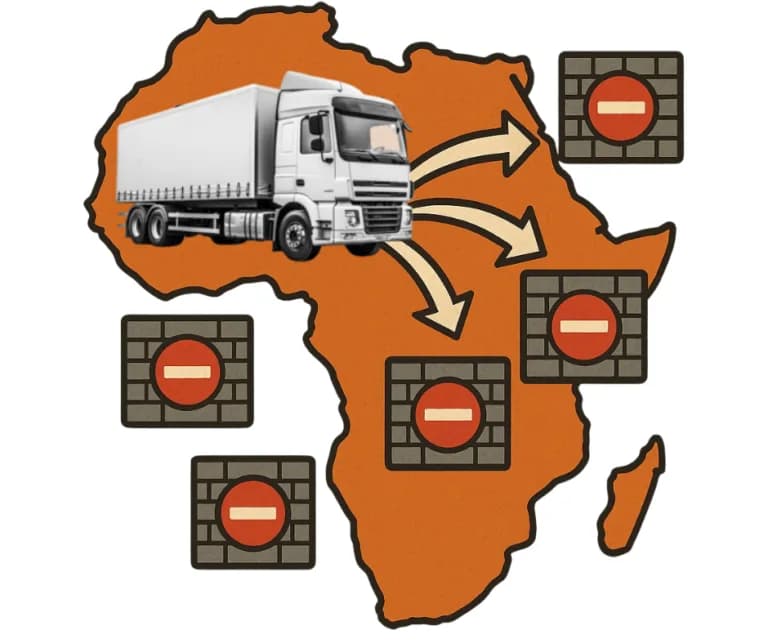
Non-Tariff Barriers: The Invisible Wall Stifling AfCFTA Trade in 2026
Within the global trade discourse of 2025-2026, tariffs have dominated headlines. The United States under the second Trump administration has rolled out reciprocal tariffs, prompting African exporters to reassess reliance on traditional markets. Meanwhile, China has expanded duty-free access for least-developed African countries, reinforcing South-Asia ties. Yet these shifts mask a deeper reality. Tariffs are
Non-Tariff Barriers: The Invisible Wall Stifling AfCFTA Trade in 2026
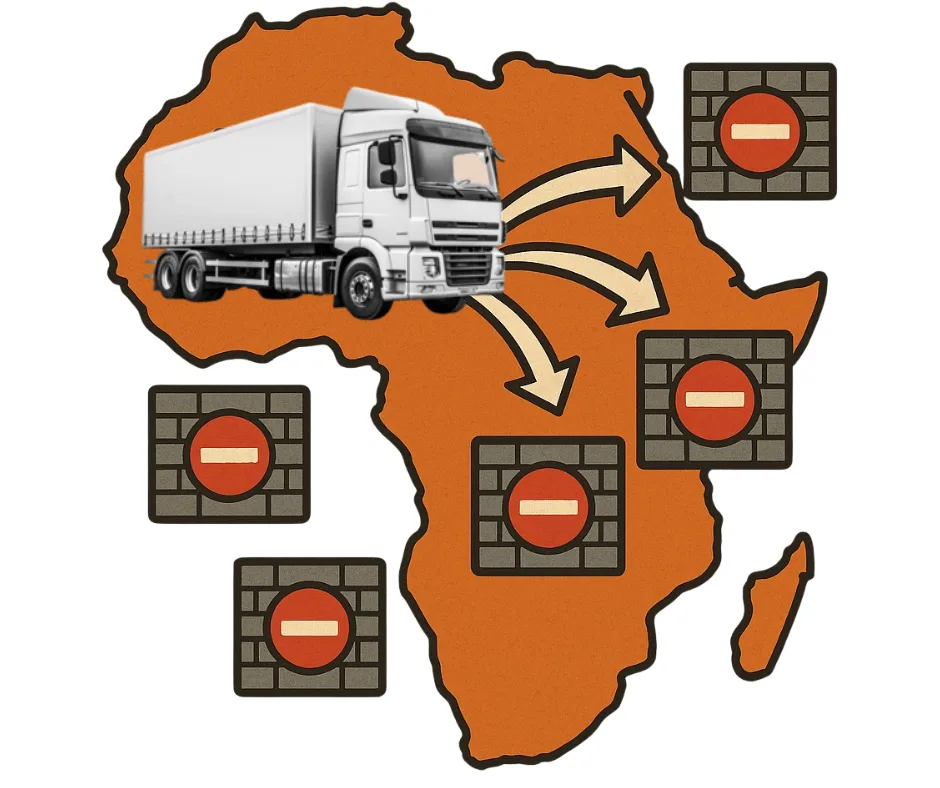
Within the global trade discourse of 2025-2026, tariffs have dominated headlines. The United States under the second Trump administration has rolled out reciprocal tariffs, prompting African exporters to reassess reliance on traditional markets. Meanwhile, China has expanded duty-free access for least-developed African countries, reinforcing South-Asia ties. Yet these shifts mask a deeper reality. Tariffs are no longer the primary obstacle to African growth. The real barrier is non-tariff barriers (NTBs), the invisible wall of logistics bottlenecks, payment frictions, regulatory mismatches, and protectionist incentives that keep intra-African trade stubbornly below 20% of the continent’s total exports.
The African Continental Free Trade Area (AfCFTA), operational since 2021 and now ratified by 49 countries, as of January 2026, was designed to change this. In 2024, intra-African trade reached $220.3 billion, a robust 12.4% increase despite global headwinds. However, this still represents only about 15% -18% of Africa’s total merchandise trade (per Afreximbank’s African Trade Report 2025 and UNCTAD data). Compare that to 59% in Asia or 68% in Europe.
AfCFTA’s Guided Trade Initiative has enabled shipments like Rwandan coffee to Ghana and Nigerian refined petroleum to Cameroon, but full potential, amounting to a projected 45% boost in intra-African trade by 2045, and adding $275 billion in value, remains locked behind NTBs that often equate to an effective tariff wall of 18-300% ad valorem equivalent, depending on the sector and corridor.
The Many Faces of the Invisible Wall
Logistics and transport costs top the list. Road transport alone accounts for 29% of the final price of goods traded within Africa, versus just 7% globally (UNCTAD Economic Development in Africa Report 2024). Trucking costs run $0.17–0.25 per tonne-kilometre, nearly three times higher than in peer developing regions. Poor infrastructure, port congestion, and border delays exacerbate this. On the Lagos-Abidjan corridor, delays and congestion add 20-30% to freight costs. Inland routes from Kenya’s Mombasa port to Uganda or Rwanda remain slower and costlier than shipping the same goods to Shanghai.
Recent experiences illustrate the pain. A Benin-based logistics firm reportedly loses 12 days monthly to border formalities. Perishable goods spoil; just-in-time manufacturing becomes impossible. Climate vulnerabilities compound risks with recent floods disrupting agricultural corridors, while Red Sea disruptions in 2024-2025 rerouted some flows at higher cost.
Money transfer issues and foreign currency shortages
These form another critical chasm. Africa faces a persistent $100-120 billion annual trade finance gap, hitting SMEs hardest (80-90% of businesses). Over 80% of intra-African payments are still routed primarily through offshore correspondent banks in USD or EUR, incurring multiple conversions, delays of days or weeks, and fees that can reach up to 10%. Currency volatility such as Nigerian naira depreciations exceeding 130% in 2024, cedi swings, and dollar shortages in Nigeria, Ghana, Angola, and beyond, forces importers into upfront payments or black-market FX, inflating costs and risks.
Regulatory and market access barriers
Barriers from regulations, including sanitary/phytosanitary (SPS) measures, technical standards, rules of origin disputes, and customs formalities, add layers of opacity. Regional industry incentives such as subsidies, local-content rules, or outright bans protecting domestic players continuously distort competition. In 2025, the AfCFTA NTB Online Reporting Mechanism logged complaints ranging from Senegal’s temporary banana import embargo from Ghana to Kenya’s airport demands for duplicate food-safety certificates on Nigerian dates, inflating costs by over 75% of invoice value in one case.
These NTBs are not static. TradeMark Africa’s 2024-25 report notes rising complaints in the East African Community (47 by mid-2025), driven by uneven enforcement and higher trader expectations under AfCFTA.
Company-Led Innovations Breaking Through
Private sector actors are not waiting for perfect policy. Practical solutions are emerging on the ground.
In payments, the Pan-African Payment and Settlement System (PAPSS) stands out as a game-changer. Launched in 2022 by Afreximbank and the African Union, PAPSS enables real-time settlement in local currencies across participating networks. By late 2025, it connected 19 countries, over 150 commercial banks, and 14 payment switches. Pilot payment projects have slashed costs by up to 50% and saved $5-8 million in FX conversion fees in early years. The 2025 African Currency Marketplace integration allows near-instant swaps between 12+ currencies, reducing the $5 billion annual continent-wide FX loss from offshore routing. Companies now settle Ghanaian cedi for Kenyan shilling trades directly, bypassing dollar dependency and speeding cash cycles for SMEs.
Logistics innovators are digitizing and multimodal-shifting. DHL’s GoTrade initiative, backed by €300+ million in Sub-Saharan investments through 2025-26, upgrades gateways, expands time-definite air networks, and builds SME capacity for AfCFTA compliance. DHL operates Africa’s only dedicated intra-continental air logistics network, helping second-tier cities connect faster. Maersk has pushed digital platforms for end-to-end visibility and sustainability-focused routing (e.g., shifting suitable freight from air to sea, cutting emissions 80% and costs sharply on select lanes). Jumia, Africa’s leading e-commerce platform, leveraged AfCFTA’s tariff preferences to expand logistics across 14+ countries by scaling local warehouses and last-mile partnerships, growing its addressable market dramatically.
On standards, TradeMark Africa-supported reforms have shown results. Certification times in East Africa dropped by 60% for many firms while Rwanda reduced meat interceptions by 45%, with digital SPS tools in Mozambique and Zambia slashed testing from 72 hours to under 30. Warehouse receipt systems in Ethiopia and Kenya have unlocked financing for horticulture exporters, turning inventory into collateral.
These company actions prove NTBs are surmountable when technology, partnerships, and persistence align.
The Indispensable Role of Authorities
Governments and continental bodies must scale these bridges. The AfCFTA Secretariat’s NTB Online Mechanism has resolved 58% of 220+ complaints (within an average of 39 days) by 2025, including the Senegal-Ghana banana freeze (lifted via national circular) and Tanzania’s misclassification of Ghanaian GFRP bars (duty corrected from 10% to 5% after origin verification). Virtual focal-point meetings and transparency upgrades are working.
Broader action is needed:
- Infrastructure acceleration: Fast-track the Tripartite Free Trade Area (COMESA-EAC-SADC) harmonization, with one-stop border posts, and PIDA projects. Corridor-specific investments (Tema-Abidjan clearance down from 12 to 9.5 hours) must multiply.
- Regulatory harmonization: Mutual recognition of standards, streamlined rules of origin (e-Tariff Book with RoO module launched 2024), and full Digital Trade Protocol rollout should be accelerated to enable paperless processes.
- Payment ecosystem support: Mandate or incentivize PAPSS adoption across all 55 AU states; align central-bank regulations; expand local-currency settlement to reduce the trade finance gap.
- Policy coherence: Phase out distortive regional incentives; establish national AfCFTA implementation committees with private-sector input; use blended finance for logistics PPPs.
- Capacity and inclusion: Prioritise the training of SMEs on AfCFTA tools; support women/youth traders via dedicated protocols.
The global context demands urgency. US tariffs and potential AGOA uncertainties, combined with EU Carbon Border Adjustment Mechanism pressures, make intra-African resilience essential. China’s duty-free offers are welcome but insufficient if shipping from Nairobi to Shanghai remains cheaper than to Lagos due to internal walls.
A Path Toward Barrier Busting
NTBs are not insurmountable, most are the result of policy choices and coordination failures. Recent wins such as the PAPSS expansion, resolved complaints, corridor efficiencies, and private investments, prove that targeted action delivers results. Full AfCFTA implementation, paired with sustained NTB elimination, could double intra-African trade’s share within a decade, create millions of jobs, industrialise value chains, and shield the continent from external shocks.
African states, companies, and authorities must treat 2026 as the year of execution and action the digitisation of borders, connect payments, harmonise rules and standards, and invest in the roads, rails, and ports that turn a continental market from promise into prosperity. The invisible wall can crumble, if the will to dismantle it matches the ambition of AfCFTA itself.
This overview draws on Afreximbank’s African Trade Report 2025, UNCTAD/UNECA analyses, the AfCFTA NTB platform, TradeMark Africa’s 2024-25 report, and PAPSS operational updates through early 2026.