No Free Lunch Podcast – The Future of Auto Financing
Vehicle Finance in a Rapidly Changing Market In This episode of No Free Lunch, Greg Stewart chats with Wesbank CEO, Robert Gwerengwe, about the major shifts in the Automotive industry today and what this means for vehicle financing and ownership costs. The vehicle and asset finance industry is undergoing a major transformation, and Robert Gwerengwe,
No Free Lunch Podcast – The Future of Auto Financing
12 Aug 2026
Vehicle Finance in a Rapidly Changing Market
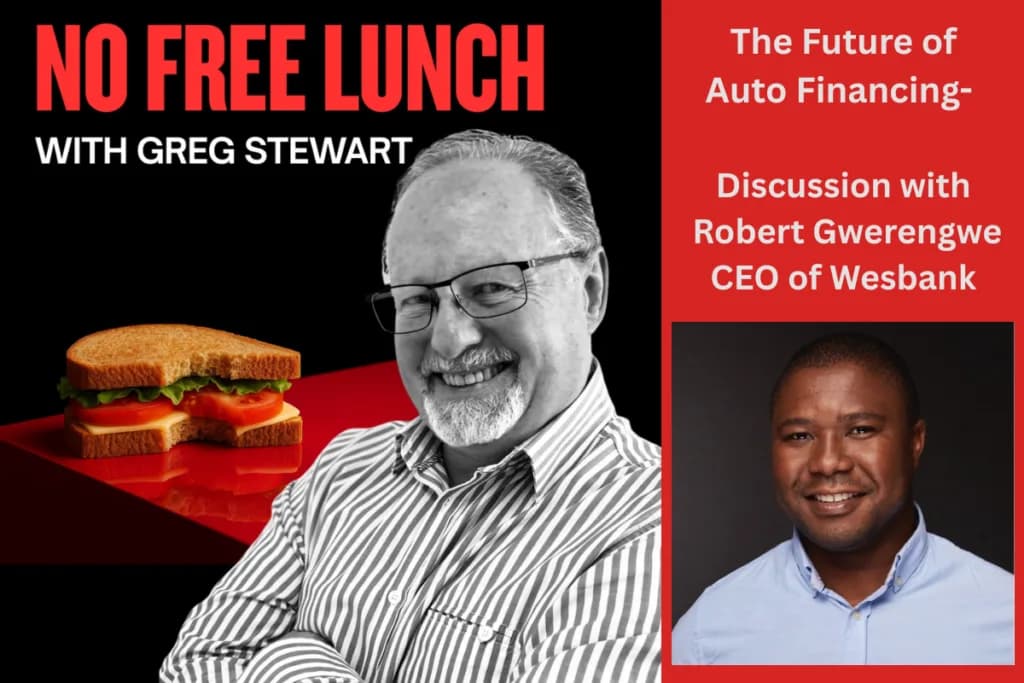
In This episode of No Free Lunch, Greg Stewart chats with Wesbank CEO, Robert Gwerengwe, about the major shifts in the Automotive industry today and what this means for vehicle financing and ownership costs.
The vehicle and asset finance industry is undergoing a major transformation, and Robert Gwerengwe, CEO of WesBank, believes the pace of change is only accelerating. In our discussion, he outlined how South Africa’s automotive market is being reshaped by new brands, shifting consumer expectations, and the rise of electrification.
Listen to The Discussion Here:
One of the biggest themes of the discussion was the surge of Chinese original equipment manufacturers (OEMs). In just a few years, their share of new vehicle sales in South Africa has grown dramatically, bringing more competition, more features, and lower prices for consumers. According to Guerengwe, this growth is not temporary. Many Chinese brands have invested heavily, learned from global markets, and are clearly positioning South Africa as a long-term base for expansion across the continent.
That shift is also changing the way financiers think about risk and residual values. With consumers now choosing between a used premium brand and a brand-new Chinese vehicle with similar features and warranties, traditional vehicle resale assumptions are being challenged. WesBank is responding by using data from markets where Chinese vehicles have been present longer, helping the business model future values more accurately.
The Emerging EV Market in South Africa
Another major point of discussion was electric vehicles. While South Africa’s charging infrastructure is still developing, Guerengwe sees this gap as an opportunity. He believes the country has significant room to grow its charging network and that WesBank wants to play an active role in enabling that growth. Robert also emphasised that the economics of EVs are becoming increasingly attractive. Lower fuel costs, fewer moving parts, and reduced maintenance can make them a strong option for individuals and businesses alike.
The Future of Auto Finance
The conversation also highlighted how the industry is moving beyond traditional car finance toward broader mobility solutions. Instead of focusing only on monthly instalments for vehicles, the future may involve more flexible offerings based on how customers actually move, whether that means cars, scooters, e-bikes, or fleet solutions for businesses.
The key takeaway is clear: the future of vehicle finance is no longer just about financing cars. It is about supporting mobility, adapting to new technology, and helping customers make smarter long-term choices. As the market evolves, financiers will need to understand total cost of ownership, electrification, and changing mobility needs to meet market expectations.