Nigeria is putting more advanced AI training into its universities
Nigeria already has a growing number of students using AI tools. The harder part is getting more students to understand what sits behind those tools and giving them the skills to build with the technology themselves. That is what the Africa AI Upskilling Programme (AAUP) is trying to address. The programme launched at the University
Nigeria is putting more advanced AI training into its universities
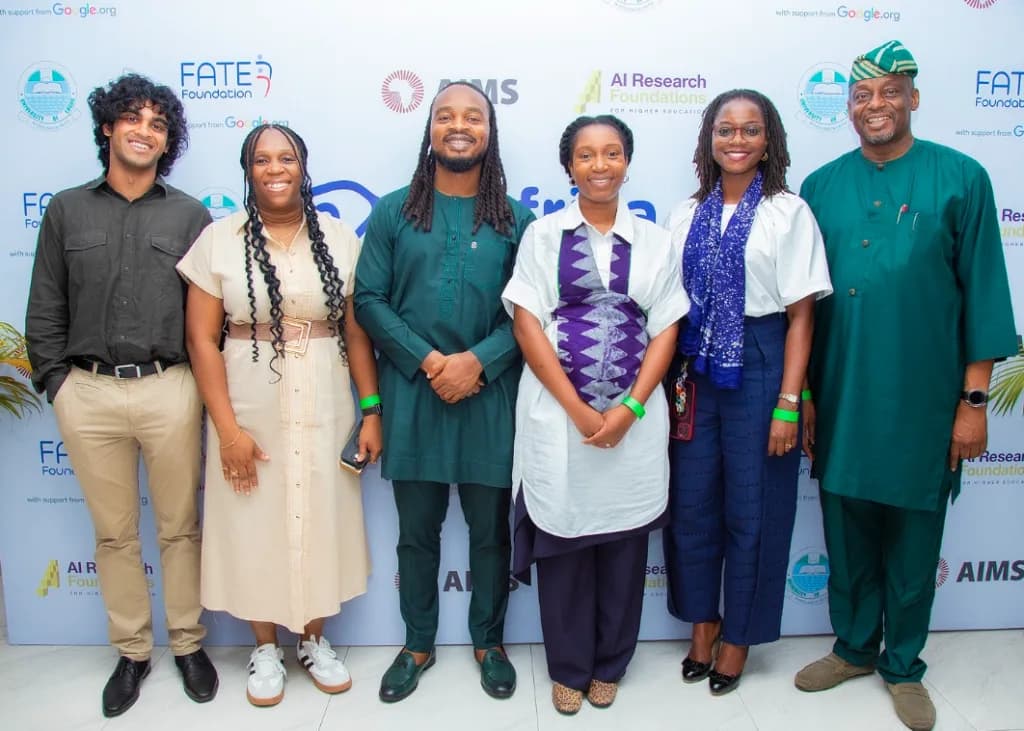
Nigeria already has a growing number of students using AI tools. The harder part is getting more students to understand what sits behind those tools and giving them the skills to build with the technology themselves. That is what the Africa AI Upskilling Programme (AAUP) is trying to address. The programme launched at the University of Lagos on 10 August and plans to reach 30,000 STEM students across Nigeria, Kenya, South Africa and Ghana. Nigeria has the biggest target, with 11,836 students across 10 universities. But the programme is not starting with the students. It is starting with the lecturers.
Training the people already in the classroom
FATE Foundation is running the programme with the African Institute for Mathematical Sciences (AIMS), with support from Google. In Nigeria, 50 university lecturers and 50 teaching assistants will receive training to deliver the programme to students. The lecturers will become what the programme calls AI Champions. They will use material from Google DeepMind, along with a teaching toolkit from University College London, to introduce students to more advanced AI and deep learning concepts. The thinking behind the approach is fairly simple. Instead of trying to train thousands of students separately, the programme can work through lecturers who already teach them.
AI tools have already found their way into Nigerian universities. Students use ChatGPT and other tools for research, writing and coding. Businesses are also using AI for things such as customer service and marketing. But that does not mean the country has enough people who understand how these systems work. That is the gap AAUP is targeting. Matita Arize, Sub-Saharan Africa Programme Manager at Google.org, said Africa needs more people who can build AI models, carry out research and develop technology rather than only use products created elsewhere. That distinction is becoming more important as AI spreads into more parts of the economy.
The focus is on problems students already know
The programme is also pushing students to look at problems around them. Francis Sani, Programme Director at 3MTT Nigeria, said researchers and students should apply their technical skills to local industries rather than keeping AI inside the technology sector. There are plenty of areas where that could happen. Small businesses still handle many parts of their operations manually. Farmers need better information. Logistics companies deal with complicated supply chains and rising costs. Students do not need to invent a completely new industry to find useful AI applications. They can start with problems they already see.
The programme will still use classrooms
AAUP is not relying entirely on online learning. Michael Alummottil, the programme’s project manager, said the programme will combine digital material with face-to-face teaching. That matters for a subject like deep learning, where students can easily get stuck on concepts that are difficult to work through alone. A lecturer can see when a student is struggling and explain the problem in a different way. The programme is therefore using online resources without removing the university classroom from the process.
Nigeria is targeting 11,836 students
Across Nigeria, Kenya, South Africa and Ghana, AAUP plans to train more than 292 lecturers and teaching assistants and reach 30,000 students. Nigeria will account for 11,836 students, supported by 50 AI Champions and 50 teaching assistants across 10 universities. Those numbers are a useful starting point, but they do not tell the whole story. Universities still need computers, reliable internet and enough computing power for students to work on more demanding AI projects. Lecturers also need to keep teaching the material after the programme’s initial training ends.
Launching an AI training programme is the easy part. The harder part is keeping it going once the launch event is over. If lecturers continue using the material, students build projects and some of those students move into AI research, technical jobs or startups, the programme could have a much wider effect. If students simply complete a course and move on, the numbers will not mean much. Nigeria does not only need more people who know how to use AI. It needs people who understand the technology well enough to build with it and apply it to problems in the Nigerian economy. AAUP is starting with the universities and the lecturers already inside them.