Digital Skills Training as a Pathway for Women in Mining Operations Now
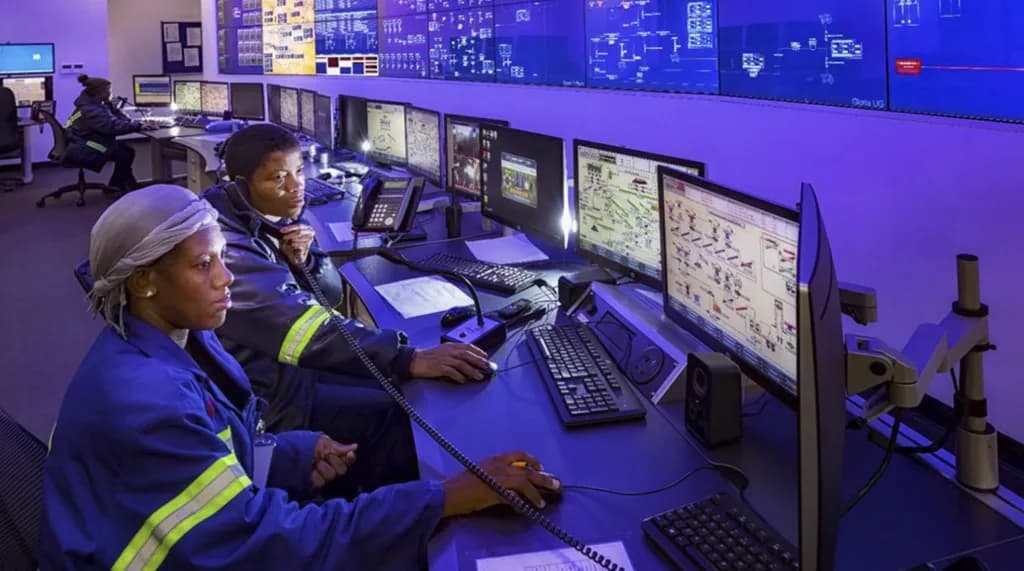
Mining operations are steadily integrating advanced tools ranging from sensor-driven equipment to remote operating platforms creating new entry points for women who were historically excluded from on-site production roles. As control rooms replace manual interfaces and data dashboards guide decision-making, digital skills training has become a practical route for women to build long-term careers across
Digital Skills Training as a Pathway for Women in Mining Operations Now
Mining operations are steadily integrating advanced tools ranging from sensor-driven equipment to remote operating platforms creating new entry points for women who were historically excluded from on-site production roles. As control rooms replace manual interfaces and data dashboards guide decision-making, digital skills training has become a practical route for women to build long-term careers across mine sites, processing plants, and technical support divisions.
Barriers Shift as Technology Restructures Mining Tech
Across many regions, women have been sidelined in mining due to restrictive labour norms, heavy manual tasks, and limited access to technical training. Today, however, the move toward screen-based oversight, diagnostics software, automated drilling consoles, and equipment monitoring systems means the workforce is changing. Mines now need individuals who can interpret telemetry, adjust plant parameters through AI integration digital interfaces, and troubleshoot equipment through system alerts rather than wrenches. Digital training programs give women the skills to thrive in these environments.
Training Designed for Real Mining Conditions
Effective programs go beyond basic computer instruction. They typically include training in pump and conveyor monitoring platforms, GIS based mapping for pit planning, drone-captured imaging analysis, machine-health dashboards, and entry-level coding for equipment logic adjustments. Practical exposure is central trainees often practice on simulators, run virtual plant startups, or assess sensor readings to detect irregularities in haul truck performance. These are tangible skills directly tied to production continuity and equipment reliability.
Opening Doors to Technical and Supervisory Roles
The strongest impact of digital training is its ability to give women access to roles previously closed off not through token inclusion, but through demonstrated technical ability. In a modern control room, an operator may oversee an entire hauling fleet from a single interface. A processing technician may adjust flotation chemistry through real-time digital feedback rather than manual sampling. A maintenance planner may use fault-prediction software to schedule repairs days before a breakdown threatens output. These are areas where women are already proving their capability when training pathways are accessible.
The benefits are not limited to entry-level positions. Digital fluency allows women to move into dispatch management, metallurgical balancing, environmental monitoring, blast design support, and systems optimisation. Proficiency in equipment analytics, sensor interpretation, and software-based reporting provides a path toward supervisory or specialist roles, particularly in mines increasingly defined by precision and reliability.
Mining companies that invest in women-focused digital upskilling often see improvements in task accuracy, cross-team communication, and operational discipline. A wider talent pool also reduces skill shortages that frequently slow production cycles. Communities around mine sites benefit as well; when women secure stable technical jobs, household income, school attendance, and local purchasing power tend to rise.
What Must Support These Training Pathways
For digital training initiatives to have stronger impact, support structures must accompany them. Women need transport assistance, predictable training schedules, access to protective equipment suited to their body sizes, and committed mentors who understand both the technical content and the realities of working on a mine. Without these, the training may open the door but fail to keep it open.
As mining operations increasingly rely on technologically guided decisions, digital skills are becoming the new foundation of Mine competence. For women, these skills are not merely an introduction to the industry they are a direct route into roles with influence, advancement potential, and long term stability.