Microwave Pre-Treatment in African Mining: Too Advanced or Ignored?
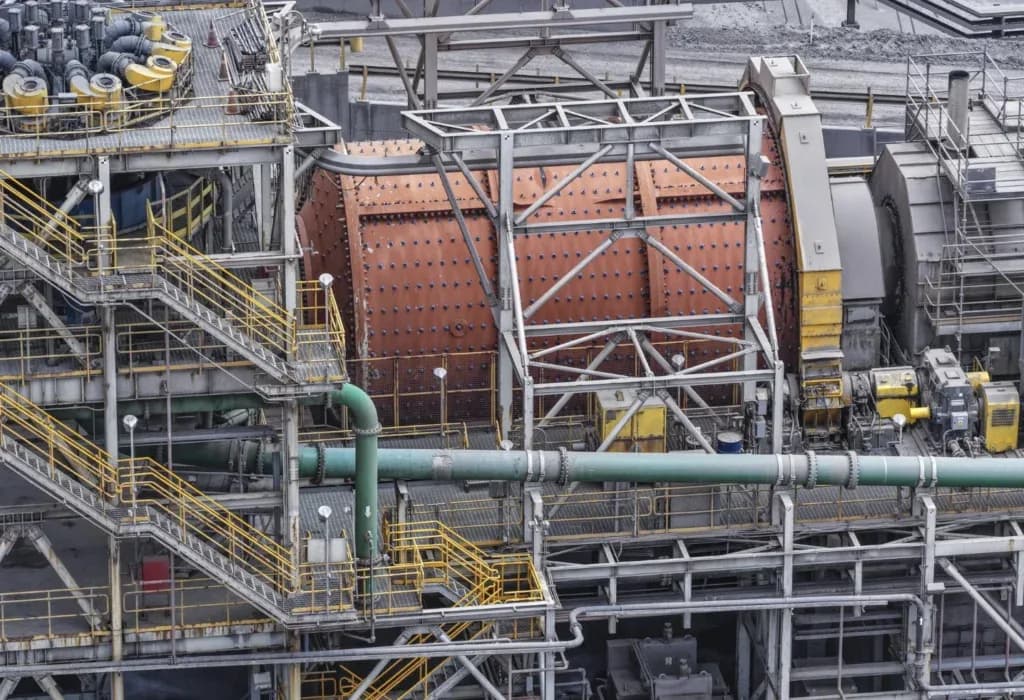
Mining companies spend a large portion of their energy breaking rock. Before valuable minerals can be extracted, ore must be crushed and ground into smaller particles. This process, known as comminution, is one of the most expensive and energy-intensive stages of mining. As deposits become more complex and minerals occur in finer grains, mines often
Microwave Pre-Treatment in African Mining: Too Advanced or Ignored?
Mining companies spend a large portion of their energy breaking rock. Before valuable minerals can be extracted, ore must be crushed and ground into smaller particles. This process, known as comminution, is one of the most expensive and energy-intensive stages of mining. As deposits become more complex and minerals occur in finer grains, mines often have to grind ore even further, increasing both electricity use and operational costs.
A Different Approach to Ore Preparation
One technology that has attracted attention as a possible solution is microwave pre-treatment. The idea is relatively simple. Before the ore enters the crushing or grinding circuit, it is exposed to microwave energy. Different minerals respond to this energy in different ways. Some heat up faster than others, creating tiny cracks inside the rock. These cracks weaken the ore, making it easier to break during the normal crushing and grinding stages.
The concept has attracted attention because comminution remains one of the mining industry’s most persistent inefficiencies. Grinding circuits often consume enormous amounts of electricity while achieving only incremental improvements in mineral liberation. Technologies that weaken ore before mechanical processing could therefore reduce power consumption while improving recovery rates. In laboratory settings, microwave treatment has demonstrated promising results, including improved fragmentation and reduced grinding energy.
The Challenge of Industrial Adoption
However, moving from controlled research environments to large-scale mining operations is far from straightforward. Installing microwave systems requires significant capital investment, and the equipment must be integrated into existing processing circuits, often between primary crushing and milling stages. For many mines operating with older infrastructure, retrofitting plants to accommodate microwave treatment may involve costly redesigns.
Energy considerations also complicate the equation. Microwave generators consume substantial electricity, meaning the economic benefits depend on whether the reduction in grinding energy outweighs the energy required for microwave treatment. In regions where power supply is unstable or electricity costs are high, operators may hesitate to introduce additional energy-dependent systems, even if they promise long-term efficiency gains.
Industry Caution and Operational Familiarity
There is also a cultural element within the mining industry. Mining operations tend to rely on technologies that have been tested over long periods. Crushers, mills, and flotation systems have decades of operational history behind them. Microwave ore treatment, by comparison, remains relatively new outside research and pilot projects.
However, ignoring the technology entirely may also carry risks. Many African mines are dealing with more complex ore bodies that require greater energy input to process. As electricity costs rise and sustainability pressures increase, companies may begin looking more seriously at ways to reduce energy consumption in their processing plants.
Technology Limits or Strategic Hesitation?
Microwave pre-treatment may not be the right solution for every mine. Some ores respond better to the technology than others, and the economics will vary from site to site. But the broader question remains important. In an industry where efficiency and energy use are becoming central concerns, technologies that help reduce grinding intensity deserve closer attention.
The slower adoption of microwave pre-treatment may therefore reflect two different realities. On one hand, the technology can appear difficult to introduce in plants designed around conventional crushing and grinding circuits, particularly where capital budgets and power infrastructure are already under pressure. On the other hand, mining companies are always cautious about adopting technologies that require changes to established processing strategies. In that sense, microwave pre-treatment may be less a case of technological limits and more a reflection of an industry that tends to favor incremental improvements over fundamental changes to how ore is prepared for processing.