MEPS – New Electric Motor Regulations In South Africa
Starting from 1 June 2025, new regulations targeting electric motors came into effect that will require virtually all new industrial application electric motors, of 0,75 kW output or more, that are imported and sold in the country. These will need to meet a minimum efficiency rating of an IE3 electric motor or a higher efficiency
MEPS – New Electric Motor Regulations In South Africa
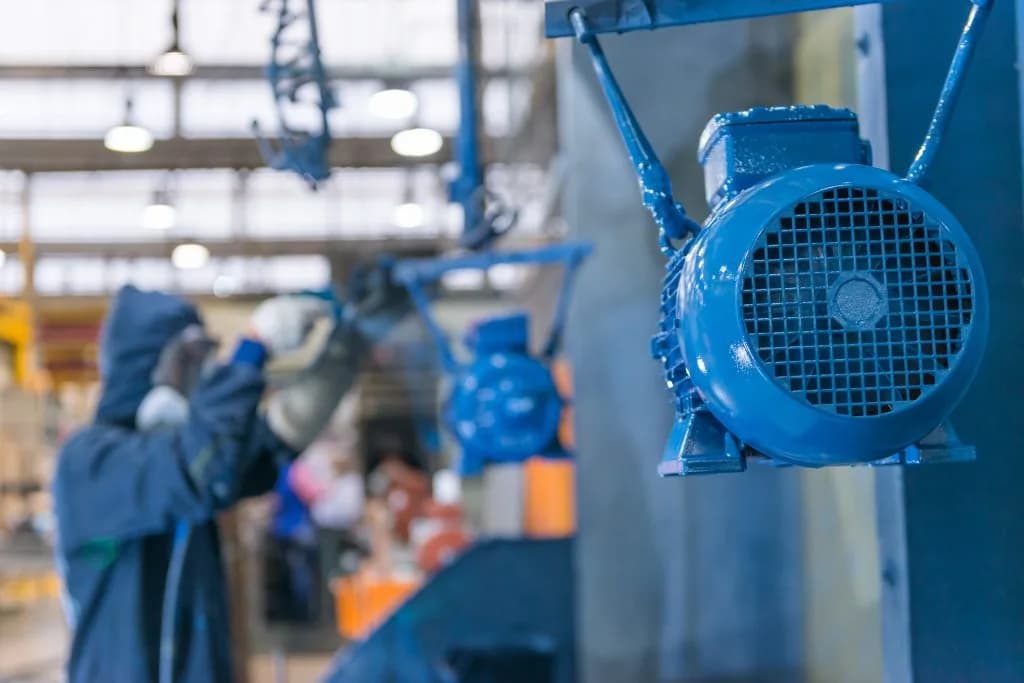
Starting from 1 June 2025, new regulations targeting electric motors came into effect that will require virtually all new industrial application electric motors, of 0,75 kW output or more, that are imported and sold in the country. These will need to meet a minimum efficiency rating of an IE3 electric motor or a higher efficiency rating.
The regulations exclude certain categories, such as single-speed motors with ten or more poles, multi-speed motors, motors that use mechanical commutators, and motors designed to operate entirely while immersed in a liquid, such as borehole pumps.
Businesses can continue to run operational IE1 and IE2 motors, replacing these upon failure. Existing IE1 and IE2 motor stock held by suppliers will still be allowed to be sold until May 2026
At a media briefing today, Harvest-Time Obadire, Power and Renewables Analyst, BMI commented:“Global energy consumption has doubled in the last 20 years, spurring international trend towards a more energy-secure and energy-efficient future. Industrial applications consume nearly a third of produced electricity, and electric motors are responsible for two-thirds of that consumption. In the South African context, the market is at risk of experiencing an energy deficit by the end of the decade while electricity prices also continue to place growing pressures on consumers across all sectors. When you look at these numbers, the MEPS regulation makes enormous business and societal sense.”
Lower Energy Usage and Lower Costs
The basic concept is one of ensuring lower energy consumption with the IE3 standard motor, improving energy efficiency by between 4% to 8% compared to IE1 and IE2 motors that will be phased out via a process of motor retirement when required, rather than enforced replacements.
While the energy consumption difference of 4-8% may not seem significant, one has to bear in mind that this should be seen against two criteria: The energy cost increases that are running at above inflation rates that this year will see a national increase of 12% excluding additional local municipal increases, and secondly that electric motors are estimated to consume around 40% of the total energy consumed in South Africa.
The result, over time, is a compounded savings trajectory that ensures return on investment for companies who adopt the new standard of energy efficient motors. When comparing cumulative running costs, IE3 savings typically return investments within one to five years. Premium IE3 motors that run continuously can recoup their costs in months.
Additional Savings Via Tax Deductions and Rebates
At a media briefing at WEG Africa today, Zadok Olinga, a specialist consultant on industrial energy audits and rebates, provided insights on additional tax savings and rebate opportunities that could provide further cost-saving benefits to companies.
Oliga stated that further tax rebates are provided under Section 12L regulations, where companies that can show a decrease in energy consumption are allowed by the national treasury to claim a tax rebate in its tax submissions.
Eskom also provides for further energy cost rebates and for major industrial companies or industries with intensive energy usage; these additional savings can be quite significant.
A case study provided by Zadok showed that a large industrial manufacturer had saved over R22 million after upgrading its manufacturing facilities with better energy-efficient equipment.
“Improving what we have by pursuing greater energy efficiency is a crucial strategy. MEPS regulations enable local businesses and utilities to improve their efficiency, and they also create new employment and market opportunities through local manufacturing and skills development.” – Zadok Olinga, Past President of the Southern Africa Energy Efficiency Confederation (SAEEC)
Summary of the new regulations:
- South Africa’s Minimum Energy Performance Standards (MEPS), effective from June 2025, will phase out IE1 and IE2 electric motors in favor of IE3 motors, in line with international trends.
- This change affects three-phase, low-voltage electric motors with two, four, six, or eight poles and a rated power output ranging from 0.75 kW to 375 kW.
- IE3 electric motors are 4–8% more efficient than IE1 and IE2 motors, and continuously running premium motors can recoup their replacement cost in a few months.
- End-user businesses are not obligated to replace their current motors and can phase out older motors as they fail.
- Electric motor manufacturers and original equipment manufacturers (OEMs) can sell current IE1 and IE2 stock until May 2026.
- WEG Africa has already phased out IE1 and IE2 motors from its product line, and has established local IE3 motor manufacturing lines.