Mahindra Considers Full Vehicle Assembly in South Africa with Durban CKD
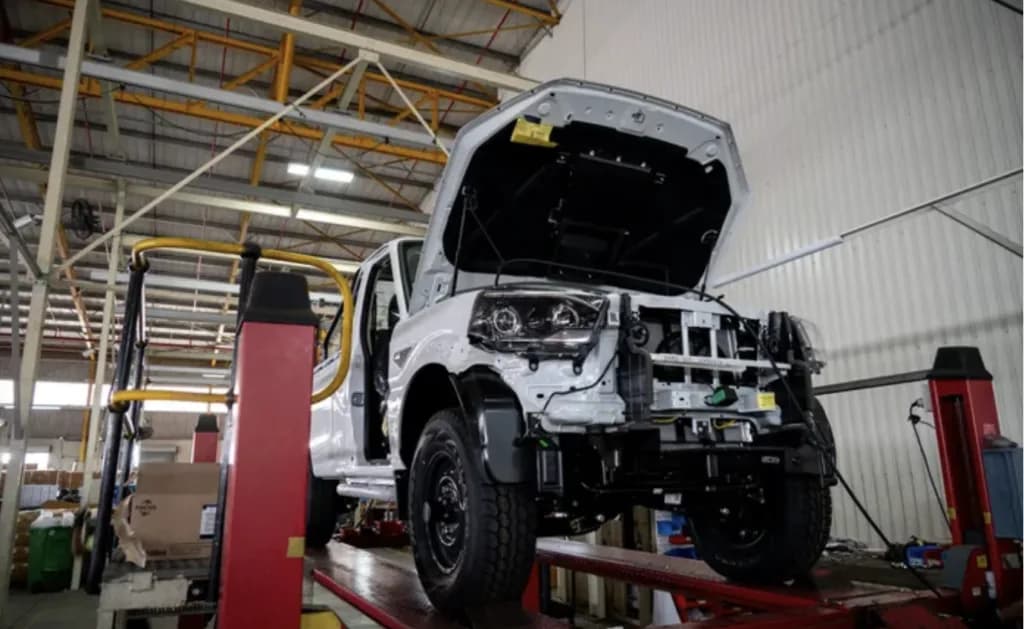
Indian automaker Mahindra is exploring the possibility of setting up a completely knocked down (CKD) production line at its facility near Durban. If approved, the company would ship fully disassembled vehicle kits to South Africa for final assembly locally. This would be a move from its current setup. Since 2018, Mahindra has used a semi-knocked
Mahindra Considers Full Vehicle Assembly in South Africa with Durban CKD
Indian automaker Mahindra is exploring the possibility of setting up a completely knocked down (CKD) production line at its facility near Durban. If approved, the company would ship fully disassembled vehicle kits to South Africa for final assembly locally.
This would be a move from its current setup. Since 2018, Mahindra has used a semi-knocked down (SKD) model, where larger pre-assembled vehicle sections are shipped from India and assembled in South Africa. According to Bloomberg, the discussions are based on people familiar with the matter. Mahindra is also in talks with the Industrial Development Corporation (IDC) to assess whether the expansion is viable, pointing to a longer-term push to deepen its presence in the country.
Focus on the Growing Mid-Market Segment
The potential move aligns with Mahindra’s aim to strengthen its position in South Africa’s affordable vehicle segment. The brand already performs strongly in rural and light commercial markets, particularly with its “Pik Up” model.
A change to full local assembly would also place the company closer to South Africa’s industrial policy goals, which continue to prioritise local manufacturing and job creation.
South Africa’s vehicle market has been recovering strongly. In 2025, new vehicle sales reached 596,818 units, up 15.7% from the previous year and above pre-pandemic levels.
Passenger vehicles drove much of that growth, rising 20.1% to 422,292 units. Industry forecasts from the National Association of Automobile Manufacturers of South Africa (Naamsa) expect another 9% to 11% growth in 2026, supported by easing inflation and slightly lower interest rates.
Competition Heating Up
The push also follows competition in South Africa’s automotive market intensifies, particularly from Chinese manufacturers. With pressure mounting in their home and Western markets, several Chinese brands have increasingly turned to South Africa as a key expansion base. This has already translated into a strong local presence, with close to fifteen Chinese automotive brands now operating through assembly or distribution channels, directly challenging established players such as Volkswagen, Toyota, and Mercedes-Benz. The momentum has also extended into major industrial moves, most notably Chery’s agreement to take over Nissan’s Rosslyn plant near Pretoria. The facility, which has been in operation for decades, is expected to come under Chery’s control by mid-2026 and will serve both the South African and wider regional market.