What Happens After a Mine Closes? The Economic Afterlife of African Mining Towns
In the midst of Africa’s mining boom, fueled by cobalt, copper, lithium, and rare earths powering EVs and green technology, one reality stands out: these resources are finite. Each day, mining operations haul the first tonne, crush fresh ore, drill and blast new faces, and smelt gold and copper concentrates, with each “first” quietly marking
What Happens After a Mine Closes? The Economic Afterlife of African Mining Towns
In the midst of Africa’s mining boom, fueled by cobalt, copper, lithium, and rare earths powering EVs and green technology, one reality stands out: these resources are finite. Each day, mining operations haul the first tonne, crush fresh ore, drill and blast new faces, and smelt gold and copper concentrates, with each “first” quietly marking another step toward the last. From Zambia’s Copperbelt to South Africa’s goldfields and Ghana’s Ashanti region, this cycle of extraction and decline remains consistent across African mining operations. With every passing day, extraction edges these operations closer to mine closure and the end of a mine’s life, until they eventually become unsustainable and uneconomical. This is the harsh reality behind the boom.
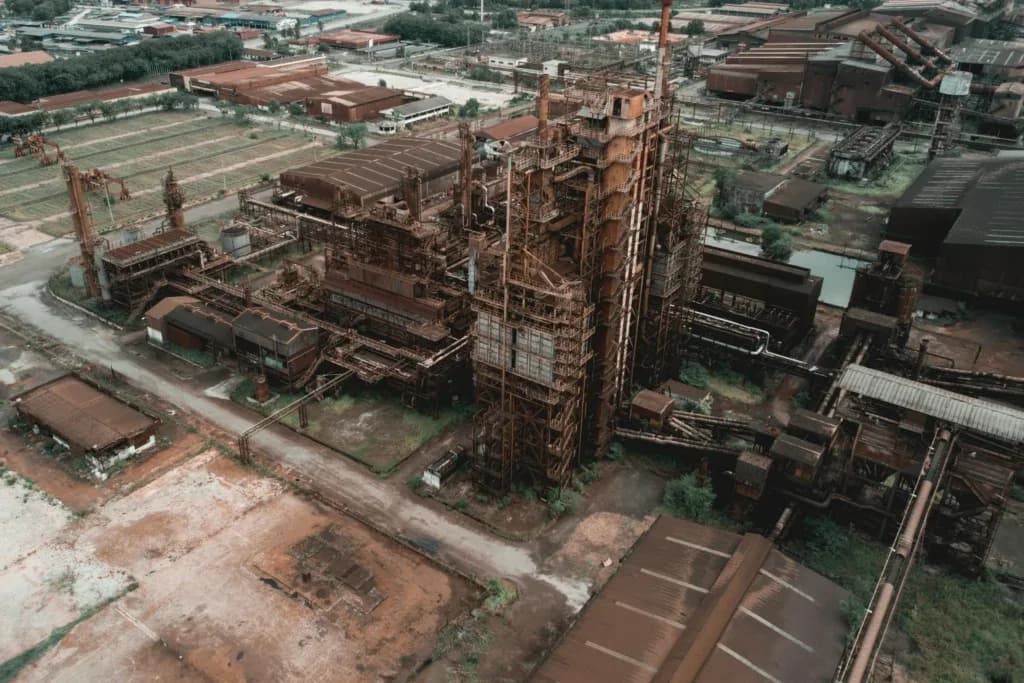
But the story does not end when the mine stops operating. Hundreds of settlements were built on a single premise: extract, process, export. When the ore runs out or prices collapse, the pit may close, but the town remains. What follows is a complex economic afterlife shaped by geography, governance, and how well the boom years were managed.
This begs the question: what really happens after a mine closes in Africa?
The typical arc is boom, bust, limbo
Mining towns grow fast. Labor migrates in, informal businesses multiply, and local governments become dependent on company taxes and royalties. Housing, retail, and transport expand to meet mine schedules. But few towns diversify while revenues flow. When closure arrives, the dominant employer vanishes, often within months.
The immediate effects are measurable. Unemployment spikes above 40% in some former gold towns in Gauteng and Free State. Property values drop, sometimes by half within two years, eroding household wealth and municipal rates bases. Young people leave first, creating a demographic hollowing where the population ages even as service demands remain. Infrastructure built for 50,000 people suddenly serves 20,000, making per-capita maintenance costs unsustainable.
Three pathways in the afterlife
Empirically, African mining towns tend to follow one of three trajectories after closure.
The difference between the first and last pathways is hardly geology. It is governance. Ghana’s Minerals and Mining Act requires a reclamation and closure plan, including social provisions. South Africa’s Mineral and Petroleum Resources Development Act mandates a Social and Labour Plan, but enforcement has been uneven. When closure planning starts only after production stops, towns enter decline by default.
What Mining Towns really need are assets, not just aid
Successful transitions leverage three assets mining towns possess without realizing it.
- Fixed capital: Power lines, water systems, rail spurs, and workshops are expensive to build. In Botswana, the closed BCL mine facilities in Selebi-Phikwe were repurposed for a special economic zone focused on manufacturing. The grid connection became the pitch to investors.
- Human capital: Miners have mechanical, electrical, and safety skills. In Zambia’s Kabwe, vocational centers retrained former lead miners for solar installation and agritech repair. The shift is not seamless, but wages in maintenance trades beat informal trading.
- Location: Some towns sit on trade corridors. Kolwezi in the DRC remains a logistics hub even as individual pits close, because cobalt still moves through it. Proximity to borders or highways matters more than ore reserves after closure.
The limits of diversification
Tourism and agriculture are common prescriptions, but both face constraints. Mine sites can become heritage or adventure tourism, but only if they are safe, accessible, and near existing tourist flows. Agriculture absorbs labor but struggles when soils are contaminated or water tables disrupted by decades of extraction. Kabwe still deals with lead contamination that complicates urban farming.
A harder truth is that not every town should be saved at full size. Planned shrinkage, where infrastructure is consolidated and outlying areas returned to other uses, has worked in parts of the Copperbelt. It is politically difficult but financially realistic.
Financing the afterlife
The timing of money matters. Royalties paid during operation seldom reach ring-fenced closure funds. Canada and Australia now require financial surety for closure before extraction begins. A handful of African jurisdictions are moving this way. Botswana’s Mine Closure and Rehabilitation Fund and Namibia’s environmental guarantees are early models. Without pre-funded mechanisms, towns negotiate with companies that no longer have revenue, which weakens outcomes.
The stakes beyond economics
When towns fail, the costs are regional. Unemployment feeds migration to primate cities, straining urban services. Abandoned shafts create safety and environmental hazards. Acid mine drainage in South Africa’s Witwatersrand continues to burden public budgets decades after closures.
The economic afterlife of a mining town is therefore not a local curiosity. It is a test of whether resource wealth was converted into durable development. Towns that plan for closure before opening day tend to write better second chapters. Those that do not inherit a harder arithmetic: fewer people, fewer jobs, and the same kilometers of pipeline and road to maintain. This is the moment that reveals whether the resource boom was truly development or just extraction, and whether governance and ESG principles were actually implemented.