The Real Cost of Illegal Mining: Survival, Risk, and SMEs in the Informal Economy
Illegal mining is usually treated as a law-and-order issue. Governments focus on enforcement, mining companies raise concerns about losses, and public debate centres on environmental damage. That framing misses a key point. Across several African countries, illegal mining is closely linked to gaps in the formal SME economy, where limited access to jobs, finance, and
The Real Cost of Illegal Mining: Survival, Risk, and SMEs in the Informal Economy
Illegal mining is usually treated as a law-and-order issue. Governments focus on enforcement, mining companies raise concerns about losses, and public debate centres on environmental damage. That framing misses a key point. Across several African countries, illegal mining is closely linked to gaps in the formal SME economy, where limited access to jobs, finance, and structured business opportunities pushes individuals into high-risk and life threatening, informal activity.
Survival and Risks on the Ground
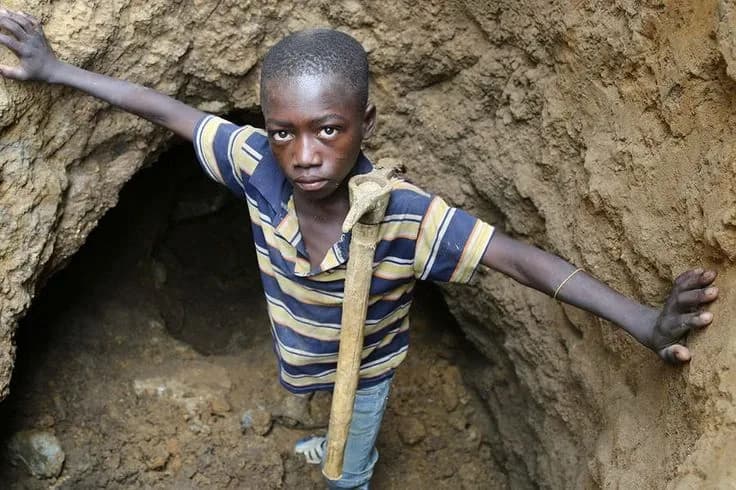
In regions where jobs are scarce, mining becomes one of the few available income options. Young people are drawn to it because it provides immediate cash, unlike formal employment, which often requires qualifications, networks, or lengthy hiring processes. Informal mining has a low barrier to entry, but that accessibility comes with significant risk. For those with limited alternatives, it is less a viable path and more a reflection of constrained economic choices.
The risks are significant. Informal mining takes place in unstable shafts, with no protective equipment and no safety standards. Collapses, injuries, and exposure to toxic substances are common. These incidents are not always recorded, but the consequences are visible in mining communities. Beyond physical danger, miners also face arrest during enforcement operations, creating a constant layer of uncertainty.
The Informal Economy and Tensions
Illegal mining also supports a wider informal economy. Around mining sites, there are food vendors, transport providers, equipment suppliers, and traders. These activities generate income for people who are not directly involved in extraction. Entire local economies form around mining activity. When enforcement operations shut down sites, the impact extends beyond miners to everyone connected to these networks.
There is also tension between informal miners and licensed operators. Abandoned or underutilised concessions often attract informal activity, creating disputes over access. Licensed companies treat this as a security concern, while informal miners see it as a question of access to resources located within their communities. This difference in perspective continues to profile how conflicts and its ripple effects unfold on the ground.
In the absence of clear or enforceable access rights, informal miners often create their own systems of control over mining sites. Groups mark territories, regulate entry, and enforce rules without formal authority. These self-imposed arrangements can quickly lead to conflict, especially when multiple groups claim the same area or when new entrants attempt to operate without permission. Disputes over access, control of shafts, and sharing of proceeds can escalate into violence, with clashes occurring between rival groups or between informal miners and security forces. In this context, violence is not random but tied to competition over limited resources and the lack of recognised, enforceable structures governing who has the right to mine.
Environmental Impact and Policy Response
The environmental impact is clear and measurable. Unregulated mining leads to land degradation, polluted water sources, and long-term damage to ecosystems. The use of mercury in gold extraction introduces serious health risks for both miners and nearby communities. These effects do not end when mining stops; they remain in the soil and water.
Responses to illegal mining still rely heavily on enforcement. Raids and shutdowns disrupt activity, but they do not remove the underlying drivers. Without alternative income options, people return to mining. In some cases, operations become more concealed, making oversight even more difficult.
A different approach is starting to take shape in parts of the continent, with implications for small businesses and emerging ventures. Governments are introducing licensing systems for small-scale miners, alongside training and support aimed at improving safety and operations. This creates space for informal operators to transition into recognised small enterprises rather than remain outside the system. For SMEs, it opens up opportunities to formalise, access financing, and build more stable businesses around mining activity. Progress remains uneven, but the shift reflects a growing recognition that informal mining is not separate from the economy it is already part of the SME landscape.
Seeing The Bigger Picture
Illegal mining reflects a deeper dark and economic reality. It takes root where formal systems fail to absorb labour and where access to stable income remains limited. In these gaps, people build their own means of survival, even when the risks are high and the returns uncertain. Addressing it requires more than enforcement alone. It calls for a closer look at the structural conditions that sustain it limited job creation, uneven access to capital, and weak local economies. Without confronting these underlying factors, illegal mining is likely to persist, regardless of how often it is shut down or how many lives are lost.