Highlights of South Africa's 2026 Budget Speech
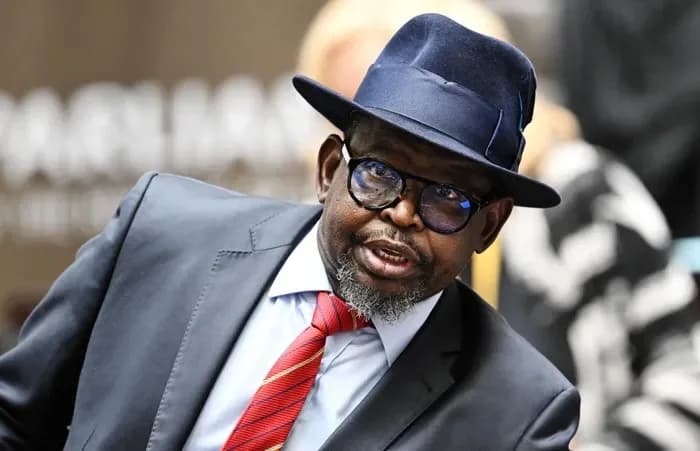
February 25, 2026: Finance Minister Enoch Godongwana delivered a notably optimistic Budget Speech in Parliament this afternoon, marking a pivotal shift toward fiscal stability and economic recovery in South Africa. The address, themed around "restoring economic resilience through structural reforms and disciplined fiscal management," highlighted the country's progress in exiting the FATF grey list, securing
Highlights of South Africa's 2026 Budget Speech
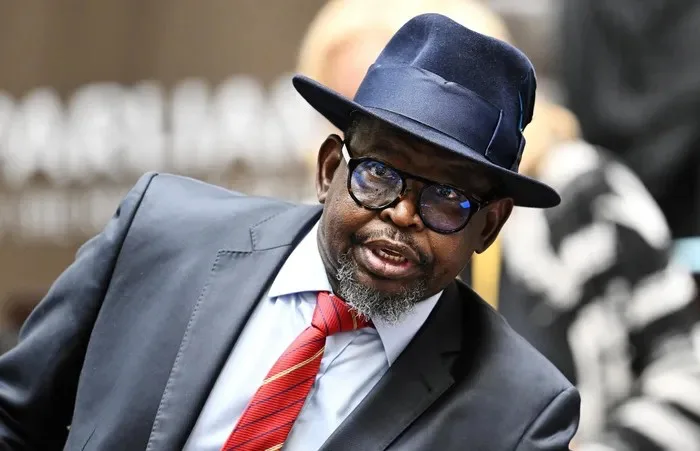
February 25, 2026: Finance Minister Enoch Godongwana delivered a notably optimistic Budget Speech in Parliament this afternoon, marking a pivotal shift toward fiscal stability and economic recovery in South Africa. The address, themed around “restoring economic resilience through structural reforms and disciplined fiscal management,” highlighted the country’s progress in exiting the FATF grey list, securing a credit rating upgrade after 16 years, and reducing borrowing costs.
Godongwana emphasized four core pillars for sustainable growth:
- maintaining macroeconomic stability,
- implementing structural reforms,
- investing in growth-enhancing infrastructure,
- and building state capacity.
This budget reflects a departure from the turbulence of previous years, prioritizing efficiency in public spending and leveraging commodity windfalls to avoid major tax hikes. With total spending projected at R2.67 trillion for 2026/27, including a R5-billion contingency reserve for disasters, the focus was on inclusive growth while safeguarding socioeconomic rights.
The minister’s speech highlighted reforms in key sectors like energy (stabilising supply and unlocking private renewable investments), logistics (public-private partnerships for rail and ports), local government (performance-linked models for utilities), and spatial planning (affordable housing near economic hubs).
Additional initiatives include managing R88 billion in unclaimed financial assets through a central administrator, regulating crypto assets, promoting data infrastructure, easing capital flows for the African Continental Free Trade Agreement, modernising payments via PayInc, and reforming skills development with dual-training systems.
Budget Increases and Reductions by Sector
The budget allocations prioritize social welfare, accounting for over 60% of non-interest spending in the medium term, with basic education, health, and social protection comprising 70.3% in 2026/27. Social grants receive R292.8 billion for 2026/27, supporting 26.5 million beneficiaries. Increases effective April 2026 include: old age, disability, and care dependency grants up by R80 to R2,400; war veterans by R80 to R2,420; foster care to R1,290 (April, +R40) and R1,300 (October, +R10); child support and grant-in-aid by R20 to R580. The social relief of distress grant remains unchanged. Fraud reduction in grants yields R3 billion in savings through biometric upgrades, terminating 35,000 ineligible grants.
Peace and security spending rises from R268.2 billion in 2025/26 to R291.2 billion in 2028/29. The Border Management Authority gets R990 million medium-term for 738 positions. Defence receives R2.7 billion for operations, including air force capabilities, plus R1 billion from the Criminal Assets Recovery Account for organized crime. Police allocations include another R1 billion for similar purposes. R883.8 million shifts from Justice to the Office of the Chief Justice for budget independence, with R687 million added for judiciary capacity.
Education Budget
Basic education, the largest expenditure at 23.7% medium-term, gets R22.7 billion for carry-through costs, primarily early childhood development, and R9.9 billion for employee compensation. The early childhood development grant receives R12.8 billion medium-term, expanding access to 300,000 more children with a R24 per-child daily subsidy. The National School Nutrition Programme aligns with food inflation for 9.9 million learners in 20,000 schools.
Health Budget
Health allocations include R26 billion to provinces for HIV/AIDS programs, covering antiretrovirals and prevention. Provinces must repurpose funds for Pepfar obligations amid U.S. withdrawal. R21.3 billion medium-term supports doctor compensation, employment, and goods/services shortfalls.
Local Government
Local government receives R182.3 billion, with R86.9 billion for free basic services to 11.2 million households. R27.7 billion medium-term funds performance-linked reforms in metro trading services (electricity, water, etc.), targeting cities like eThekwini and Johannesburg. The Municipal Infrastructure Grant is reformed with a split delivery model. R1.5 billion adds to the provincial roads maintenance grant for disaster costs.
Infrastructure
Infrastructure exceeds R1 trillion medium-term: R577.4 billion by state-owned entities, R217.8 billion by provinces, R205.7 billion by municipalities. Transport/logistics dominates, with Sanral maintaining 27,000km and resurfacing 2,000km. While this is a limited amount considering the road maintenance backlog in the country, it provides for some relief and improvement.
Prasa gets R5.8 billion for corridors and a special appropriation of R1 billion for rolling stock. Water focuses on bulk augmentation and refurbishment, desperately needed across most of the country. Energy emphasizes private investment and will provide a Credit Guarantee Vehicle with the World Bank.
Other increases: Provincial equitable share adds R342 million for Grade R teacher pay, R340 million for early retirement, R319 million for presidential employment initiatives. Special appropriations include R1 billion for IFC subscription and R700 million for Communications.
Reductions total R12 billion in targeted savings medium-term, including R8.4 billion from the Public Transport Network Grant (shifted to indirect bus costs).
Tax Amendments
Godongwana withdrew the R20 billion provisional tax increases from the 2025 Budget, thanks to R21.3 billion upward revenue revisions for 2025/26 from higher VAT, corporate income tax, and dividends. No changes to VAT, personal, or corporate income tax rates. Personal brackets and rebates have been adjust fully for inflation for the first time in three years. The tax-free investment limit rises from R36,000 to R46,000 annually; retirement fund deductions from R350,000 to R430,000. VAT registration threshold for small businesses increases from R1 million to R2.3 million. Capital gains tax exemption for small business sales by older persons rises from R1.8 million to R2.7 million (for businesses up to R15 million).
Excise duties on tobacco and alcohol align with inflation: tobacco (cigarettes up to R23.58 per 20-pack); alcohol (beer/cider +8 cents per 340ml, wine +15 cents per 750ml, spirits +R3.20 per 750ml). Fuel levies increase: general +9 cents/litre petrol/8 cents diesel; carbon +5 cents petrol/6 cents diesel; RAF +7 cents/litre.
Anticipated GDP Growth, Deficits, and Debt Levels
Real GDP growth is projected at 1.6% for 2026, up from 1.4% estimated for 2025, strengthening in the second half of 2025. Medium-term average is 1.8%, reaching 2% by 2028. Risks include logistics issues, infrastructure weaknesses, and diseases like foot-and-mouth.
The consolidated budget deficit narrows to 4.5% of GDP for 2025/26 (from 4.8% previously), 4% in 2026/27, and 3.1% thereafter. The main budget primary surplus is 0.9% of GDP in 2025/26, rising to 1.6% in 2026/27, 1.9% in 2027/28, and 2.3% by 2028/29.
Gross debt stabilizes at 78.9% of GDP in 2025/26 (slightly higher due to weaker nominal GDP and increased issuance), falling to 77.3% in 2026/27 and 76.5% by 2028/29. Debt-service costs are declining, reflecting improved fiscal health.
Morgan Stanley economist Andrea Masia described the budget as potentially “one of the most bullish budget documents prepared by National Treasury in many a year.”
Deloitte Africa Analysts emphasised that with debt stabilising near 78% of GDP and growth projected at 1.6% for 2026 (up from 1.4% in 2025), the speech tests the government’s resolve to deliver on commitments like private sector involvement in energy/logistics and inclusive growth, calling it a step toward resilience, though more aggressive CapEx would be needed for faster economic expansion.
Godongwana’s budget potentially signals a “turning point” for South Africa, that hopefully will see a balancing of fiscal prudence with investments in infrastructure, reforms and social support to foster economic growth and reduce social vulnerabilities.