Guerrilla Growth Tactics: Drive Sales in African Markets Without Paying for Ads
African startups and scale-ups are today operating in one of the world’s most dynamic yet capital-constrained environments. With funding at multi-year lows and ad costs on platforms like Meta and Google rising 20–30% in key markets, bootstrapped teams across the continent cannot compete on paid media budgets. Enter guerrilla marketing: unconventional, low- or no-cost tactics
Guerrilla Growth Tactics: Drive Sales in African Markets Without Paying for Ads
African startups and scale-ups are today operating in one of the world’s most dynamic yet capital-constrained environments. With funding at multi-year lows and ad costs on platforms like Meta and Google rising 20–30% in key markets, bootstrapped teams across the continent cannot compete on paid media budgets.
Enter guerrilla marketing: unconventional, low- or no-cost tactics that create surprise, spark word-of-mouth, and drive measurable sales through creativity rather than cash.
Unlike traditional ads, guerrilla marketing works on leveraging public spaces, community networks, cultural moments, and digital amplification (especially WhatsApp and TikTok) to generate earned media. In Africa’s informal economies, where 80%+ of transactions still happen offline, these tactics feel authentic and culturally resonant. They turn customers into advocates, often delivering a 5–10x Return on Investment (ROI) compared to paid campaigns when executed well. Recent examples show guerrilla marketing moves can achieve millions in earned impressions or direct sales spikes without a single sponsored post.
African Wins: Creativity Meets Local Realities
Africa’s most effective guerrilla campaigns succeed by embedding deeply into daily life such as markets, boda boda routes (Pathways avoiding main traffic roads), community events, and mobile-first sharing, rather than imposing foreign marketing templates.
In March 2026, Nigerian creator-economy platforms Selar and Mainstack provided a textbook – if somewhat messy- case. During Mainstack’s Moment2026 conference at Lagos’ Landmark Event Centre, Selar secured venue approval for large motivational billboards inside the rival’s event space. Taglines like “Create with intention” and “Create what sells” prominently featured Selar’s logo. The ambush generated buzz among 1,000+ attendees and spread rapidly on X, delivering free visibility to a competitor’s high-value audience. While the billboards were eventually removed after complaints and the stunt escalated into a public feud involving talent poaching, Selar gained significant earned media and demonstrated how precise venue infiltration can work in Africa’s tight-knit tech scene.
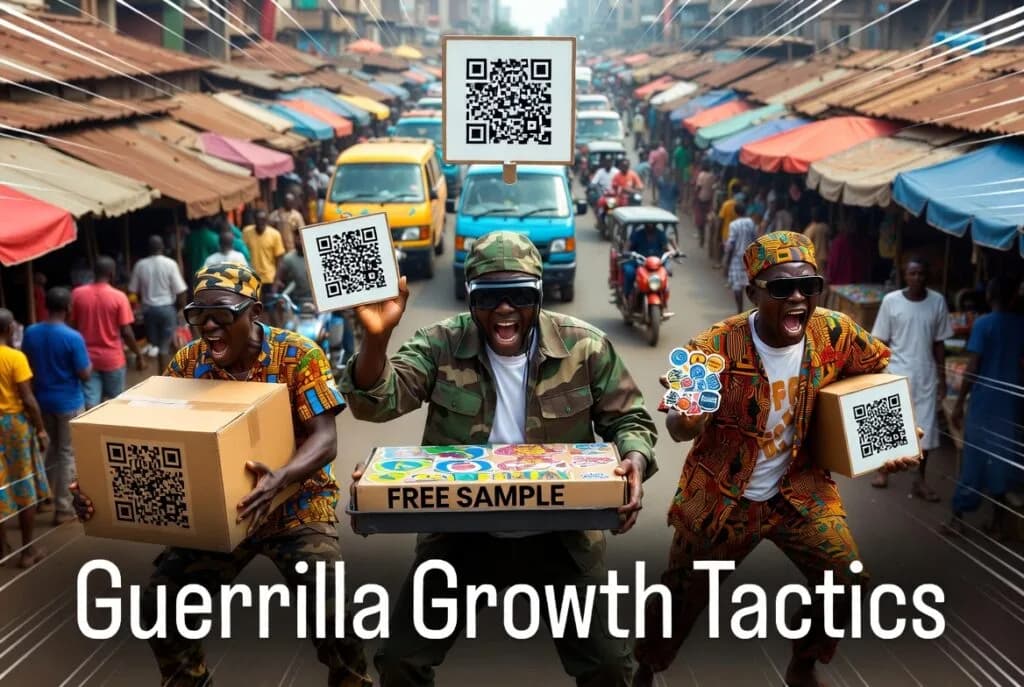
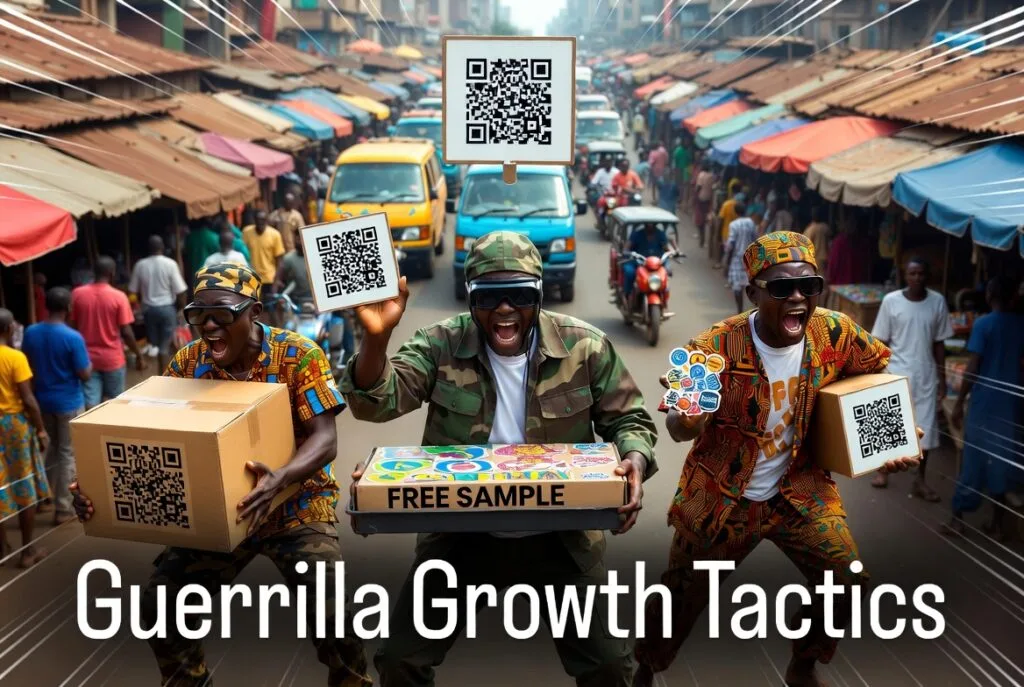
Kenyan small businesses offer simpler, highly replicable models. A great example of this was Mama’s Kitchen food truck parked in busy marketplaces, offered free samples of new menu items, and encouraged customers to share photos with a branded hashtag. The campaign created organic social proof and foot traffic without paid promotion. Boda Boda Delivery outfitted motorcycle taxi riders with branded jackets and helmets, turning thousands of daily riders into moving billboards while building instant trust in a market where speed and reliability matter most. Other Kenyan tactics include pop-up stores inside public buses during rush hour, graffiti collaborations with local artists to beautify walls while showcasing interior design services, and puzzle installations in shopping malls that rewarded solvers with app downloads.
Respect Local Realities
These campaigns succeed because they respect African realities: high foot traffic in informal markets, trust built through personal interaction, and rapid sharing via WhatsApp groups. Flash sales in public parks or university campuses create urgency; community baking workshops or recycling art exhibitions position brands as socially conscious while driving loyalty. The Results? Direct sales lifts of between 30–50% in a single weekend and sustained customer acquisition at near-zero marginal cost.
South African and broader examples echo this with street performers in flash-mob dances for fashion drops or utility branding like free phone-charging stations in high-traffic areas. The common thread is hyper-local relevance, tactics that feel like community events rather than sales pitches.
Global Lessons African Businesses Can Import
Global campaigns prove guerrilla marketing scales when rooted in surprise and share-ability which are principles directly transferable to Africa’s youthful, mobile-first demographics.
The 2025 A24 film Marty Supreme campaign, starring Timothée Chalamet, is a masterclass. An 18-minute “leaked” video of Chalamet pitching absurd stunts (orange blimp, Empire State Building projection, Las Vegas Sphere takeover) went viral first, then the team executed the ideas. A Hollywood pop-up drew LAPD-level crowds; earned media coverage flooded global outlets. Presales shattered records with a $145,933 per-screen average. African founders can adapt this layered approach: seed a “leaked” WhatsApp voice note or TikTok challenge about your product, then deliver the stunt in a Nairobi market or Lagos traffic jam.
Australian fashion brand Meshki pulled off a 2025 ambush at the Melbourne F1 Grand Prix without official sponsorship. They created “Real-Time Race Day Looks” featuring influencers and WAGs wearing Meshki outfits, displayed on digital tram-stop screens and a wrapped tram with instant QR codes. The brand owned the event’s visual narrative at a fraction of sponsorship cost. In African terms, imagine a Kenyan startup “ambushing” a major football match or music festival with branded matatus (Minibus) or pop-up fitting rooms outside the venue and capturing the crowd without paying for tickets.
Imagination Is your only Limitation
Other adaptable ideas include McDonald’s turning pedestrian crossings into giant fries boxes (pedestrians become part of the ad) or brands installing branded utility installations like free Wi-Fi hotspots or water refill stations. In 2026, AR-enhanced guerrilla tactics such as scavenger hunts via free phone apps are exploding; African teams can replicate this cheaply using WhatsApp location sharing or USSD codes for low-data users.
The lesson for African businesses is this – timing and position matters. Tie stunts to cultural moments (festivals, elections, sports) or pain points (traffic, power outages, youth unemployment). Combine offline surprise with instant digital sharing to amplify reach exponentially.
Legal, Ethical, and Environmental Guardrails
Guerrilla marketing’s edge that often operates in grey areas, also carries risks. Ignoring them can turn a viral win into costly fines, lawsuits, or brand damage.
Legal Considerations: Most public-space tactics require permits. Unauthorized billboards, flash mobs, or installations can trigger fines (hundreds to thousands of dollars per violation in cities like Lagos or Nairobi) or forced removal. Venue ambushes like Selar’s succeeded initially only because approval was secured; skipping disclosure risks trespassing claims or contract breaches. False or misleading claims (exaggerated product benefits) violate advertising standards in most African jurisdictions.
The Solution: Consult local councils early, document approvals, and use lawyers for high-visibility stunts.
Ethical Considerations: Deception erodes trust. Paid actors posing as genuine customers or undisclosed sponsorships in “organic” campaigns invite backlash, especially in Africa’s tight social networks where word spreads fast. Talent poaching or public feuds (as in the Selar case) can damage industry reputation. A key approach is to prioritise transparency – clearly label branded content, and respect communities. Avoid tactics that exploit vulnerabilities or create negative emotions like fear.
Environmental Considerations: Litter from flyers, single-use props, or non-biodegradable installations harms brand perception in eco-conscious markets. Consumers increasingly punish wasteful campaigns. Opt for sustainable materials (recycled art, digital QR codes instead of paper), leave spaces cleaner than you found them, and tie stunts to positive causes like recycling exhibitions. Green guerrilla marketing not only avoids fines but builds loyalty.
Smart teams run a quick risk checklist: Is this legal here? Is it honest? Is it sustainable? Measure success beyond buzz and track actual sales, repeat purchases, and sentiment.
Getting Started: Your Guerrilla Playbook
African entrepreneurs already possess the ultimate advantages such as ingenuity, community access, and mobile connectivity. A good starting point is to map high-traffic informal spots, test one low-risk tactic (free samples + hashtag), and track results via simple WhatsApp polls or UTM links. Look to partner with local influencers for authentic reach. Combine offline surprise with digital amplification for compounding effect.
In an era of ad fatigue and funding droughts, guerrilla growth is a smart startup move. Brands that master surprise, relevance, and responsibility, not only have the potential to drive sales today but build lasting cultural equity tomorrow. The next viral success in Lagos or Nairobi won’t come from a big budget; it will come from a smart, bold idea executed with precision and care.
Your market is waiting—go surprise them.