Governance – South Africa's Achilles Heel
By Noah Ncube Every South African knows the moment when government failure becomes real. It is when the tap runs dry. When refuse piles up on the pavement. When potholes multiply faster than they are repaired. Or when a municipal bill arrives for services that were never delivered. These are symptoms of a deeper structural
Governance – South Africa's Achilles Heel
By Noah Ncube
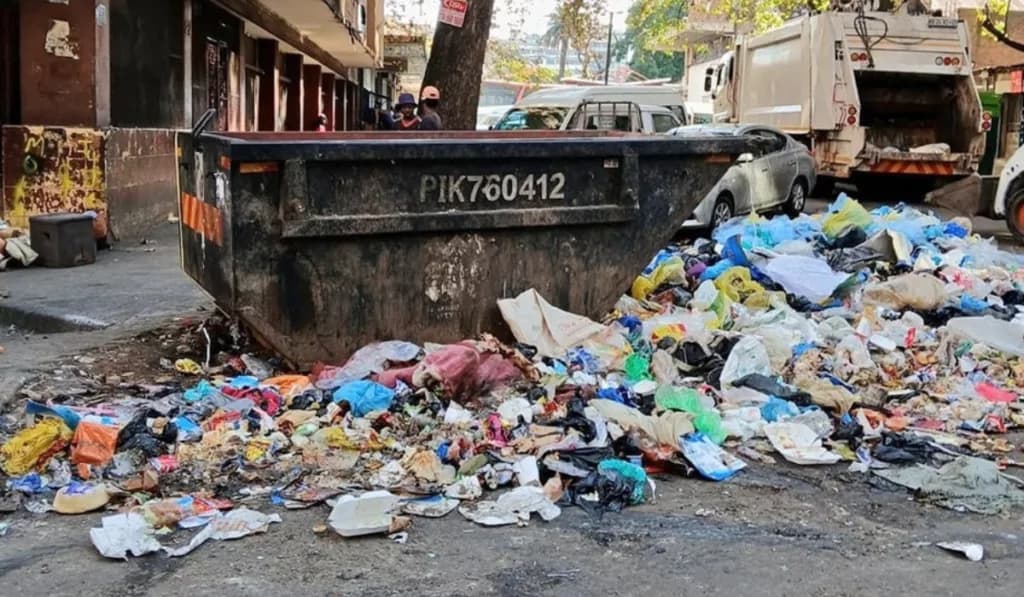
Every South African knows the moment when government failure becomes real. It is when the tap runs dry. When refuse piles up on the pavement. When potholes multiply faster than they are repaired. Or when a municipal bill arrives for services that were never delivered. These are symptoms of a deeper structural problem.
South Africa (SA) is not simply struggling with service delivery. It is struggling with governance itself.
SA has built a complex state architecture that often struggles to coordinate decisions, manage resources, and execute projects. When that system falters, the consequences ripple through every community.
The numbers tell part of the story. South Africa now has more than 62 million citizens placing growing demands on housing, healthcare, water, sanitation and education. Unemployment remains above 32 percent, pushing millions of households into deeper dependence on public support. Infrastructure deficits continue to widen as municipalities battle ageing systems and limited budgets.
The challenge is one of governance rather than resources. SA’s constitutional framework divides authority across three spheres of government: national, provincial and local.
The intention was to create accountability and decentralised decision making. Instead, the structure often produces blurred responsibility and fragmented implementation.
Citizens Carry The Weight of Municipal Failures
Municipalities sit at the centre of this tension. There are 257 municipalities tasked with delivering essential services such as water, electricity, sanitation and waste management. In many cases they are expected to manage billion-rand infrastructure systems while operating with limited technical capacity and unstable finances.
When service delivery breaks down the blame game begins. National government points to failing municipalities. Municipalities blame insufficient funding or provincial oversight failures. Citizens are left with the consequences. Breaking this cycle requires a fundamental shift in how government institutions work together.
New Collaborative Development Model Built on Technology
One attempt to address this challenge is the District Development Model. The concept is built around a simple principle called One District One Plan. Instead of departments planning in isolation, the model encourages national, provincial and local government to align their priorities within a single integrated development strategy.
If the idea works, it could reduce duplication, improve planning and ensure that infrastructure spending actually meets local needs. But coordination frameworks alone will not fix governance problems if institutions lack the systems and skills to execute them.
That is where technology can play a decisive role. One of South Africa’s most successful examples of digital governance is the electronic tax filing system developed by the South African Revenue Service. The platform transformed how citizens interact with the tax authority. Compliance improved, administrative costs dropped and the relationship between the state and taxpayers became more efficient.
Municipalities could achieve similar breakthroughs by modernising their systems. Digital platforms could allow residents to log service complaints instantly, track responses and monitor infrastructure repairs. Integrated billing systems could eliminate many of the errors that currently frustrate ratepayers. Data dashboards could give officials real time insight into infrastructure maintenance, service demand and budget performance.
Technology will not eliminate governance failures overnight. But it can reduce inefficiency, increase transparency and rebuild public trust. Accountability must improve at the same time.
Financial Accountability Crucial
The Auditor General has repeatedly highlighted serious weaknesses in municipal financial management. Billions of rand are lost every year through irregular expenditure, procurement failures and weak supply chain oversight. These are not abstract accounting problems. They represent schools not built, pipes not replaced and communities left without services.
Greater transparency in procurement, stronger oversight committees and wider adoption of electronic procurement systems could significantly reduce these risks. But governance reform cannot stop at internal government improvements.
State Must Build Competence And Capability
South Africa faces enormous infrastructure investment needs. Water systems require upgrades, transport networks need expansion and energy infrastructure must continue evolving. The scale of these demands means the state cannot do everything alone.
At the heart of all these solutions lies a simple truth. Governance is ultimately about institutional capability.
South Africa needs a stronger professional public administration that can plan infrastructure, manage budgets and execute projects consistently. Municipalities require engineers, planners, financial managers and project specialists who are empowered to perform their roles effectively. Without that capacity even the best policy frameworks will remain paper promises.
The stakes are rising. If governance complexity continues to paralyse service delivery, economic growth will remain constrained and public frustration will intensify. But if South Africa succeeds in modernising institutions, improving coordination and enforcing accountability, the rewards could be substantial.
Better governance unlocks investment, stimulates growth and strengthens confidence in the state.

Noah Ncube, Is the head of the Regenesys School of Public Management