Global Supply Chain Upheavals: Africa's Window of Opportunity?
The Global Supply-Chain Context The global supply chain landscape is undergoing profound transformations, driven by escalating trade tensions, particularly with the U.S. implementing higher tariffs on imports from countries like China, Vietnam and India. These measures, have intensified under the current Trump administration, aims to protect domestic industries but have prompted multinational corporations to rethink
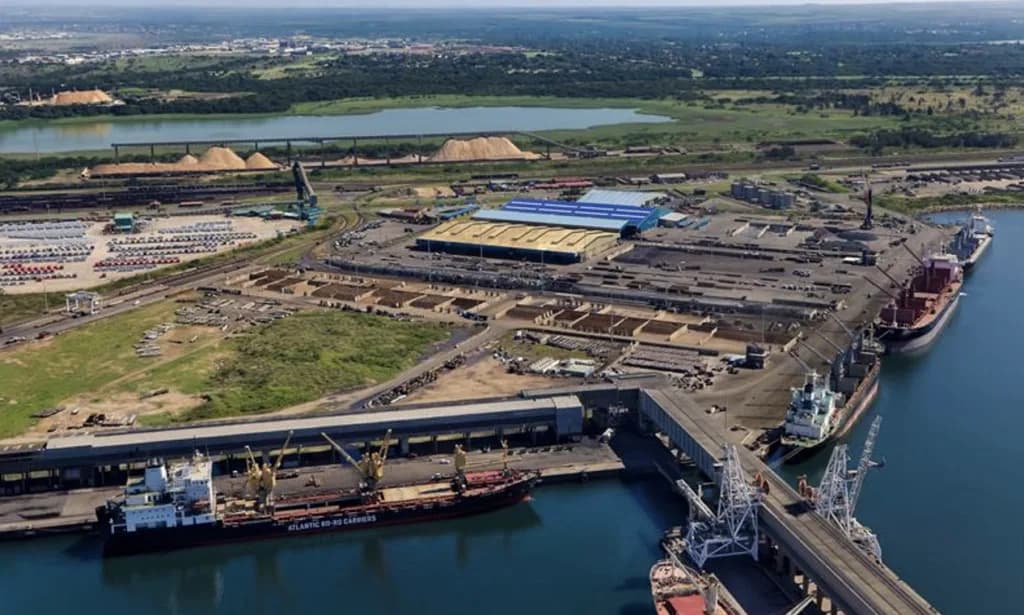
Transnet Seeks Bids to Develop New Container Terminal in Richards Bay
The Global Supply-Chain Context
The global supply chain landscape is undergoing profound transformations, driven by escalating trade tensions, particularly with the U.S. implementing higher tariffs on imports from countries like China, Vietnam and India. These measures, have intensified under the current Trump administration, aims to protect domestic industries but have prompted multinational corporations to rethink sourcing strategies.
For Africa, this presents a potential opening. Many African nations benefit from the African Growth and Opportunity Act (AGOA), which grants duty-free access to the U.S. market for eligible products from 33 countries, including apparel, automotive parts, and minerals.
With tariffs disrupting established routes such as those reliant on Chinese manufacturing, African states with low or zero U.S. tariffs could emerge as alternative conduits for parts and supplies in sectors like automotive and electronics.
However, this opportunity is only possible if challenges such as infrastructure gaps, political risks, and competition from other regions can be mitigated.
Our analysis explores the opportunity for Africa, assessing feasibility, alternatives, and actionable steps for African nations, drawing on recent developments.
Where Are Major Financial Companies Buying Properties and Warehouses?
Recent reports highlight how financial giants are positioning themselves amid supply chain realignments by investing in logistics infrastructure. JP Morgan, through its Real Estate Income Trust (JPMREIT), has been actively acquiring warehouses and industrial properties to capitalize on shifting trade flows.
In May 2025, JPMREIT purchased two logistics warehouse portfolios totaling $124 million in Virginia, Florida, and Texas, focusing on high-demand areas for e-commerce and manufacturing distribution. These acquisitions emphasize infill logistics facilities in growing U.S. metropolitan areas, such as Tampa, where population booms drive demand for efficient storage. Additionally, in July 2025, JPMREIT executed a $95.2 million sale-leaseback deal for industrial outdoor storage with a North American transportation provider, expanding its portfolio in key U.S. hubs. Earlier in February, JP Morgan launched a $700 million joint venture with Zenith IOS to acquire outdoor storage properties across the U.S., targeting sites suited for rerouted global shipments.
Citi Bank, while less directly involved in property acquisitions, is deeply engaged through supply chain financing and advisory services. Its 2025 World Supply Chain Finance Report underscores investments in warehousing to support new routes, though specific buys are not detailed.
Citi’s focus appears more on global financing mechanisms, such as payables finance, to enable firms to build resilient networks. Collectively, these moves are concentrated in the U.S. for now—leveraging domestic stability amid international tariffs—but signal broader global strategies.
For instance, JP Morgan’s insights on supply chain crises highlight geopolitical contexts driving investments in regions like Southeast Asia and Latin America, though direct non-U.S. acquisitions remain underreported. This U.S.-centric approach likely anticipates increased transshipment through American ports for goods rerouted from high-tariff origins.
Likely New Trade Routes and Supply-Chain Destinations for Bypassing Higher Tariff Countries
To evade U.S. tariffs, which can reach as much as a 60% tariff on Chinese goods in sectors like electric vehicles and semiconductors, companies are diversifying routes. China, the epicenter of disruptions, is rerouting exports via Southeast Asia, with shipments transiting through Vietnam, Malaysia, and Thailand before reaching the U.S.
In June 2025, U.S. container imports fell 8%, while Chinese exports to ASEAN and Africa surged over 20%, indicating a pivot to intermediate hubs. Transit trade models, such as China-to-Malaysia-to-U.S., minimize duties by re-labeling origins. Mexico and Canada are also key, with nearshoring trends boosting North American corridors—despite debunked rumors of a direct Mexico-Canada bypass.
Emerging destinations include Brazil, Singapore, and Vietnam, where manufacturers are relocating to leverage lower tariffs and proximity to markets. For automotive industries, this means sourcing parts from these nodes to assemble in low-tariff zones.
Research shows circumvention adds costs—up to 10-15% in logistics—but remains viable for high-value chains. Africa’s role is at this stage small but growing, with increased Chinese exports positioning the continent as a potential assembly hub for U.S.-bound goods. Overall, these shifts favor agile, multi-hop routes over direct high-tariff paths, reshaping global logistics.
African Countries Best Suited to Hook into This Market Shift
Several African nations are well-positioned due to AGOA’s duty-free benefits, low labor costs, and resource endowments. Ethiopia stands out for apparel and automotive parts, with its industrial parks attracting firms like PVH and H&M, though recent U.S. tariffs impose a 10% baseline.
Kenya, another AGOA beneficiary, excels in textiles and horticulture, exporting over $500 million duty-free to the U.S. in 2024, and is eyeing electronics assembly. Lesotho leads in garments, with factories supplying brands like Levi’s, benefiting from zero tariffs.
For minerals and automotive supplies, the Democratic Republic of Congo (DRC) offers cobalt and copper critical for EVs, with AGOA eligibility enhancing U.S. access. South Africa, despite not relying heavily on AGOA, has advanced manufacturing in autos (e.g., BMW plants) and faces minimal tariff hikes.
Egypt, with its Suez Canal proximity, could serve as a transshipment node for rerouted goods. These countries’ advantages include young workforces and improving free trade zones, but success hinges on stability—Ethiopia’s conflicts pose risks.
Real Potential or are There More Likely Alternatives?
Africa’s potential in this supply chain shift is real but nascent. UNCTAD reports position the continent as a future manufacturing force, leveraging its 1.4 billion population and resources for tech-intensive industries. Amid trade upheavals, AGOA has facilitated $10 billion in annual U.S. imports from Africa, disrupting Chinese dominance in low-end manufacturing.
With U.S. tariffs targeting China, African states could capture 5-10% more market share in autos and textiles by 2030, per estimates, as firms seek diversification. Chinese investments, like those in Ethiopian parks, already signal this trend.
However, challenges abound. Infrastructure deficits with poor ports and road infrastructure issues increase logistics costs by 30-40% compared to Asia. Political instability, as in the Sahel, deters investors, and AGOA’s 2025 expiry has arrived, although African Nations have appealed to the US for an extension. It’s finalisation however would potentially expose exports from African states to a range of 10-30% in import tariffs. Africa’s U.S. import share currently sits at only 1.2%, and is dwarfed by Asia’s.
More likely alternatives include Southeast Asia (Vietnam’s exports up 25% in 2025) and Latin America (Mexico’s nearshoring boom). These regions offer better infrastructure and proximity, capturing most rerouted flows. Intra-African trade via the African Continental Free Trade Area (AfCFTA) could be a stronger pivot, boosting GDP by 7% by reducing external dependence.
Positioning Strategies for African Countries and Businesses
To capitalize, African governments must prioritize reforms. Invest in infrastructure: Upgrade ports (e.g., Mombasa in Kenya) and digital logistics for seamless integration. Skills development—vocational training in manufacturing—can attract FDI; Ethiopia’s model has drawn $3 billion. Leverage AfCFTA for regional chains, processing raw materials locally (e.g., DRC cobalt into batteries).
Businesses in Africa should prioritise forming partnerships with multinationals, lean on administrations to improve logistics infrastructure as a priority and adopting ESG standards to appeal to U.S. buyers.
African States have a hill to climb regarding the advocating for an AGOA renewal through diplomacy, as seen in recent summits, however this will be critical for growth opportunities.
There is also a great need for African states to diversify markets beyond the U.S., targeting EU and Middle East regions. With proactive steps, Africa could transform upheaval into growth, but inaction risks marginalisation and the loss of what may well be a once in a generation opportunity to hook in more of the global supply-chain business.