Fresh Funding Blueprint For African Start-ups
Beginning the journey of entrepreneurship in Africa is a common place event. African economies in general do not provide for enough growth for their populations to be fully employed, despite much effort on the continent to attract sufficient capital investment. Africans, through need, and in many instances simply the desire to better their community's lives
Fresh Funding Blueprint For African Start-ups
Beginning the journey of entrepreneurship in Africa is a common place event. African economies in general do not provide for enough growth for their populations to be fully employed, despite much effort on the continent to attract sufficient capital investment. Africans, through need, and in many instances simply the desire to better their community’s lives and their environment, drive amazing innovations leading to a wide spectrum of new businesses every year.
Getting out of the starting block however, is not the biggest hurdle these businesses face. The largest challenge for most, is how to access capital in a way that will provide sufficient runway for them to scale their business, improve their product or service to find enough market penetration and hire skilled staff who can support this growth into a sustainable and valuable business entity.
The stark reality is this: too many impact-led businesses with real potential remain constrained not by a lack of ideas or ambition, but by capital that is not designed for their realities.
A New Funding Solution Built on a Better Funding Philosophy
Several years ago, the Anglo American Foundation and Savant got together around a shared objective: to help build inclusive, resilient businesses that create real economic opportunity, particularly in contexts where traditional capital too often fails to reach the entrepreneurs who need it most.
The problem the partnership discovered on their journey, was an often cited issue amongst African entrepreneurs. The issue comes down to a structural challenge, where even robust new or start-up businesses that are experiencing growth and market acceptance, cannot find suitable financing options and are trapped in a funding gap where financing companies are looking for assets or billing beyond the scope of where the business finds itself.
An additional hurdle is the average interest rate return financiers are looking for, simply becomes a business killing path in many instances. these types of financing gaps are essentially a problem of capital design, not of business pipeline.
The partners brought in Krutham, a premier research and advisory firm combining capital markets expertise with sophisticated political economy analysis. This in turn led to a multi-year process of learning, testing, and iteration, and posing the question: What would capital look like if it were genuinely designed around the realities of impact-led businesses in an African context. The conclusion for the group was clear: addressing this challenge required more than a fund or a programme. It would require a purpose-built, permanent capital vehicle that would need to be built to be patient, flexible, and accountable to long-term impact.
This journey led to the launch of Aséli Impact Capital.
A Blueprint for Future Philanthropy and Funding
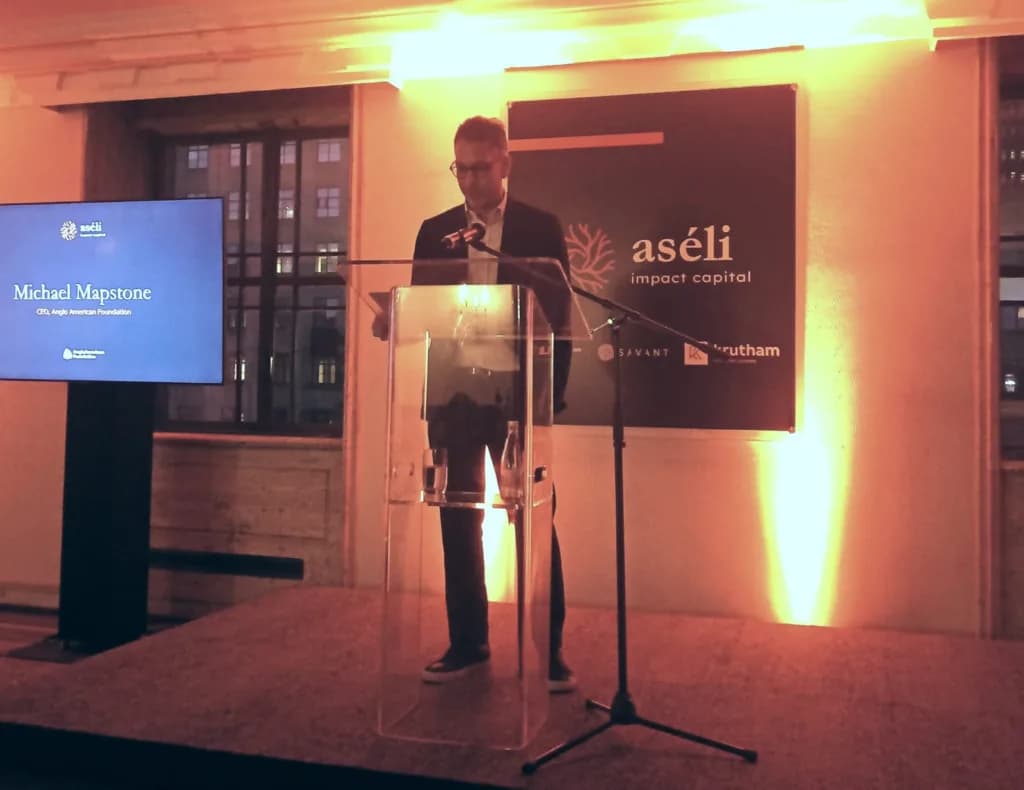
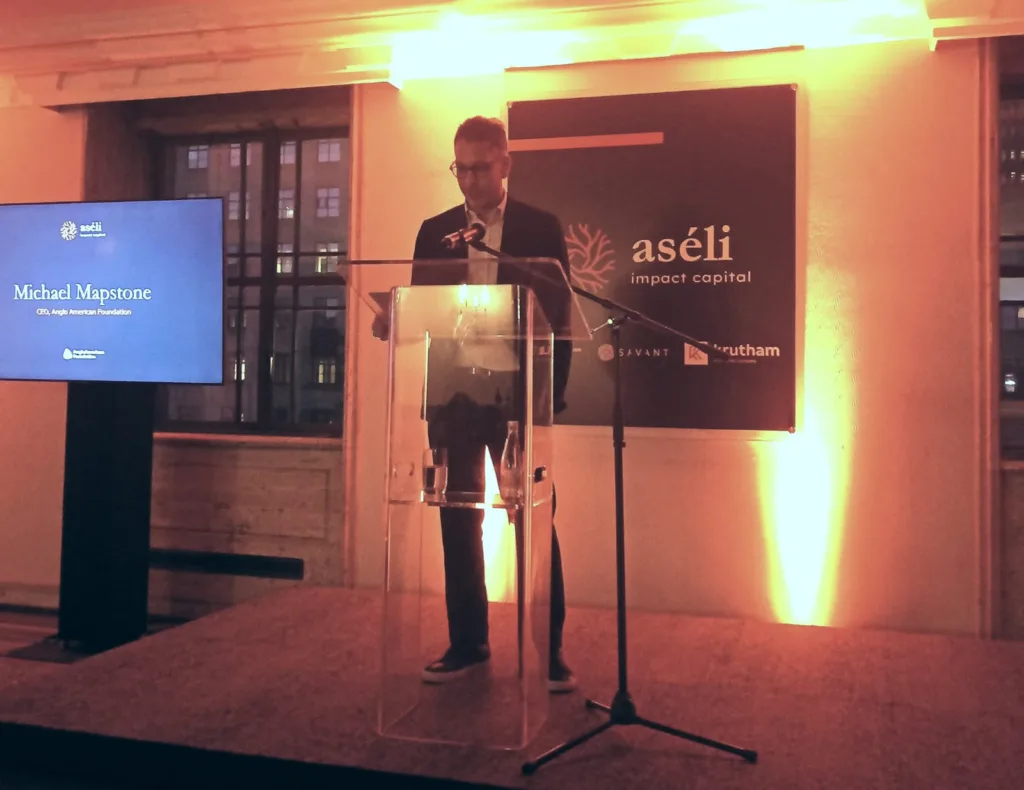
Speaking at the official launch of Aséli Impact Capital last night, at the old Anglo American Building in downtown Johannesburg , Michael Mapstone, CEO of the Anglo American Foundation, said “The Foundation, obviously we’re a philanthropy, and I think philanthropy often forgets itself. You know, philanthropy is risk capital, society’s risk capital. We often think of philanthropy purely about money and that’s a really important component but actually it’s the stuff that sits behind the money within a philanthropy that’s really fascinating.”
Mapstone highlighted that philanthropy of need is “flexible, it’s patient, it can take risk, it can be a catalyst, it can do things that pretty much other parts of the economy can’t do.” he went on to say that “I’d like to think that the Foundation is actually living up to those standards that we should hold philanthropy to.”
It is clear that the partnership has created something particularly refreshing in the world of financing business start-ups in Africa and holds the potential to become a blueprint for future developments.
As Mapstone put it “It’s designed to become the starting point for a new way of thinking about how we invest in South Africa’s future, particularly in the green economy. How do we invest in those businesses that are often perceived as very risky? How do we help those SMEs within the green sector go from start-up to something that can create jobs and be successful? It’s not just a new vehicle. Aseli is actually built on stuff that the country’s never seen before.”
Process of Learning Lead to Aséli’s Funding Formula
in December 2025, the team soft launched Aseli with it making its first two investments into what Mapstone calls “some incredible green businesses that have real potential to grow.” “It’s built to be based on the success of the businesses it invests in,” he stated. “The returns get recycled back into that vehicle that can then reinvest in new businesses. So it’s something that is actually built to be sustainable.”
Beyond the scope of usual funding, Aseli has been designed and built to prove a point. “It has been created to demonstrate that we can do things differently,” said Mapstone. “But the big impact is actually to prove a point to the markets that you can do something different and you can diversify the way you fund SMEs into the future.” he concedes.
Kate Turner-Smith, Partner and co-founder of Savant, explained the process that had lead to the new funding model. The team had used a sandbox grant from Anglo, and focussed on startups in green industries and discovered that the key challenge was that businesses scaled slowly but steadily, which excludes most from VC funding, usually seeking early exits not longer term equity.
The research into how the start-ups functioned, revealed that these businesses needed capital to scale, and capital of a different sort. VCs are not interested in slow-growing businesses, while Banks are not interested in businesses that don’t have security. And green businesses in particular, need capex to expand, and they require working capital to build and scale, and this type of patient capital is not readily available in the market.
Call For Funding Applications
Turner-Smith states that “So that is why the team put together this Aséli concept, and I am also incredibly proud of everybody who was involved with it. Aséli is, it is very different from normal funding vehicles, in that it’s a permanent capital vehicle, it’s patient, it was deliberately designed to be equity-like, but more flexible.” “Businesses can basically pay down their revenue-based reference shares over time at an affordable rate, which means that they are able to scale rapidly, and pay down their financing in a manner that makes sense for the business,” said Kate.
Turner-Smith also announced that Aséli had put out their first commercial call for companies to apply yesterday (5 March 2026), are looking for green economy businesses who need funding ticket sizes of between R5 and R10 million.
To apply – businesses can go to https://www.aseli.capital/