Freedom Day – When Will We See The Fruits of Freedom in Africa
On this day – 27 April 1994, South Africa held its first democratic, non-racial elections after decades of apartheid rule. This year, marked a critical departure point for the country, where for the first time in the country’s history, all citizens over the age of18, regardless of race, were allowed to vote. Those first-time 18-year old voters in 1994
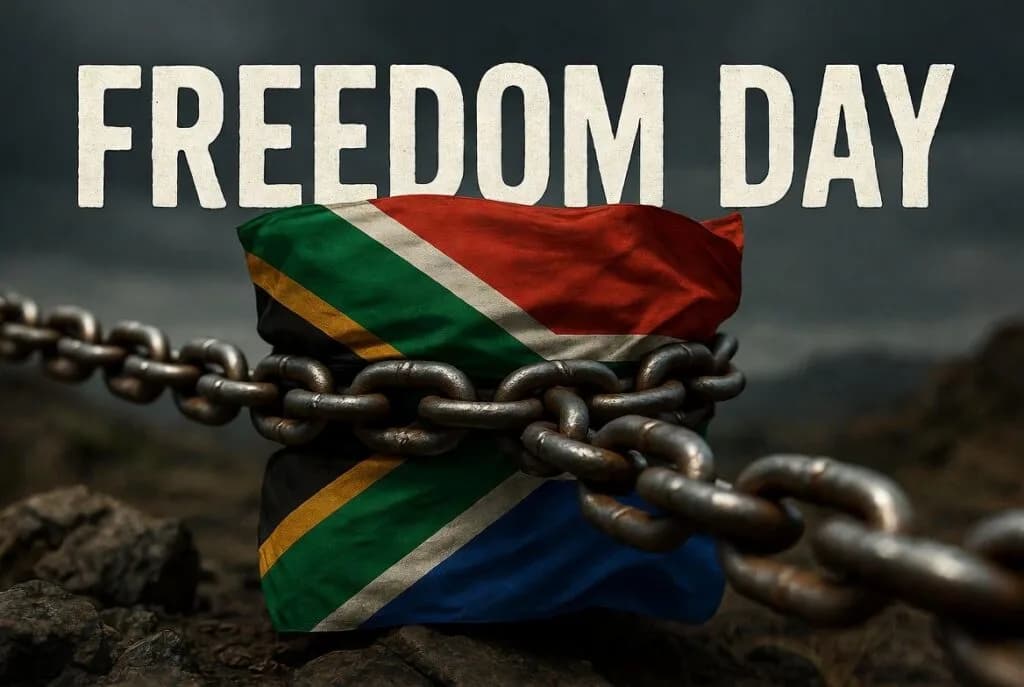
Freedom Day – When Will We See The Fruits of Freedom in Africa
On this day – 27 April 1994, South Africa held its first democratic, non-racial elections after decades of apartheid rule. This year, marked a critical departure point for the country, where for the first time in the country’s history, all citizens over the age of18, regardless of race, were allowed to vote.
Those first-time 18-year old voters in 1994 would now be 50-years old, with around 28-30 million citizens of the total population, born after 1994. This “Born Free” generation now consists of almost 50% of the total South African population.
Across the globe and particularly in Africa, this freedom was celebrated, and for a short period of time, of around 10-years, the country flourished. There was significant foreign Direct Investment flowing into the country, GDP growing regularly above 3%, a 4.5% GDP growth in 2004, and unemployment steady at around 24-25%. While this was not a low unemployment number, it was far better than the current massive 42% unemployment rate in the country.
Out of the total 7.8 million unemployed people in South Africa, 5.8 million (nearly 75%) are young people aged 15–34.The youth (15–24’s) unemployment rate of 57% is one of the highest in the world.
Mandela’s Legacy Lost
While many South African politicians will today be telling the world about the great freedom won over three decades ago, their words remain hollow rhetoric. The lived reality for so many is one of bitter disappointment, with leaders failing the “Born-Free” generation at almost every level.
Corruption is rife at every level of government as well as government administration, the education system is broken, producing graduates who are unemployable, and many of those who manage to persevere to get a university degree or diploma, are unable to find meaningful employment.
The billions allocated to improvement of infrastructure is mostly wasted via illegal tenders and non-delivery or poor workmanship on projects. The whole system is now one, that instead of supporting the growth of the economy and employment, is one that is hurting the economy, with rent seekers and fraud syndicates, plugged into every channel of government spend that exists. Even healthcare has not escaped this ill, which is possibly the most damming of all.
Whistleblowers, who care to raise concerns are pushed out of positions or even murdered and police investigations into these corruption events stalled or halted or buried, as the criminal enterprise has strengthened it’s reach to invade the police and justice system as well.
This has all been enabled by a political system of self enrichment, by an elite political class who strut around in “Blue-Light” brigade cavalcades and Armani suits, while the average population struggle to make ends meet.
Mandela himself saw the potential peril of this cast of self enriched politicians, living off the futures of today’s youth.
Sadly, this story is a common thread across many states in Africa, where “liberators” have turned on their own and built up wealth and privilege for themselves and small groups of elites rather than building a legacy for all.
Everyday Heroes Are Still Fighting For Real Freedom
One of those hero’s in South Africa is Girls and Boys town – a registered non-profit organisation that has been providing youth development and family support services for over 60 years. The organisation offers residential care, community-based programmes, educational support and psychosocial services to vulnerable children, youth and families across South Africa. Its interventions focus on behavioural change, resilience-building and reintegration into families, schools and communities.
Girls and Boys Town South Africa CEO Karen Farred has asked asking an important question this week: “If we are free, why do so many young South Africans still not feel free?”
Freedom Day is a moment of national pride, reflection, and remembrance. But beneath the celebrations a difficult question lingers, that we dare not ignore. if we are indeed free, why do so many young South Africans still not feel free?
For many young people, freedom is not experienced as opportunity. It is experienced as survival.
Lived Reality for Many
Karen explains what many youth today are experiencing: It is waking up in unstable homes, carrying unspoken trauma, and trying to build a future with limited support, limited access, and few second chances. While South Africa has made progress since 1994, the reality is that freedom has not been experienced equally.
“At Girls and Boys Town South Africa, we see this day after day. Young people arrive carrying stories of neglect, loss, violence, and rejection. Many have had to survive long before they were given the chance to simply be young.”
“Without support, these experiences shape identity, limit confidence, and narrow what young people believe is possible for their lives, and this is why our work matters. Freedom is not limited to the political. It is also emotional and psychological. It is the ability to make choices, access opportunity, and believe in a different future.”
“At Girls and Boys Town, we see freedom begin again when a young person feels safe, is heard, and starts to rebuild their sense of self through counselling, education, and life skills support. We see young people move from hopelessness to possibility. From silence to voice. From survival to direction.Freedom is when a young person realises they have a choice. It is when they begin to see that their future can be bigger than their circumstances,” says Farred.
Time for Reflection and Correction
As we reflect on Freedom Day, we it is time where we must be brave and honest. Political freedom opened the door in 1994, but economic, social and emotional freedom are still being fought for and built every day.
If we are serious about South Africa’s future, we must expand what freedom means. It must include safety, support, mental health care, education, and real opportunity for development, employment and growth.
Because until every young person can live with dignity, hope, and possibility, the story of freedom in South Africa is not yet complete.
The Country Needs a new freedom, one that is defined by ethical behaviour and the care of all who live in, and call the country their home. The next generation should not be sitting here in another there decades time, wondering when they will finally experience the true freedom – The Freedom to become all you can, without the constraints of a failed state.