Founder Fridays : Booi Industries
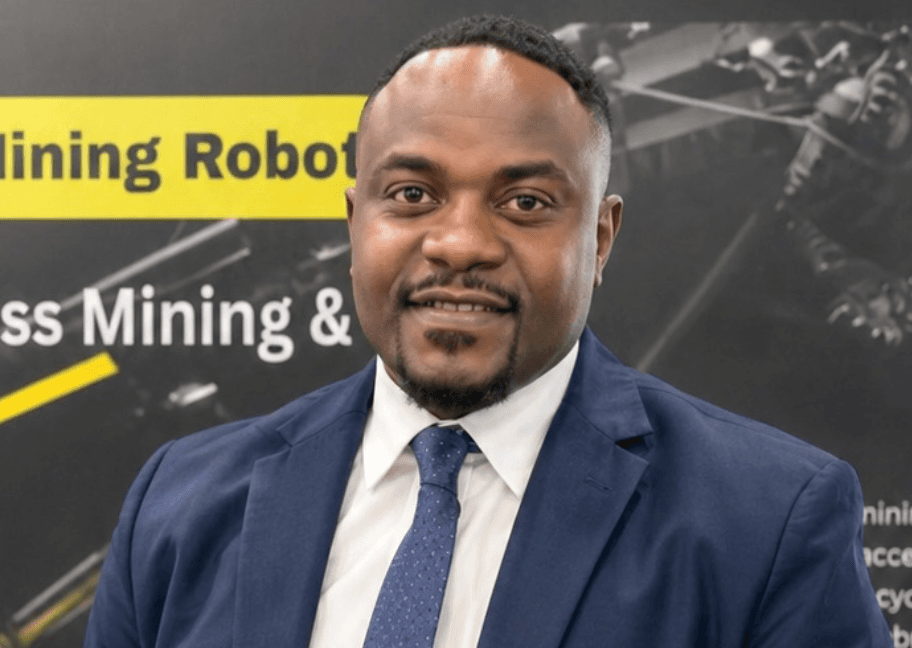
Delisile Booi Founder of Booi Industries
- Booi Industries develops autonomous mechanical cutting equipment (Rapid Access Miner) to reduce blasting and worker exposure near active mining faces
- Hardware startups face a funding catch-22: investors want customer letters of intent, customers want a working prototype first
- Founder argues African mining tech firms can build solutions for local challenges and export them, but says the continent needs stronger R&D funding ecosystems
Certain engineering problems can be solved on paper. Others demand years of understanding what happens when people, machines and rock meet underground. For Delisile Booi, that challenge began in 2007, when he started researching the limitations of conventional mining methods and looking at how engineering could make underground operations safer and more productive. That early research eventually became Booi Industries, a South African mining technology company developing robotic and automated systems for deep-level and narrow-reef mining.
Delisile continued his research for several years before formally registering Booi Industries in 2016. The company was created to develop engineering solutions for problems he had identified in mining, including restricted working spaces, difficult access and slow development rates.
“I saw an industry facing significant challenges around safety, productivity, access and the limitations of conventional mining methods,” he said.
From Engineering to Mining Robotics
Those challenges led Delisile to explore how robotics, automation and mechanical cutting could change underground excavation. His focus was on reducing the need for workers to operate close to active mining faces. His engineering background has also influenced how he approaches product development. For Delisile, innovation starts with understanding a problem before moving through design, construction, testing and refinement.
“Engineering innovation and entrepreneurship have to move together,” Delisile said.
That thinking is reflected in Booi Industries’ Rapid Access Miner, a system designed to create underground tunnels through continuous mechanical cutting and rock breaking. The equipment is being developed for autonomous operation, with the aim of improving safety and development rates.
For Delisile, technical performance is only one part of the equation. The equipment must also be reliable, maintainable and practical to manufacture at a viable cost.
Designing Around Safety and Reliability
Safety remains central to the technology. Reducing blasting during parts of the excavation process can limit workers’ exposure to blasting-related hazards and unstable ground around active mining faces.
Mining equipment must also withstand vibration, heat, rock forces and continuous operating demands. Delisile said the development process therefore considers cutting performance, automation, control systems, maintenance and manufacturing together.
A machine that performs well during controlled testing still needs to prove itself underground. It must also be practical to repair without creating excessive costs for the customer.
The Challenge of Building Mining Hardware
Developing mining equipment has presented Delisile with challenges beyond the engineering itself. Hardware development is expensive, requiring investment in design, components, manufacturing, testing and certification before a product can reach the market. For an early-stage company, finding that funding while the technology is still being developed can be particularly difficult.
Delisile explained that funding requirements can also create a challenge for startups. Funding institutions may ask for a letter of intent from a potential mining customer, while mines may want to see a working prototype before providing one. The result is a difficult cycle: the startup needs funding to build the product, but the customer wants to see the product before committing to it.
Booi Industries has looked beyond South Africa to address that market-access challenge. The company secured letters of intent in Germany from potential customers interested in its technology for the European tunnelling and construction market. At the same time, development funding from the Department of Trade, Industry and Competition (dtic) has supported engineering work, technical research, documentation and prototype development.
Recognition has provided another boost to the company’s credibility. Booi Industries was named Startup of the Year at the Africa Tech Festival Awards 2025 and won the RISP Regional Innovation Challenge, receiving about R150,000 in support. Delisile said the recognition has helped open conversations with investors, corporates, government institutions and potential technology partners.
Building African Mining Technology
Delisile sees opportunities for African companies in automation, robotics, artificial intelligence, remote operations, energy efficiency and mining safety. He believes African companies can develop technologies around local mining challenges and eventually export those solutions to international markets.
“African technology can compete internationally,” Delisile said.
His experience has also shown him that international expansion requires patience. Building relationships, understanding regulations and finding suitable partners all take time.
For Delisile, Africa also needs stronger research and development ecosystems. Early-stage innovators need funding to build prototypes, but access to that funding can be difficult before a product has been tested commercially.
Developing People Alongside Technology
Booi Industries also works with entrepreneurs, students and product developers through innovation workshops. Through programmes linked to the RISP Regional Innovation Challenge and the CSIR, the company provides training in design, prototyping and product development. For Delisile, this work is closely connected to the company’s technology development because building new products also requires people with the skills to design, test and eventually manufacture them.
He believes Africa has the technical talent to develop its own mining technologies, but innovators need access to the equipment, knowledge, funding and facilities required to turn those ideas into commercial products. Developing that capability, he said, is important if African companies are to move beyond using imported technologies and begin developing and exporting their own.
Expanding Beyond Mining Robotics
Delisile’s work extends beyond mining equipment. Booi Industries is also the exclusive African distributor for Vanguard Supertech multi-fuel engine technology, giving the company an opportunity to work on power-generation solutions for remote locations. Delisile said discussions have included potential applications in Ghana and the DRC, including mining operations that face power-generation challenges. The work has also allowed Booi Industries to build relationships with international technology partners while developing its broader industrial technology capabilities.
That wider experience is feeding into the next stage of the company’s mining technology development. Booi Industries is now moving towards prototype fabrication, pilot testing and industry validation, with priorities including completing the prototype, conducting rock-cutting trials and testing the system with mining and tunnelling companies.
The company is also strengthening its engineering and manufacturing capabilities as it prepares for commercial deployment. Discussions are underway with a major mining company in Algeria, while potential customers in Germany are being engaged. For Delisile, success will mean seeing Booi Industries equipment operating in real mining and tunnelling environments, improving safety and production. The longer-term ambition is to move from prototype development into commercial production and international markets.
Delisile’s Advice to Young Entrepreneurs
Delisile’s own journey has Mirrors the advice he gives young engineers and entrepreneurs. His first lesson is to start with the problem instead of the technology.
Understanding what needs to be solved should guide the development process. Hardware entrepreneurs also need patience because industrial equipment requires testing, redesign and repeated refinement. Finally, Delisile encourages African innovators to think beyond their domestic markets. A solution developed for an African challenge can compete internationally if it delivers clear value.
“We have to have the courage to build, the patience to develop and the ambition to commercialise,” he said.
Read about other founders HERE