Formula E: Accelerating the electric vehicle transition
We're witnessing the rise of the Electric Vehicle (EV) era, with major economies committing to phasing out traditional internal combustion engine vehicles in favour of EVs and low-emission alternatives. At the forefront of this transition is the ABB FIA Formula E World Championship, hailed as "the future of motorsport." Formula E showcases high-performance single-seater electric

Formula E: Accelerating the electric vehicle transition
We’re witnessing the rise of the Electric Vehicle (EV) era, with major economies committing to phasing out traditional internal combustion engine vehicles in favour of EVs and low-emission alternatives.
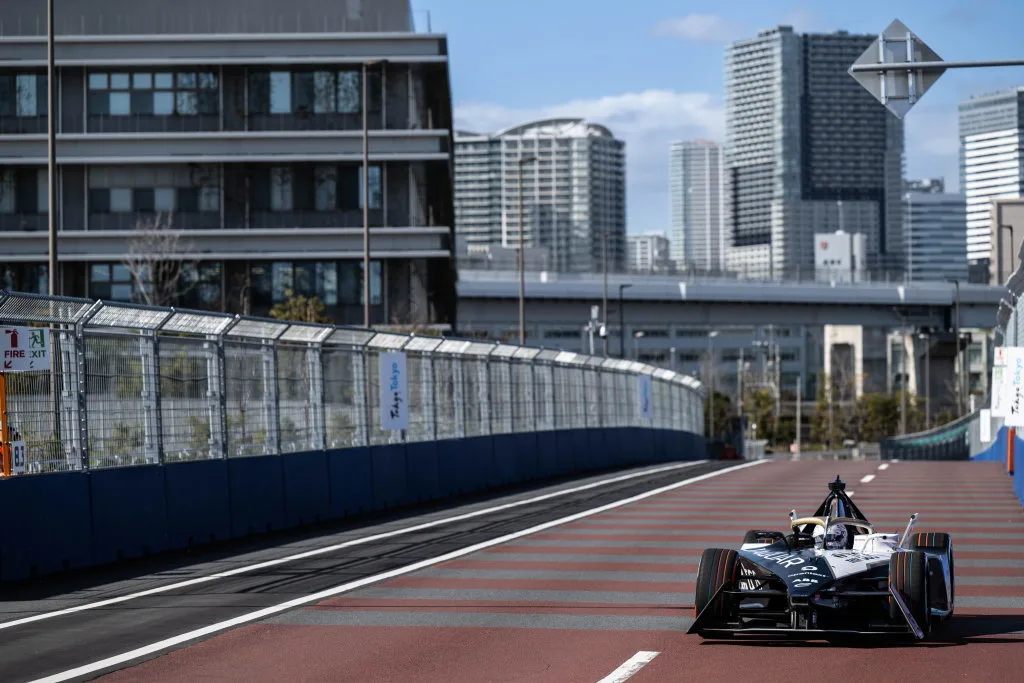
At the forefront of this transition is the ABB FIA Formula E World Championship, hailed as “the future of motorsport.” Formula E showcases high-performance single-seater electric racing cars competing in major cities worldwide.
Since its inception, Formula E has been Net Zero Carbon, making it a pioneer in environmentally conscious racing. The championship serves as a testing ground for electric technology, shaping the future of road cars.
With a calendar boasting 16 races across 11 global cities like London, Berlin, Shanghai, and Monaco, Formula E draws significant attention and revenue. Although the inaugural Cape Town E-Prix didn’t make it to this year’s championship, Formula E involvement positions South Africa at the forefront of electric vehicle evolution.
President Cyril Ramaphosa highlighted EV manufacturing in his recent State of the Nation address, aligning with South Africa’s national automotive strategy. The National Association of Automotive Manufacturers of SA (Naamsa) aims for new-energy vehicles (NEVs) to constitute 20% of SA’s new-vehicle market by 2025 and 40% by 2030.
There’s widespread acknowledgment of the climate and sustainability advantages of EVs, especially when coupled with the transition to renewable energy sources like solar, wind, and hydrogen power. However, the development of software and technology to support this transition is equally crucial.
Motorsports offers a brilliant testbed to develop and try these new innovations.
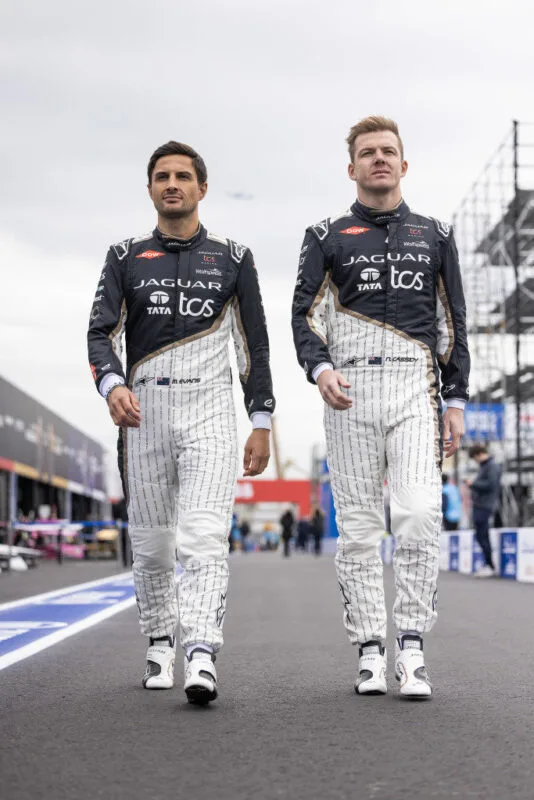
The 2024 Formula E season kicked off in January with races in Mexico City and Diriyah, where Jaguar TCS Racing driver Nick Cassidy secured three consecutive podiums including a race win.
As Title and Official Technology Partner to Jaguar TCS Racing, Tata Consultancy Services is an important part of that team. “A problem shared is a problem halved,” says James Barclay, Managing Director of JLR Motorsport and Jaguar TCS Racing Team Principal, of the importance of partnerships.
As one of the world’s largest IT and technology consulting companies, TCS helps Jaguar TCS Racing explore how new and existing technologies can help improve team performance the track. TCS and Jaguar TCS Racing collaborated to harness the power of cloud computing, building a flexible, secure environment to host the team’s database.
“Cloud computing enables our team to drive operational efficiency when developing tools for deployment across racing activity,” says Barclay. “When we go to Rome or Saudi Arabia we can’t practice whenever we want and the simulator allows us to have correct tests that are close to reality, since it replicates the conditions of the scenarios, from the ambient temperature or the type of asphalt.”
In Formula E, races are won or lost by fractions of a second. Hosting data in a cloud environment speeds up the transfer of data from the track to the team base in the UK so that track data can be analysed, digital-twin setups and strategies can be tested by the Team’s reserve driver in the simulator, and changes can be made ahead of the races, with the aim of improving performance.
Since Formula E car designs are locked in for two seasons at a time, the biggest competitive opportunity for Jaguar TCS Racing engineers to tweak technology is in their software.
The Formula E “race-track to road” philosophy is driving clean, sustainable mobility forward, through rapid evolution of EV capabilities on the track. For example, the maximum power of the GEN3 electric racing car can reach 350kW, compared to the Gen1’s 200kW in 2014/15. Regeneration capabilities have reached 600kW from 150kW, and in 2023, Nissan’s Sacha Fenestraz drove the fastest ever lap time in Formula E with an average speed of 154.987km/h in Cape Town. The fastest speed reached by a GEN3 race car was achieved by Jaguar TCS Racing driver Mitch Evans at the Portland E-Prix when he reached a top speed of 276.6km/h.
Improvements derived from battery-electric motor racing have also helped Jaguar with the development of its range of road vehicles. One key benefit derived from the I-PACE eTROPHY was a complimentary software update for all existing I-PACE owners that delivered up to 20km of additional real-world range on a full charge. The update, available from December 2019 and standard on all new I-PACEs since then, uses race-derived enhancements to optimise battery management, thermal systems and all-wheel-drive torque delivery to increase range.
That development relationship will continue, with Formula E poised for continued growth, and numerous leading manufacturers committed to the format as a proving ground for the ongoing integration of sustainable EV technology, and the data insights that optimise it.
Formula E has also helped to raise awareness of sustainability and alternative energy solutions within the motoring space, and made it clear that sustainable, electricity-powered motoring is also the domain of high-performance excitement and spectacular entertainment.
The sport, with its rich partnerships between motor manufacturers and strategic technology providers, exemplifies the future of mobility. The next wave of electric vehicle development – and the connected experience that defines it – will be powered by cloud, software development and data analytics.