The Hard Economics Behind Africa's Mining Value Addition Push
For decades, African governments, mining indabas, and African critical minerals beneficiation advocates have spoken about moving beyond the export of raw minerals toward local processing, refining, and manufacturing. Smelters and refineries sit at the centre of this ambition. In theory, they promise higher export earnings, skilled jobs, technology transfer, and stronger industrial bases. In practice,
The Hard Economics Behind Africa's Mining Value Addition Push
For decades, African governments, mining indabas, and African critical minerals beneficiation advocates have spoken about moving beyond the export of raw minerals toward local processing, refining, and manufacturing. Smelters and refineries sit at the centre of this ambition. In theory, they promise higher export earnings, skilled jobs, technology transfer, and stronger industrial bases. In practice, building and sustaining mineral-processing facilities across Africa has proved far more difficult than policy statements suggest.
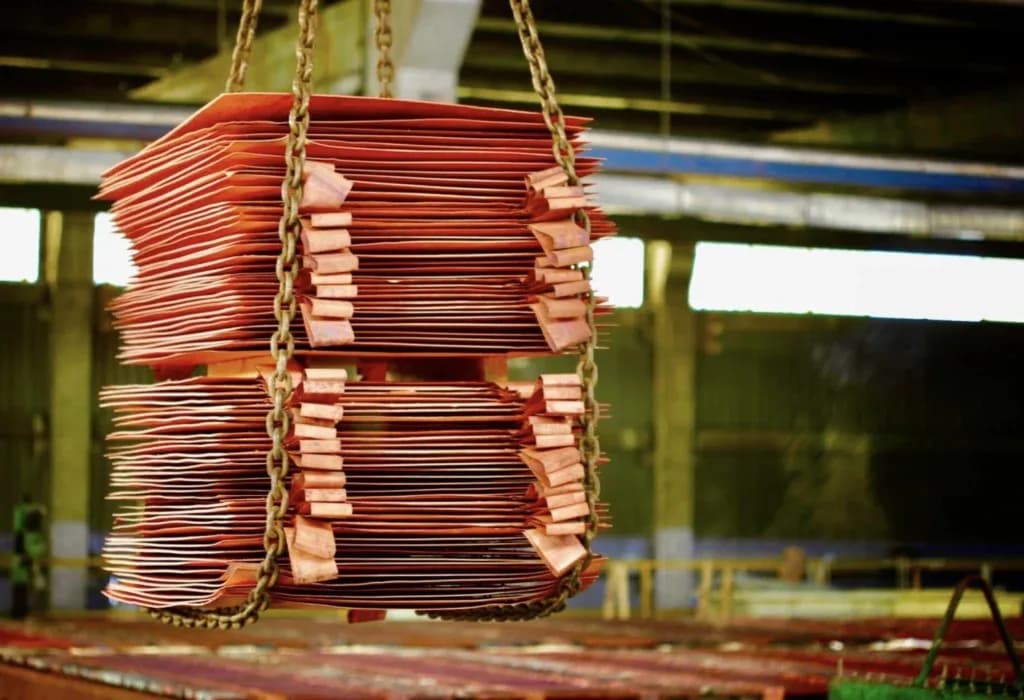
The first obstacle is cost. Smelters and refineries are capital intensive, long-term investments that require billions of dollars upfront and stable operating conditions over decades. Investors need certainty on power supply, feedstock availability, and export logistics before committing capital. In many African jurisdictions, these fundamentals remain fragile. Electricity shortages, tariff instability, and unreliable grids make energy-hungry facilities such as aluminium smelters or copper refineries especially risky.
Power, scale, and the economics of processing
Power costs alone can determine whether a project proceeds or collapses. Smelting requires continuous, uninterrupted electricity. Even short outages can cause equipment damage and costly downtime. Where power is available, it is often priced higher than in competing regions such as Asia or the Middle East, where state-backed infrastructure and subsidies lower production costs. This places African smelters at a structural disadvantage before they even begin operating.
A second challenge lies in scale and feedstock security. Smelters need consistent volumes of ore or concentrate to operate efficiently. Many African mines, particularly junior or mid-tier operations, produce at scales that struggle to justify standalone processing facilities. Transporting concentrate across borders to centralised smelters introduces regulatory friction, logistical delays, and additional costs. Without regional coordination, value-addition efforts risk fragmenting supply rather than consolidating it.
There is also the question of global competitiveness. Smelters do not operate in isolation; they compete in global markets. Refined metals produced in Africa must match international prices and quality standards. This requires advanced technology, skilled labour, and efficient logistics. Many African countries face shortages in specialised metallurgical skills, forcing operators to import expertise at high cost. Over time, this erodes the economic case for local processing unless deliberate investments in skills development accompany industrial policy.
Policy risk and rising environmental scrutiny
Policy uncertainty further complicates the picture. Several African countries have introduced export bans or beneficiation requirements aimed at forcing local processing. While well-intentioned, abrupt policy shifts often unsettle investors. Processing facilities cannot be financed on the basis of short political cycles. When rules change midstream whether through revised royalty regimes, export restrictions, or local ownership demands the risk profile rises sharply, and capital becomes more expensive or disappears entirely.
Environmental and social considerations add another layer of complexity. Smelters and refineries carry significant environmental footprints, from emissions to waste management. Communities and regulators are increasingly resistant to projects perceived as polluting or poorly managed. Without strong environmental controls and transparent engagement, value-addition projects can face the same opposition that has delayed or halted mining developments across the continent.
Value addition as a long-term test
Despite these challenges, value addition is not unattainable. Success stories tend to share common traits: reliable power supply, clear and consistent policy frameworks, regional integration, and public-private collaboration. Where governments focus on enabling conditions rather than mandates processing investments become more feasible.
Ultimately, smelters and refineries are not shortcuts to industrialisation. They are complex, high-risk projects that require patience, coordination, and realism. For Africa Mining the challenge is not whether value addition is desirable, but whether the conditions exist to make it sustainable. Without addressing power, policy certainty, scale, and skills, the promise of beneficiation will remain aspirational rather than transformative.