Ore Sorting Before Grinding: Energy Savings African Mining Is Leaving in the Pit
Energy has become central to African mining’s operational reality. The industry has invested heavily in securing energy, from building solar plants to negotiating more stable grid access. But far less attention falls on how efficiently that energy is used once ore reaches the processing plant. Large volumes of barren rock still pass through grinding circuits
Ore Sorting Before Grinding: Energy Savings African Mining Is Leaving in the Pit
Energy has become central to African mining’s operational reality. The industry has invested heavily in securing energy, from building solar plants to negotiating more stable grid access. But far less attention falls on how efficiently that energy is used once ore reaches the processing plant. Large volumes of barren rock still pass through grinding circuits across the continent, consuming electricity despite carrying little or no economic value. At a time when mines face rising power tariffs, unreliable supply and mounting pressure to reduce emissions, a largely overlooked source of energy waste sits inside the processing plant itself. In many operations, the energy challenge is not only about generating more power it is also about preventing waste material from reaching the mill in the first place.
Grinding remains one of the most energy-hungry stages in mineral processing. Once ore reaches the mill, vast amounts of electricity are required to break rock down into fine particles suitable for mineral recovery. In many operations, grinding alone accounts for close to half of total energy consumption. What is often ignored is that a large portion of the material entering these mills carries little economic value. Plants routinely spend energy pulverising waste.
Ore Sorting as an Intervention
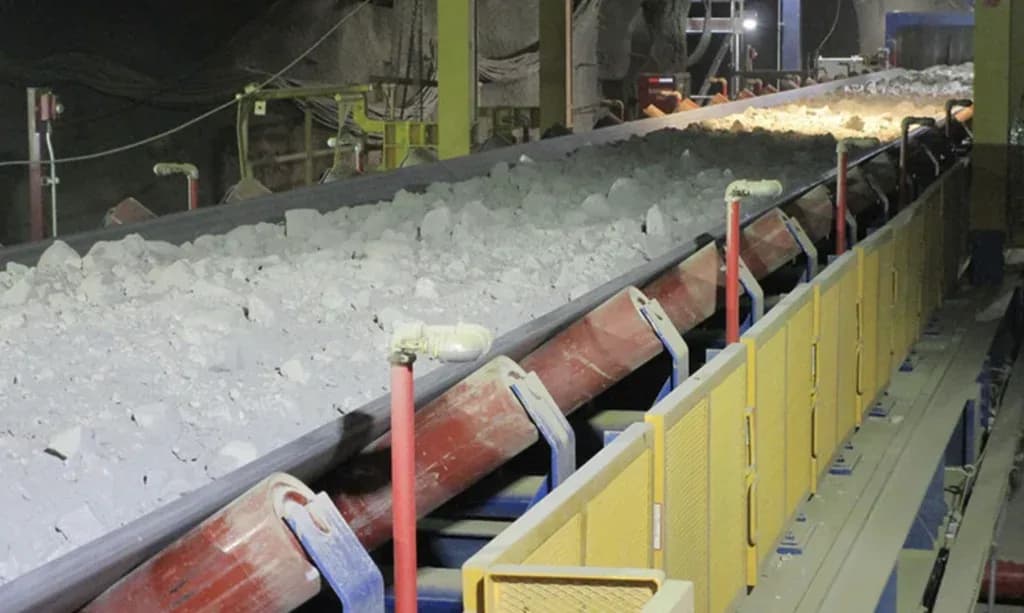
Ore sorting offers one way to intervene earlier in the processing chain not as a novelty, but as a practical adjustment to how material flows through the plant. Modern sorting systems use sensors, imaging technologies and automated separation equipment to identify mineralised rock and discard barren material before grinding begins. The logic is straightforward: process less waste, and the energy burden of the plant immediately declines.
In theory, the concept is simple. In practice, it challenges long-standing habits in the industry. Many African operations still run processing flowsheets designed decades ago, when electricity was relatively cheap and ore grades were more forgiving. Those plants were built on the assumption that most material extracted from the pit would move straight into the mill. Introducing ore sorting disrupts that model by forcing operators to reconsider how much of that material should actually be processed.
The economics are beginning to favour that change. As ore grades decline, mines must move and process larger volumes of rock to produce the same amount of metal. This trend places increasing pressure on energy consumption, plant capacity and operating costs. Pre-concentration technologies such as ore sorting address the problem at its source by stripping out waste before the expensive part of the process begins.
Efficiency Gains and Technological Progress
Energy savings are only part of the equation. Removing barren material early also allows mills to operate more efficiently. With less waste entering the circuit, plants can process higher-grade feed and improve throughput. The grinding circuit spends its energy on material that actually contains value, rather than diluting effort across tonnes of uneconomic rock.
Technological progress has strengthened the case further. Earlier generations of sorting equipment were limited in their ability to distinguish subtle mineral differences. Today’s systems combine X-ray transmission, optical sensors, laser scanning and increasingly sophisticated algorithms to identify mineralised material with far greater precision. In some deposits, these systems can reject significant volumes of waste before grinding begins.
Adoption Challenges and Industry Mindset
Despite this, adoption across African mining remains uneven. Inertia plays a role. So does the perception that introducing sorting equipment requires costly plant redesigns. But the larger issue may be cultural. The industry has historically prioritised extraction and throughput, sometimes at the expense of examining how efficiently material moves through the processing chain.
For mines operating in energy-constrained environments, that mindset is becoming harder to justify. Electricity shortages in countries such as South Africa and Zambia have already forced operators to rethink how processing plants consume power. As energy becomes a central operating constraint rather than a background cost, technologies that reduce grinding demand will attract more attention.
Ore sorting will not suit every deposit. Mineralogy, particle size distribution and economic thresholds all influence whether the technology delivers meaningful gains. But where the conditions are right, the benefits can be difficult to ignore.
Energy efficiency in mining is often discussed in terms of power supply, from new solar capacity to more reliable grid access. But part of the answer lies deeper inside the processing plant itself. Every tonne of waste removed before grinding reduces electricity demand, equipment wear and processing costs. In many operations, scarce energy still ends up processing material that never needed to reach the mill.