Ecobank to Coordinate US$200 Million Financing for Sentuo Oil Refinery Expansion
Ecobank Ghana has been appointed to coordinate a US$200 million financing package for the next phase of expansion at Sentuo Oil Refinery, a project that will more than double the facility's processing capacity and introduce petrochemical production. The agreement was formalised through a memorandum of understanding signed in Accra, with Ecobank tasked with assembling a
Ecobank to Coordinate US$200 Million Financing for Sentuo Oil Refinery Expansion
Ecobank Ghana has been appointed to coordinate a US$200 million financing package for the next phase of expansion at Sentuo Oil Refinery, a project that will more than double the facility’s processing capacity and introduce petrochemical production. The agreement was formalised through a memorandum of understanding signed in Accra, with Ecobank tasked with assembling a syndicate of local, regional, and international lenders to raise the required capital.
Once completed, Sentuo’s refining capacity will increase from 40,000 barrels per day to 100,000 barrels per day. New petrochemical facilities will also be added, allowing the company to produce a wider range of petroleum-based products. According to Ecobank Ghana Managing Director Abena Osei-Poku, the bank remains committed to supporting projects that create jobs and expand Ghana’s industrial base.
Refining More of Ghana’s Oil Locally
Ghana’s oil faces a long-standing contradiction. Although the country produces crude oil, it still imports most of the fuel consumed locally. During the inauguration of the Sentuo refinery in 2024, former President Nana Akufo-Addo noted that roughly 97% of Ghana’s fuel requirements were being met through imports.
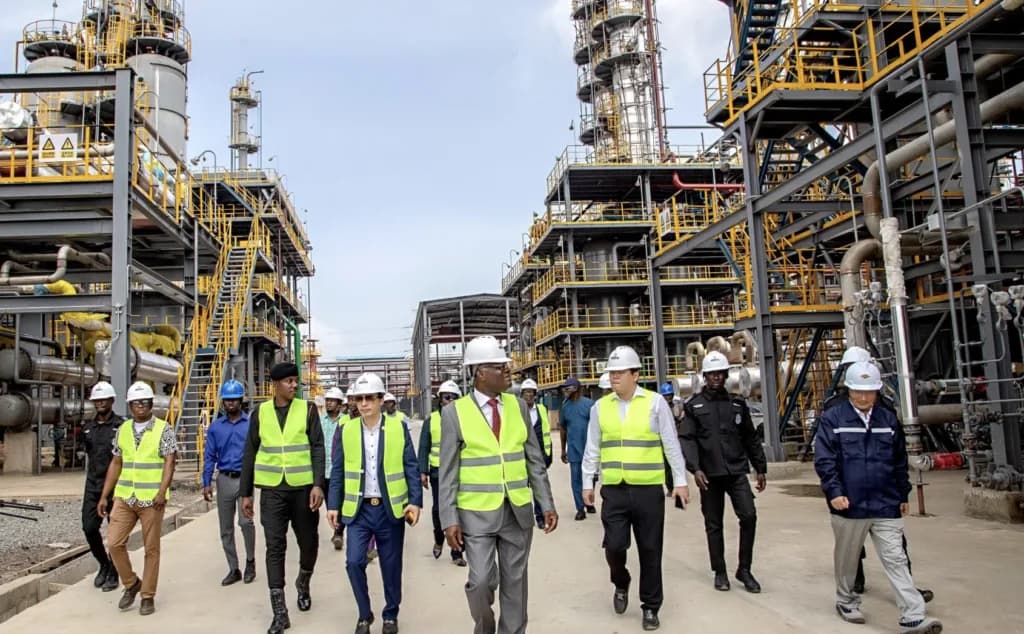
Built by China’s Sentuo Group and commissioned in January 2024, the refinery was developed at a cost of approximately US$1.98 billion. It is Ghana’s first privately owned refinery and was designed to process crude produced within the country, including output from Ghana’s offshore oil fields. In its current configuration, the facility can process up to 40,000 barrels of crude oil per day.
The expansion is intended to increase the amount of crude refined locally rather than exported and processed elsewhere. For policymakers, local refining offers a way to reduce fuel imports while creating additional industrial activity around the country’s oil resources.
Sentuo Expands Beyond Fuel Production
Expanding capacity is only part of the plan. Sentuo also intends to move into petrochemical production, giving the company access to additional markets beyond transport fuels. This would allow the refinery to manufacture a broader range of petroleum-derived products and create new revenue streams from the same crude supply.
In July 2024, Sentuo Group announced plans to invest a further US$980 million into the expansion after securing its full operating licence. At the time, company chairman Xu Ningquan argued that African countries should process more of their crude oil domestically rather than exporting raw materials and importing refined products back at a higher cost.
Funding arranged through Ecobank will help finance the next phase of construction and support the company’s longer-term growth plans.
Local Refining Gains Momentum
Interest in domestic refining has gathered pace in recent months. Earlier this month, President John Dramani Mahama announced that Tema Oil Refinery was preparing to process its first shipment of crude sourced directly from Ghana’s offshore oil fields. Expected later this month, the cargo will mark a significant moment for the state-owned refinery as it looks to increase the use of locally produced crude.
Activity at both Sentuo and Tema suggests Ghana is becoming more focused on processing crude oil within its own borders rather than exporting it and importing finished fuels. Whether these projects substantially reduce fuel imports remains to be seen, but they represent some of the largest investments in the country’s refining industry in recent years and signal a stronger push towards local processing.