Africa’s Largest Wind Electricity Generation Plant
A cluster of three wind farms, called the Koruson cluster, in the Eastern Cape area of South Africa is nearing completion.
Africa’s Largest Wind Electricity Generation Plant
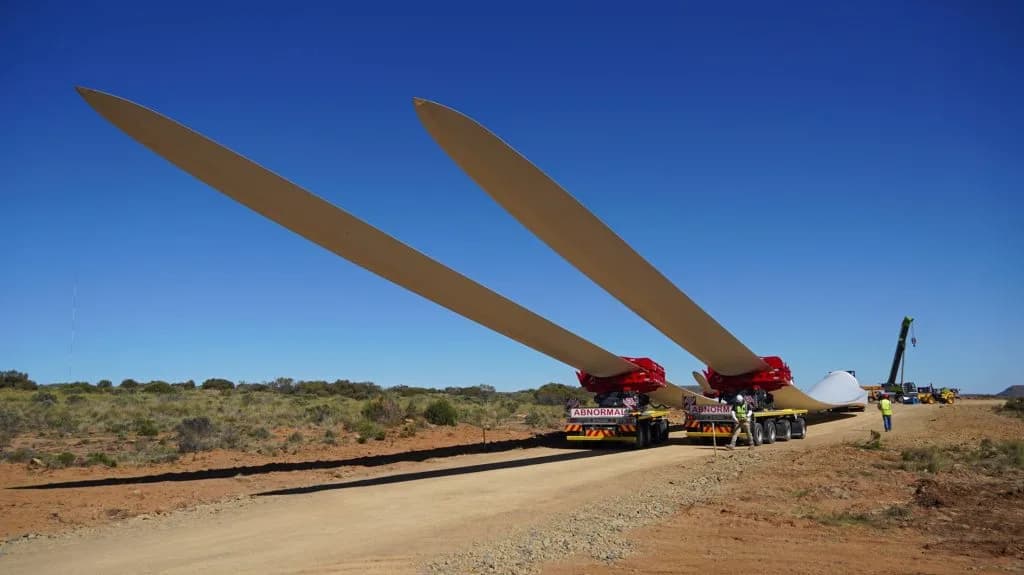
A cluster of three wind farms, called the Koruson cluster, in the Eastern Cape area of South Africa is nearing completion. With the bulk of the turbine and tower components having being delivered, and the construction of the three distribution substations well underway the project is on target to go online in 2025 with the planned Commercial Operations Date (COD)for the Koruson Cluster in the first quarter of 2025.
The three sites, developed by EDF Renewables, are spread across a large 50 square kilometer area with a total of 78 wind turbines, currently being assembled, that will be installed on 124m high concrete towers, each comprising of 50 keystones, that are all manufactured locally at a concrete tower factory outside Middelburg.
Each wind farm, once completed is designed to generate a capacity of 140 MW, with a total installed capacity of 420 MW. This makes it the biggest wind farm ever built in Africa, the total investment in the project is $600 million.
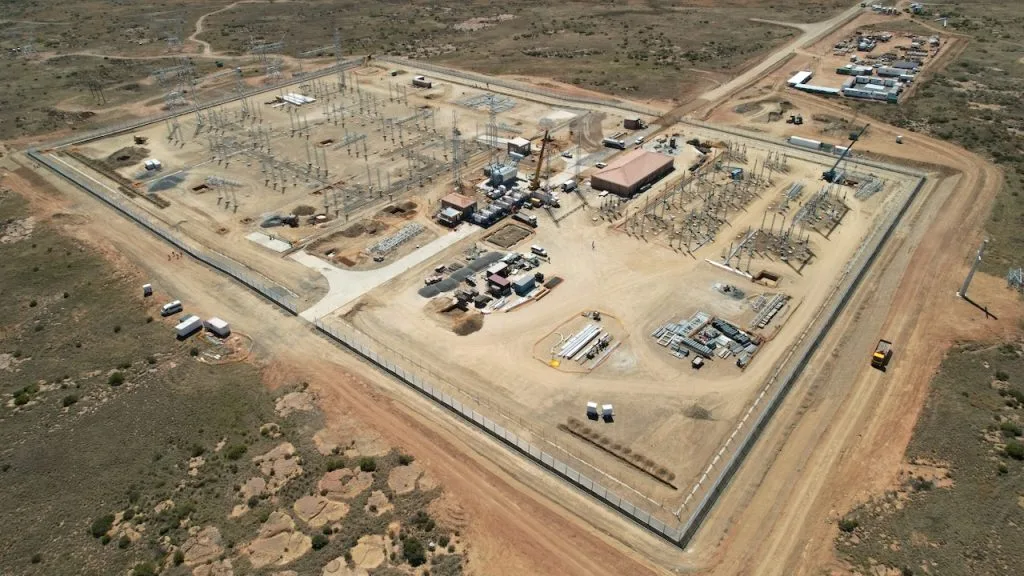
The project, which is part of Round 5 of the Renewable Energy Independent Power Producer Program, will contribute to reducing the energy deficit in South Africa. This ambitious program aims to secure $12 billion in renewable energy investment by 2030 or around $2 billion per year.
The South African renewable energy market demonstrated resilience and steady growth in 2023, despite facing uncertain policy conditions and technical hurdles. The lifting of licensing requirements for large-scale generation projects and efforts to address the electricity crisis in South Africa, have all played a role in this growth.
While public programs were initially the primary driver of market expansion in the past, the industry is increasingly being driven by private off-taker agreements. This is evidenced by the rapid rise in registered private generation facilities being developed such as the Koruson Wind farm project.
In addition, the continued process of unbundling Eskom’s electricity infrastructure monopoly and the mining industry’s shift towards renewable energy should further propel the sector’s progress and it is likely that with further de-regulation there should be an increase in number and size of these projects over the next 5-10 years.