Dunlop’s R1.7 billion investment could open more work for Ladysmith SMEs
Dunlop Tyres South Africa has completed a R1.7 billion investment in its uMnambithi manufacturing plant in KwaZulu-Natal, upgrading equipment and increasing the factory’s production capacity. For Ladysmith, the investment is about more than the number of tyres coming off the production line. The factory already supports a large workforce, but it also relies on businesses
Dunlop’s R1.7 billion investment could open more work for Ladysmith SMEs
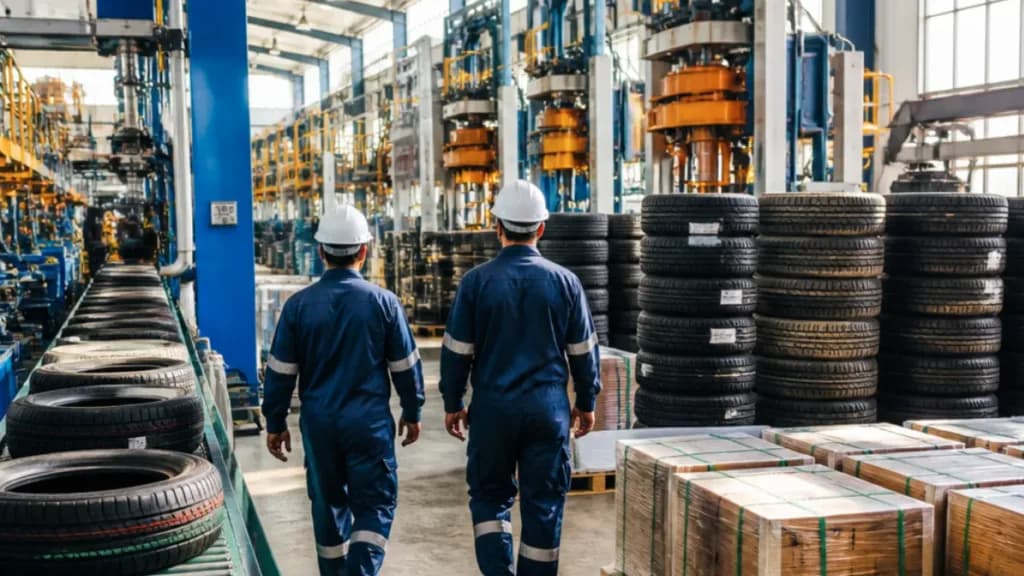
Dunlop Tyres South Africa has completed a R1.7 billion investment in its uMnambithi manufacturing plant in KwaZulu-Natal, upgrading equipment and increasing the factory’s production capacity. For Ladysmith, the investment is about more than the number of tyres coming off the production line. The factory already supports a large workforce, but it also relies on businesses around it to keep production moving. That includes transport companies, engineering and maintenance firms, contractors, security companies and other service providers. This is where smaller businesses could see some benefit if more of that work is placed with local suppliers.
Dunlop is already a major employer
Dunlop says it has hired 1,257 people in the area since 2014 through permanent and temporary positions, apprenticeships, learnerships, graduate programmes and other training. The Ladysmith plant employs around 1,100 people. The R1.7 billion investment should not be treated as a promise of thousands of new jobs. New manufacturing equipment is designed to improve production and efficiency, so the number of direct jobs does not necessarily rise at the same rate as investment. The effect can be felt through the companies that supply the factory. A transport business taking on more work may need another driver. An engineering company could need additional technicians. A contractor may need more workers to handle a larger order. These are smaller employment gains, but they can add up.
SMEs still have to get the work
The difficult part is getting local businesses into the supply chain. Dunlop has previously highlighted local supplier development at its Ladysmith operation, including a local company involved in managing moulds used at the plant. But supplying a major manufacturer is different from winning a normal local contract. Businesses have to meet quality requirements, deliver on time and have enough capacity to handle the work. Cash flow can also be a problem for smaller companies that need to pay workers and suppliers before receiving payment from a large customer. That can leave some local businesses watching the investment from the sidelines.
Skills could become another opportunity
The upgraded plant also needs workers who can operate and maintain more advanced equipment. Dunlop has used apprenticeships, learnerships and graduate programmes as part of its skills development. That matters for Ladysmith because those skills can move beyond the Dunlop factory. A technician trained in industrial maintenance, for example, can potentially find work with another manufacturer or an engineering company. It also gives local SMEs a larger pool of people they can employ as their own businesses grow.
The local supply chain will be the real test
The R1.7 billion has already been spent on the plant. The bigger question for Ladysmith is what happens around it over the next few years. If higher production leads to more contracts for local transporters, engineering firms, contractors and other suppliers, the investment could support jobs well beyond Dunlop’s own payroll. But that will depend on how much of the additional business is available to smaller South African companies. For Ladysmith SMEs, the opportunity is not necessarily in supplying tyres. It is in supplying the factory that makes them.