Dangote Secures Gas Supply Deal for Ethiopia Fertilizer Project
Dangote Group has secured a long-term gas supply agreement to support its fertilizer project in Ethiopia, advancing plans to build an integrated production chain in the country. The company announced a 25-year gas supply deal with China’s GCL Group to supply its fertilizer plant under construction in Gode, eastern Ethiopia. The agreement is estimated at
Dangote Secures Gas Supply Deal for Ethiopia Fertilizer Project
Dangote Group has secured a long-term gas supply agreement to support its fertilizer project in Ethiopia, advancing plans to build an integrated production chain in the country.
The company announced a 25-year gas supply deal with China’s GCL Group to supply its fertilizer plant under construction in Gode, eastern Ethiopia. The agreement is estimated at $4.2 billion, according to international media reports. Gas will come from the Calub field in the Ogaden Basin and move through a dedicated 108-kilometer pipeline to the plant, linking upstream gas production directly to fertilizer manufacturing.
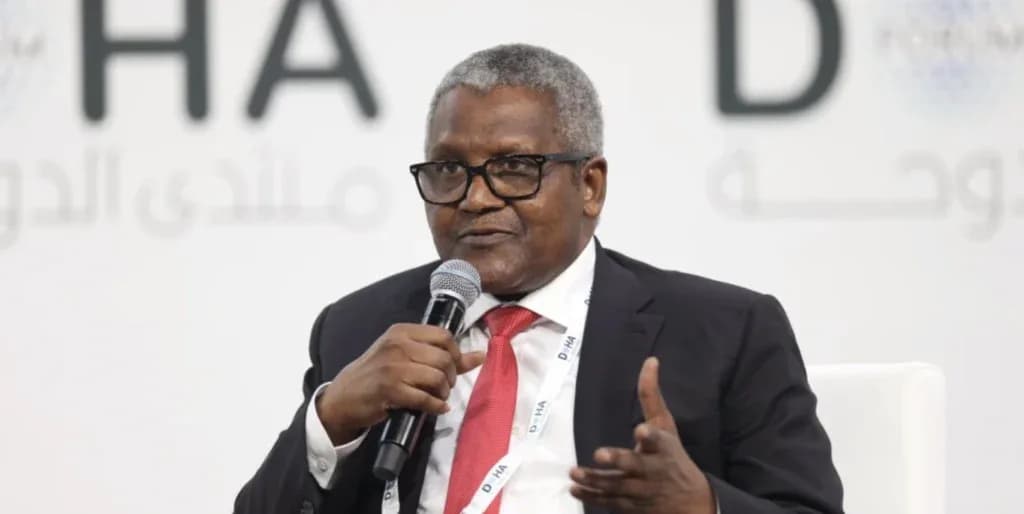
The project links gas extraction directly to fertilizer production. “Through seamless integration and strategic cooperation with GCL, we will achieve an efficient closed-loop value chain from natural gas extraction to fertilizer production,” said Aliko Dangote, chairman and CEO of Dangote Industries Limited. He added that the initiative supports efforts to strengthen Africa’s food security.
Ogaden Development and Production Outlook
GCL has been developing the Ogaden liquefied natural gas (LNG) project with the Ethiopian government since 2013, although progress has been uneven due to delays and restructuring. The first phase was launched in October 2025 with annual capacity of 111 million liters of LNG. A second phase is expected to raise capacity to 1.33 billion liters per year, though no clear timeline has been confirmed.
While the volume of gas covered by the agreement has not been disclosed, the Dangote fertilizer plant is expected to produce 3 million tons of urea annually once operations begin, targeted for 2029. The project is positioned to replace Ethiopia’s fertilizer imports while supplying regional markets.
Ethiopia remains one of Africa’s largest fertilizer importers. In 2024, the country purchased about 2.32 million tons from international markets, according to the International Fertilizer Development Center (IFDC). With no domestic production of inorganic fertilizers, the project carries clear implications for both agricultural output and industrial development.
Investment and Supply Structure
The Gode fertilizer plant represents a total investment of $2.5 billion. Until it becomes operational, Ethiopia will continue to rely on imports, with the government maintaining tight control over the supply chain. The Ethiopian Agricultural Businesses Corporation (EABC) handles more than 90% of imports and distributes them to farmers through cooperatives.