Creator Pulse – Forget the charts, the real magic in SA podcasting is in the growth curve
The most-streamed podcast in South Africa is hosted by a man whose most viral moments tend to also be his most condemned. Meanwhile, data shows that locally produced, women-hosted podcasts have grown 273% in listenership since 2019. To my eyes and ears, the charts and the audience are telling two very different stories about what we want

Creator Pulse With Mohale Moloi
The most-streamed podcast in South Africa is hosted by a man whose most viral moments tend to also be his most condemned. Meanwhile, data shows that locally produced, women-hosted podcasts have grown 273% in listenership since 2019. To my eyes and ears, the charts and the audience are telling two very different stories about what we want from what we listen to.
One look at the top of the charts and the pattern is obvious. Names like Bartlett, Shetty, Huberman and Robbins are consistently there. They’re useful voices but mostly from outside of SA, almost all male, almost all selling a version of the same thing: a framework for living. The appetite for these frameworks makes sense because we listen to podcasts in intimate, solo moments like in the car, on a run, or before we go to bed. We want to fill that headspace with something that helps us figure out how to be our best selves. The question I’ve been thinking through is whose voice is doing the helping, and whose stories get told in the process.
Women Podcaster Audience Gap
I was recently at an event, talking to a guy I’d just met about podcasts we both really rated, and every show was hosted by a man. When was the last time you talked about podcasts and no one in the room brought up the Diary of a CEO? Are we being a bit myopic? Maybe.
The data suggests we’re not alone. ‘Boy Problems’ host, Liz Plank, summarises the asymmetry plainly: “Women will listen to men without hesitation, but there is still a real reluctance among many men to engage with content made by women.” A 2025 US study of almost 600 popular shows on Spotify found that women are outnumbered roughly 2 to 1 as hosts. This gap grows at the guest level, where out of over 6 400 guests across the top 100 podcasts, 73% were male, and more than three-fifths of episodes featured no female guests. For all of podcasting’s democratic, “anyone-can-do-it” branding, it’s genuinely wild that the medium has ended up worse on gender representation than film, television or music.
I’ll spare you the rest of the case for why representation matters – you’ve heard it, and if you haven’t, there are plenty of better-placed writers who’ve done the work. What I’d rather do is direct you toward the antidote. Because, outside the dude-bro industrial complex, at the top of the charts, South African podcasting is full of shows that are quietly building some very engaged audiences. These shows expand the way you think about the place we actually live in and the people we share it with.
Of the ones I listen to, here are three I keep revisiting.
Host Pheladi Sethusa takes us on an immersive journey into people’s working lives. How they do their jobs, what makes those jobs good, what makes them hard, and what makes the people want to quit. The show was sparked by 12 Lost Songs, a part-performance, part-exhibition piece by the group Quarantine, in which around 30 people perform 12 hour-long shifts of their actual everyday jobs in front of an audience. Sethusa has taken that premise and turned it into something only podcasting can do: she goes to people’s places of work and lets the room do half the talking.
I’ll admit I didn’t like the first episode. It was about architects, and listening in the car, then again on speakers at home, I just couldn’t get into it. The sound felt muddy, and the conversation felt distant. It was only when Sethusa mentioned in a later episode that she’d privileged headphone listening in the edit that everything clicked. Put the headphones on, and the show transforms. The ambient sound of the workplace becomes the context that allows you to stand in someone else’s shoes.
That’s what makes the show so good once you find the right way in. The interviews are genuine. Guests don’t talk their jobs up the way people often do on podcasts; they just talk about them. From the ups and downs of being an educator to the bus drivers trying to build better lives for their families, the show centres people and their lived experience at a moment when we mostly talk about work through the lens of companies.
Work in South Africa reflects the unequal society we live in. In this world where a few get a smooth, privileged ride and the majority hustle, sometimes on four hours of sleep. ‘Nothing Works But The People’ doesn’t dramatise that. It sits with it. And in doing so, it gets to the real reason most of us keep working: to build the life we dream about every night.
2. Munch Better
Health and weight management are deeply personal territories. There can be a lot of fear, shame, and plain old discouragement involved if you’re a fat person trying to lose weight and live healthier, and conflicting information from Dr Google doesn’t help. So, where do you actually find resources that give you a usable mix of community, science-backed habits, and the mental health bit nobody talks about?
‘Munch Better’ tries to be that show. Hosted by Dr Tamara Pheiffer, DJ Zinhle and Oskido, it brings relatable experience into a wellness space that often feels sanitised. Zinhle and Oskido open up about the food habits they were raised with and the health scares that forced them to pay attention, peeling back the celebrity to reveal their humanity. Dr Pheiffer brings the clinical view of what those habits actually do to the body over time.
The secret sauce is tapping into the power of community. Each week, listeners are invited into a challenge that helps them build a healthy habit rather than just hear about one.
There are a lot of interview podcasts out there, which makes it hard for any of them to feel unique. If everyone has a mic and a take, there’s nothing distinctive about putting people in a room and asking them questions. But when a show taps into a universal truth and lets you see your own experiences in someone else’s story, it brings us closer to each other.
‘Cheers to Failure’ taps the most universal truth there is. We will all, at some point, fail at something. What host Nontokozo Madonsela does brilliantly is create a public space to learn from those failings, through considered questions and a clear focus that keeps every conversation on the same axis. By naming the thing out loud, the show takes some of the weight off. People stop carrying their failures as silent giants and start treating them like the shared human experience they actually are.
It’s cathartic for the guests and for the listener. Jodie Patterson on the fear of failing her children. Dan Moyane on moving on from professional betrayal. From CEOs to celebrities and creatives, Madonsela humanises everyone who sits down with her because the focus isn’t “tell me about your success”, it’s “tell me about the moment you weren’t at your best, and what you learned from it.” That single focus is what keeps the show feeling fresh in a category that’s saturated to the point of noise.
Understanding Life – Key Attribute
On the surface, these shows have nothing in common. But what I see is that they refuse to flatten people into frameworks. They don’t perform expertise, and they don’t pretend that one voice has it all figured out. They are special because of the space they create for the guests and for the audience to be human and learn from the parts of ourselves we rarely talk about. These shows are Less “how do I optimise my life,” and more “how do I understand the one I’m already in.” That’s the gap between the chart and the curve. And it’s where the most interesting listening is happening right now.
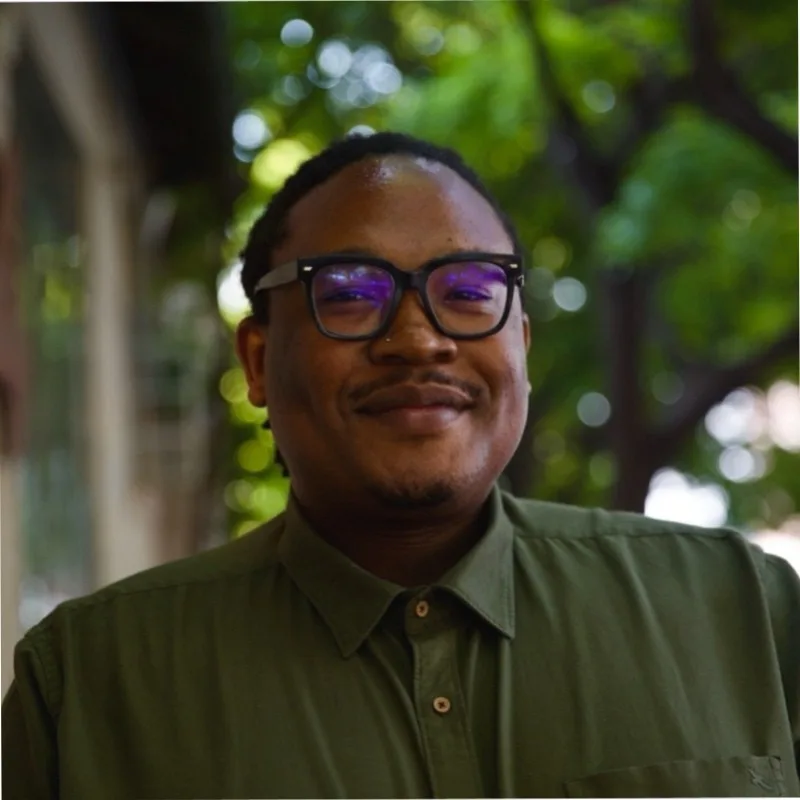
Mohale Moloi is an independent media industry analyst