Congo LNG Ships First Phase 2 Cargo, Lifts Capacity to 3 million Tons
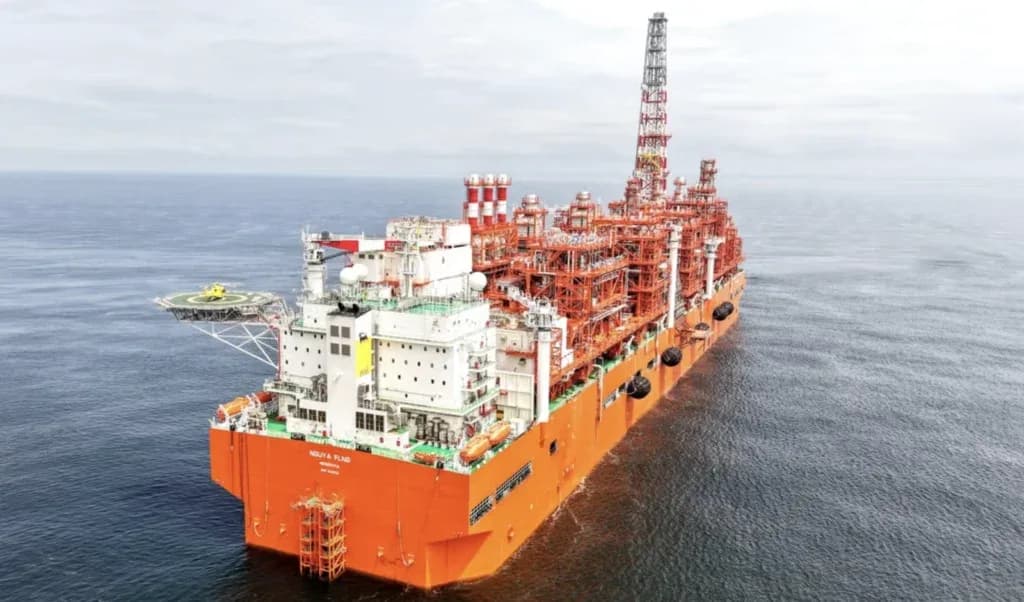
Congo LNG has shipped its first liquefied natural gas (LNG) cargo from Phase 2, lifting the project’s export capacity to 3 million tons per year and reinforcing the monetisation of Congo’s offshore gas reserves. Italian major Eni, which operates the project, confirmed that the inaugural cargo departed on Saturday, February 7, from the Nguya FLNG
Congo LNG Ships First Phase 2 Cargo, Lifts Capacity to 3 million Tons
Congo LNG has shipped its first liquefied natural gas (LNG) cargo from Phase 2, lifting the project’s export capacity to 3 million tons per year and reinforcing the monetisation of Congo’s offshore gas reserves. Italian major Eni, which operates the project, confirmed that the inaugural cargo departed on Saturday, February 7, from the Nguya FLNG floating unit in Pointe-Noire. The launch was attended by Congolese President Denis Sassou N’Guesso and Eni Chief Executive Claudio Descalzi, underscoring the strategic importance of the expansion.
Capacity expansion anchored by offshore assets
With Phase 2 online, total liquefaction capacity now reaches roughly 3 million tons annually, equivalent to about 4.5 billion cubic meters of gas. Phase 1, developed around the Tango FLNG unit, contributes 0.6 million tons per year, leaving the second phase responsible for the majority of installed output.
Gas feedstock is sourced from the offshore Nené and Litchendjili fields within the Marine XII license area. Eni holds a 65% operating stake in the block, alongside Lukoil with 25% and Société Nationale des Pétroles du Congo with 10%. The floating LNG model enables Congo to commercialise offshore reserves without constructing large onshore liquefaction facilities, reducing capital intensity while accelerating delivery timelines.
Export strategy and regional positioning
The project advances the Republic of Congo’s national gas monetisation strategy and strengthens its export profile. Based on Africa’s 2024 LNG exports of 34.7 million tons, Congo LNG could represent between 8% and 9% of continental supply, according to data from the African Energy Chamber, S&P Global Commodity Insights and the International Group of LNG Importers.
The expansion also coincides with preparations for a new gas code and the rollout of local content measures aimed at attracting foreign capital while deepening domestic participation. Within Africa’s LNG landscape, Congo is reinforcing its position alongside Algeria and Nigeria, while directing part of production toward domestic power generation. With Phase 2 in operation, the country now participates in the market at export-relevant scale rather than incremental volumes.