China to Grant Zero Tariff Access to 53 African Countries from May 2026
China will remove tariffs on imports from 53 African countries with which it maintains diplomatic relations, effective May 1, 2026. President Xi Jinping announced the decision in a message delivered to African heads of state at the 39th African Union summit in Addis Ababa. Under the policy, qualifying African exports will receive full zero-tariff treatment
China to Grant Zero Tariff Access to 53 African Countries from May 2026
China will remove tariffs on imports from 53 African countries with which it maintains diplomatic relations, effective May 1, 2026. President Xi Jinping announced the decision in a message delivered to African heads of state at the 39th African Union summit in Addis Ababa.
Under the policy, qualifying African exports will receive full zero-tariff treatment when entering the Chinese market. Xi said the measure would open additional avenues for African exports and deepen bilateral economic cooperation.
Beijing first hinted on the policy in June 2025, during a period of heightened global trade tensions linked to renewed tariff measures by the Trump administration. At the time, Chinese officials did not provide a start date for implementation.
The duty-free arrangement applies to all African trading partners except Eswatini, which maintains diplomatic ties with Taiwan. Since December 1, 2024, 33 least developed African countries have already benefited from duty-free access under an existing preferential scheme. The new policy extends similar treatment to middle-income economies that were previously subject to tariffs of up to 25%, including Kenya, South Africa, Nigeria, Egypt and Morocco.
Trade Imbalance Remains Central Issue
China has been Africa’s largest trading partner since 2008. Bilateral trade reached $348.05 billion in 2025, an increase of 17.7% from the previous year, according to data from China’s General Administration of Customs.
Chinese exports to Africa rose 25.8% to $225.03 billion, while imports from Africa increased 5.4% to $123.02 billion. As a result, Africa’s trade deficit with China widened sharply, reaching a record $102.01 billion in 2025 a 64.5% year-on-year increase.
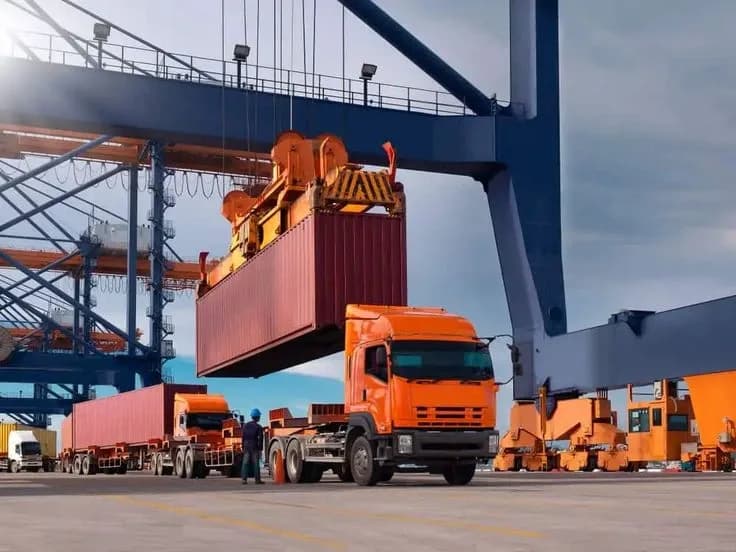
Trade flows remain structurally uneven. China exports mainly manufactured goods such as machinery, electronics and textiles, while importing largely raw materials including crude oil, mineral ores and agricultural commodities. African exports are also concentrated in a limited number of countries, notably Angola, the Democratic Republic of Congo and South Africa.
Limited Immediate Impact?
Analysts caution that the zero-tariff policy alone may not significantly narrow the imbalance. Many raw materials exported to China already benefit from preferential tariff treatment, limiting the incremental impact of further tariff reductions.
In a November 2025 report, the African Export-Import Bank (Afreximbank) argued that African economies would need broader structural adjustments to fully benefit. The bank highlighted the need to expand regional value chains in agro-processing, light manufacturing and mineral beneficiation; strengthen transport and logistics infrastructure; align exports with shifting Chinese consumer demand; and deepen trade finance capacity, including export credit insurance and yuan-based financing instruments.
The tariff removal therefore lowers one barrier to market access, but export diversification and industrial upgrading remain critical if African economies.