Cement Trends in Africa: Growth Amid Global Plateaus
A key turning point in global cement production has been reached with Global cement output, which is a significant indicator of the underlying infrastructure development and urbanisation trends in major markets, having plateaued after decades of growth. China's Building Decline Highlighted by Cement Trends China's cement production has declined nearly 30% since 2020, a remarkable
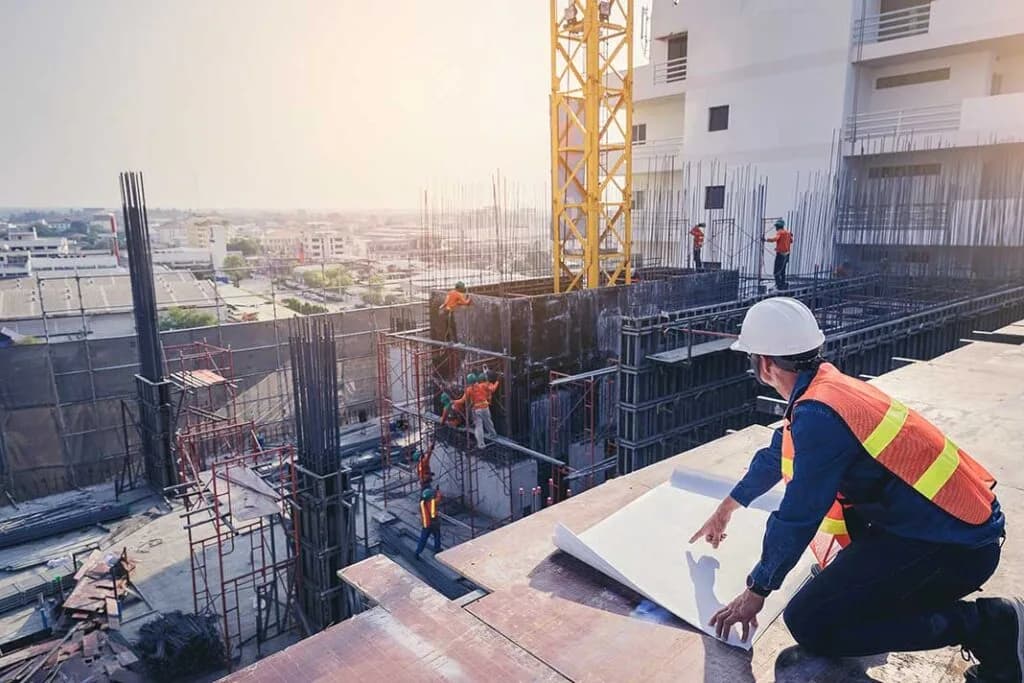
Top construction companies in South Africa
A key turning point in global cement production has been reached with Global cement output, which is a significant indicator of the underlying infrastructure development and urbanisation trends in major markets, having plateaued after decades of growth.
China’s Building Decline Highlighted by Cement Trends
China’s cement production has declined nearly 30% since 2020, a remarkable down-turn, and is expected to decline further in 2026. As the world’s largest producer, China’s slowdown, that is being driven by a rapidly fading property boom, suggests modern civilisation’s “most important growth indicator and commodity” may never regain its 2021 peak of 4.4 billion metric tons. Emerging markets like India and Africa offer some offset, but overall demand faces structural limits.
China’s property sector, once a major engine of economic growth (accounting for around 25-30% of GDP at its peak), has been in a prolonged crisis since the beginning of 2021. The downturn began with the government’s “three red lines” policy in 2020, which tightened developer borrowing to curb excessive debt. This exposed over-leveraged firms, leading to defaults (e.g., Evergrande in 2021), unfinished projects, and a sharp drop in new home sales and construction. This has forced property prices in China into a downward spiral with property investment dropping sharply (e.g., 17% in 2025), and new housing sales by floor area falling by around 8-14% annually in recent years.
Africa Holds The largest Property Development Potential Globally
Contrary to the global plateau in cement output and China’s ongoing decline, Africa’s cement sector is experiencing robust growth in production, consumption, and sales through 2023-2026. Driven by rapid urbanization, infrastructure investments, and population expansion, the continent’s demand is projected to accelerate, with no signs of peaking.
According to industry forecasts, Africa’s cement demand was expected to reach 205 million tons in 2025, reflecting strong annual growth. This aligns with broader trends: Sub-Saharan Africa’s demand is forecasted to surge by a more than significant 77% by 2030, outpacing global averages, while North Africa sees over 4% annual growth in 2025-2026, fuelled by government spending in Algeria and foreign investments in Egypt.
Overall production has risen from 212.8 Metric tons per annum (Mt/a) in 2020 to a projected 244.1 Mt/a by end 2025 (CAGR 2.6-2.9%), with capacity utilisation improving slightly to 55.9%. Consumption of cement in Africa mirrors this, with a 230% demand increase anticipated by 2050 due to 80% of Africa’s 2050 projected building stock requirement yet to be constructed.
Country-specific data supports this: Kenya’s cement production rose 17.3% to 4.85Mt in H1 2025, with consumption up 22.1% to 4.76Mt. South Africa’s market is grew at 8.1% annually to US$1.08B in 2025, with a CAGR of 7.6% through 2029. Emerging markets like India and Africa are offsetting China’s slow-down, boosting global demand via urbanisation.
Dangote Cement Projected to Grow Further
As Africa’s largest cement producer, Dangote Cement’s trends largely reflect the continent’s upward trajectory, though with regional variations. In FY 2023, group volumes dipped 1.8% to 27.3Mt due to Nigeria’s challenges (down 8.1% to 16.4Mt), but Pan-African volumes rose 12.7% to 11.3Mt, driving revenue up 36.4%.
FY 2024 saw recovery: Volumes up 1.6% to 27.7Mt, with Nigeria rebounding 7.9% to 17.7Mt and exports surging 69.1% to 1.2Mt. In H1 2025, sales volumes fell 4.1% to 13.4Mt overall, but Nigeria’s rose slightly, boosting group revenue 17.7% to US$1.35B amid price hikes. For the first nine months of 2025, volumes declined 2% to 20.2Mt, yet revenue climbed 23.2% to $2.17B and net profit soared 166% to $511M, thanks to Nigeria’s 42.4% revenue growth.
Pan-African operations saw a 5% volume drop to 7.9Mt and 3.4% revenue decline, affected by issues in Senegal, South Africa, Ethiopia, and Cameroon (down 9.3% to 0.93Mt). Despite fluctuations, Dangote’s expansions (e.g., new plants in Ghana, Côte d’Ivoire) position it to capitalise on Africa’s growth, with clinker exports up 23% in the first three quarters of 2025. No decline mirrors China’s; instead, Dangote and Africa are on an upward path.