The Bottled Water Illusion: Opportunity, Risk and the Dangerous Knowledge Gap in South Africa
In townships, rural areas, and even many urban suburbs across South Africa, the belief persists that starting a bottled water business is one of the easiest ways to enter entrepreneurship. “It’s just water in a bottle,” the logic goes. Low barriers, constant demand, and the perception of a simple product have drawn thousands of small
The Bottled Water Illusion: Opportunity, Risk and the Dangerous Knowledge Gap in South Africa
In townships, rural areas, and even many urban suburbs across South Africa, the belief persists that starting a bottled water business is one of the easiest ways to enter entrepreneurship. “It’s just water in a bottle,” the logic goes. Low barriers, constant demand, and the perception of a simple product have drawn thousands of small operators into the market. However, this seemingly straightforward industry has created a serious public health and regulatory headache — one that exposes deep gaps in consumer awareness and enforcement.
Why the Demand is So Strong
Frequent water outages, ageing municipal infrastructure, and contamination incidents have made tap water unreliable for millions of South Africans. Similar challenges exist across much of Africa. As a result, bottled water has moved from a luxury to a necessity for many households. The industry has grown steadily, but this growth has also attracted operators who underestimate — or ignore — the complexity of producing safe drinking water.
The Reality: It’s Not “Just Water”
Producing safe, high-quality bottled water is far more technical than most new entrants realise. It demands protected water sources, advanced filtration and treatment, strict hygiene protocols, continuous testing, and full traceability. Many small producers operate with minimal oversight, using inadequate treatment or even untreated municipal water, putting consumers at risk.
Often, even refilling retailers fall short of current bottling regulations as they pre-bottle water into plastic containers without applying the rigorous standards that should be adhered to for bottled water. Refilling stations in supermarkets, while providing cheaper alternatives, do not necessarily meet refilling hygiene standards where nozzles and filling areas can easily be contaminated and water is often municipal water that has simply been filtered.
This is where SANBWA (South African National Bottled Water Association) plays a critical role.
SANBWA: Raising the Bar
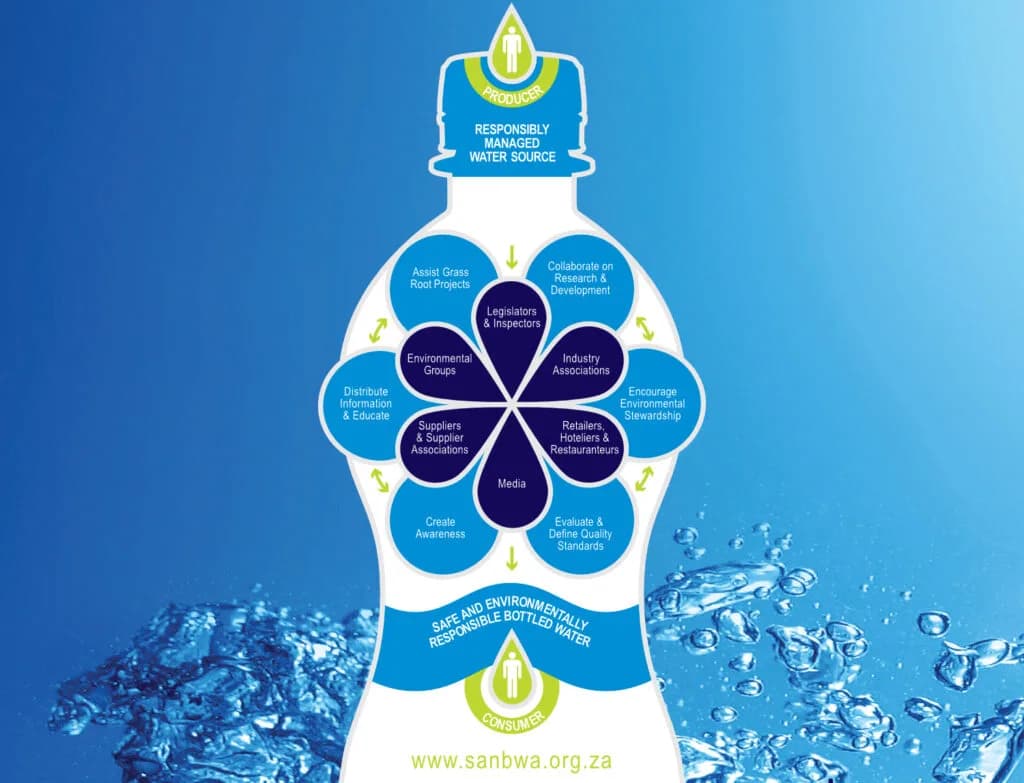
Established in 1997, SANBWA is the official industry body representing responsible bottled water producers. Membership is voluntary but demanding. Every SANBWA member must meet internationally benchmarked standards covering source water, processing, packaging, and labelling.
What makes SANBWA unique is that it is the only standard globally that includes:
- Water Source Control
- Dedicated Packaged Water Standards and Regulations
- Environmental Stewardship as a mandatory requirement
SANBWA members are subject to:
- Continuous microbiological and chemical testing at every stage — from source to bottle to shelf
- Annual independent audits of all facilities
- Full traceability systems that allow every batch to be tracked from source to shelf
- Strict environmental obligations, including source protection and responsible packaging
All SANBWA members use 100% recyclable PET bottles and actively contribute to Petco’s producer responsibility programmes.
The Retail Seal of Approval
Major South African retailers recognise the SANBWA logo as the mark of a credible producer. This gives consumers a reliable way to identify responsibly produced water. However, a significant portion of the market still operates outside these standards, creating confusion and risk for the public.
The Health and Safety Risk
Consumers, especially in areas where municipal water is unreliable, often choose the cheapest bottled water available without understanding the difference between properly regulated packaged water and unregulated “drinking water.” This lack of awareness can lead to serious health risks, including exposure to harmful bacteria and contaminants.
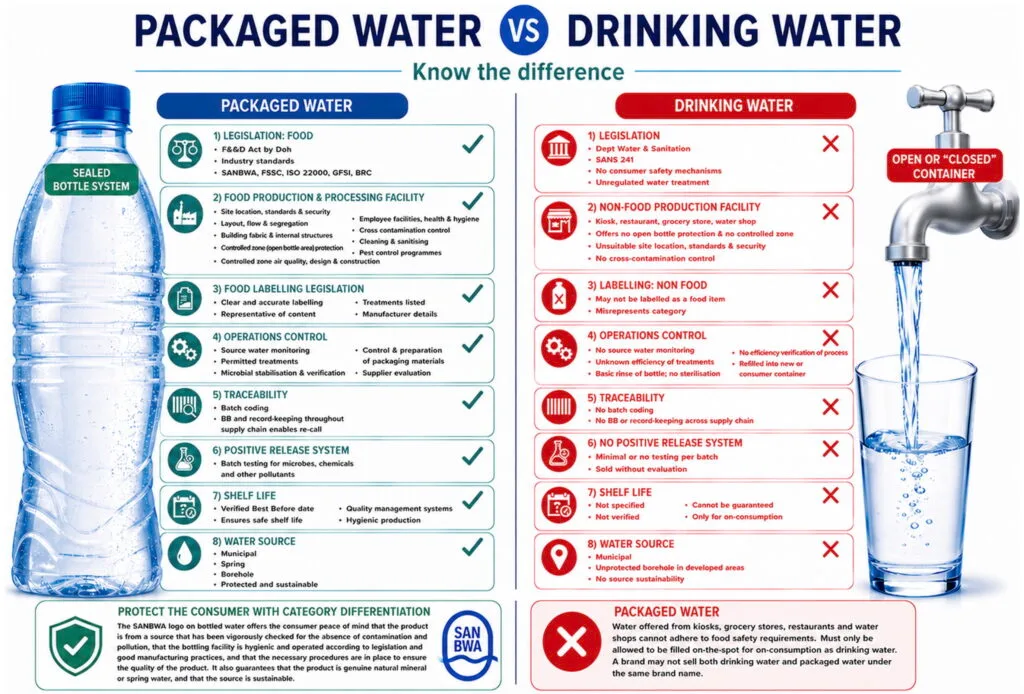
The infographic comparison between Packaged Water (regulated food product) and Drinking Water (often from informal refill points or poorly controlled sources) is particularly revealing. Packaged water must comply with strict food safety legislation, while many informal products fall outside these protections. (see below)
A Continental Challenge
This issue extends well beyond South Africa. Across Africa, rapid urbanisation and unreliable municipal supplies have created a booming but poorly regulated bottled water market. In many countries, weak enforcement allows substandard products to proliferate, particularly in informal markets.
The Way Forward
Bridging the knowledge gap requires urgent, coordinated action:
- Stronger enforcement by environmental health authorities
- Public education campaigns on how to identify reputable bottled water (look for the SANBWA logo)
- Support for compliant small producers to scale responsibly
- Greater transparency across the entire industry
For legitimate entrepreneurs, the bottled water sector still offers real opportunities — but only for those willing to invest in quality, compliance, and transparency. It is not, and never has been, a simple “fill and sell” business.
South Africa and the broader African continent need safe, reliable drinking water options. The industry can play a vital role in meeting this need, but only if consumers are empowered to make informed choices and regulators ensure that standards are upheld. Until then, the illusion that “it’s just water in a bottle” will continue to create unnecessary risks for millions of people.