Bioleaching in the Copperbelt: Science Fiction or Strategic Advantage?
Bioleaching has long stood outside the mainstream of copper extraction in the Central African Copperbelt, where conventional methods such as flotation and smelting have dominated processing for decades. These techniques remain effective for high-grade deposits. But as ore grades decline and production costs rise, mining companies are increasingly examining alternative technologies that can unlock value
Bioleaching in the Copperbelt: Science Fiction or Strategic Advantage?
Bioleaching has long stood outside the mainstream of copper extraction in the Central African Copperbelt, where conventional methods such as flotation and smelting have dominated processing for decades. These techniques remain effective for high-grade deposits. But as ore grades decline and production costs rise, mining companies are increasingly examining alternative technologies that can unlock value from lower-grade resources. One approach attracting renewed attention is bioleaching, a process that uses naturally occurring microorganisms to extract metals from ore.
Bioleaching is not a new concept. The technique has been applied in parts of the global mining industry for several decades, particularly in Chile and the United States. Certain bacteria accelerate chemical reactions that break down sulphide minerals, allowing metals such as copper to dissolve into solution. Once dissolved, the copper can be recovered using solvent extraction and electrowinning processes.
Why Bioleaching Matters for the Copperbelt
The technology is particularly relevant for the Copperbelt region, which spans northern Zambia and the southern Democratic Republic of Congo. Many deposits in the region contain complex sulphide ores that become increasingly difficult to process as grades decline. As a result, mining companies are examining alternative methods capable of recovering copper from materials that conventional processing struggles to treat economically.
Bioleaching has attracted attention because of its ability to extract metals from difficult ores and low-grade material. In the Copperbelt, where mineralogy can be complex and ore grades continue to fall, such technologies could provide an additional pathway for copper recovery.
Unlocking Value from Low-Grade Ores
In this context, bioleaching offers a possible route to recover copper from ores that might otherwise remain unprocessed. The technology can also be applied to historical mine waste, tailings or low-grade stockpiles that still contain recoverable metals. Across the Copperbelt, decades of mining have created vast dumps of previously discarded material. Advances in extraction technologies have prompted companies to reconsider the economic potential of these resources.
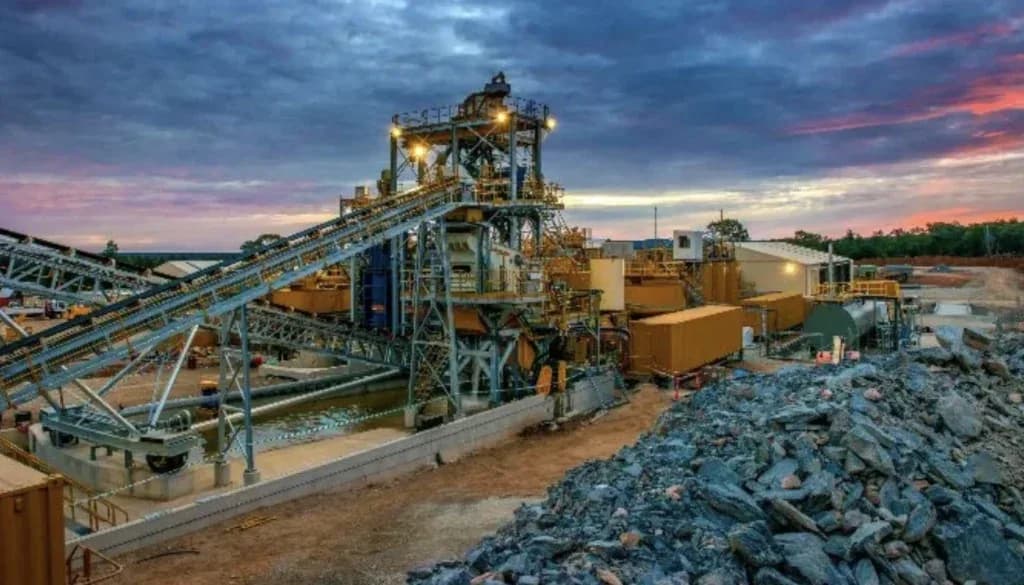
Cost structure is another factor driving interest. Traditional smelting operations require large amounts of energy and significant capital investment in infrastructure. Bioleaching systems often rely on heap leaching techniques in which crushed ore is stacked in large heaps and irrigated with solutions that support bacterial activity. Over time, microbial processes help release copper into solution.
Opportunities and Limitations
Environmental considerations also play a role. Bioleaching typically operates at lower temperatures and may consume less energy than conventional smelting processes. As mining companies face increasing pressure to reduce emissions and improve environmental performance, such characteristics are becoming more relevant.
Despite these advantages, bioleaching is not a universal solution. The process can be slower than Normal metallurgical routes, and metal recovery may take months or even years. Its effectiveness also depends heavily on the mineral composition of the ore and the environmental conditions within the leaching system. Factors such as acidity, temperature and oxygen levels must be carefully managed to sustain microbial activity.
For the Copperbelt, the issue is not whether bioleaching will displace conventional extraction. Smelting and flotation will continue to anchor copper production. The real question is whether microbial processing can redraw the economic map of what the region considers recoverable.
Decades of mining have left behind immense volumes of low-grade ore, tailings and stockpiles that sit on the margins of profitability. Much of this material contains copper that traditional processing simply cannot justify extracting. If bioleaching proves technically reliable at scale, those forgotten resources could begin to look less like waste and more like deferred opportunity.
That prospect carries strategic implications. The Copperbelt is no longer defined by the spectacular grades that once made it famous. Instead, its future may increasingly depend on technologies capable of squeezing value from material that earlier generations of miners walked past. Bioleaching will not revolutionise the industry overnight, but it may quietly alter how producers think about the region’s remaining copper endowment.
In that sense, the technology is less a scientific curiosity than a reminder of how mining evolves. As the easy ore disappears, innovation tends to follow. For the Copperbelt, microbial extraction may simply be the next step in that long process of adaptation.