The Practical Side of Automation in African Mines
Automation in African mining is often discussed in broad, aspirational terms: autonomous fleets, AI-driven optimisation and fully digitised operations. On the ground, adoption has been far more measured. For most mines on the continent, automation does not occur in isolation or as a single surge, but as a sequence of decisions driven by cost, infrastructure,
The Practical Side of Automation in African Mines
Automation in African mining is often discussed in broad, aspirational terms: autonomous fleets, AI-driven optimisation and fully digitised operations. On the ground, adoption has been far more measured. For most mines on the continent, automation does not occur in isolation or as a single surge, but as a sequence of decisions driven by cost, infrastructure, skills availability and operational risk. African mining, as elsewhere, is a game of numbers. When risks and costs outweigh returns, automation tends to be introduced gradually or viewed as a luxury rather than a necessary operational, environmental or safety upgrade.
Infrastructure as the Primary Constraint
Infrastructure readiness sits at the core of these decisions. For automation to function consistently, mines require stable power supply, reliable communications and basic data systems. However, many operations are located in remote areas where connectivity is limited, and power interruptions remain common. As a result, mines are drawn toward technologies that can operate under constraint, such as semi-automated drilling, fleet monitoring and condition-based maintenance, rather than fully autonomous systems.
Cost and Payback Considerations
Alongside infrastructure, cost plays an equally decisive role. Automation brings upfront capital requirements, ongoing maintenance obligations and the need for specialised support. For operations working within tight margins, the business case must therefore be explicit. This has led mines to prioritise technologies with short, measurable payback periods. Automated ventilation control, collision avoidance systems and equipment health monitoring are often favored because their safety and efficiency gains can be quantified relatively quickly.
Safety as an Entry Point for Automation
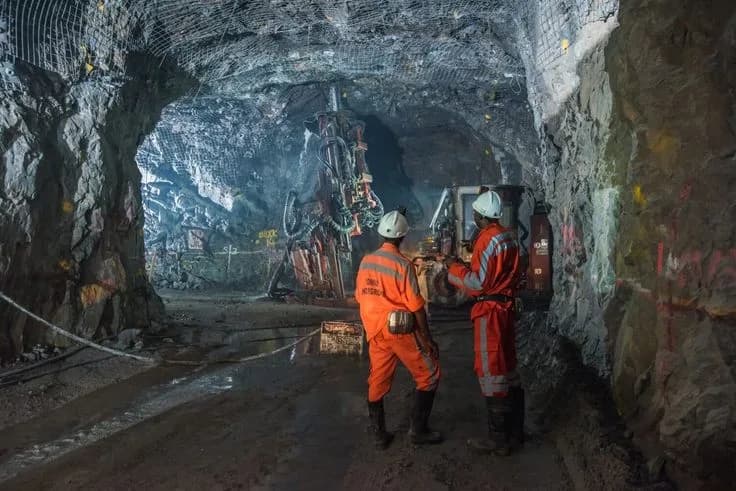
Safety has become one of the most compelling justifications for early automation. Remote-controlled equipment, automated rock monitoring and proximity detection systems reduce exposure in high-risk areas without requiring wholesale changes to production methods. In jurisdictions where regulatory scrutiny is increasing, these technologies provide tangible risk reduction rather than speculative efficiency gains.
These safety-driven deployments have also created workforce impact of automation. Concerns that automation will lead to widespread job losses have so far in my opinion not really played out across African mining. In most cases, automation has altered the nature of work rather than reduced overall employment. Roles have moved from manual operation in hazardous environments to monitoring, maintenance and technical support. Where workforce impacts do occur, they are more commonly linked to skills gaps and transition management than to automation itself.
Skills and Workforce Readiness
This makes workforce capacity a critical factor in determining how far and how fast automation can be introduced. Advanced systems require technicians, engineers and data specialists who may be scarce in certain mining regions especially in African Mining setups . To manage this constraint, many operators introduce automation alongside targeted training programmes, allowing manual and automated processes to operate in parallel. This approach limits disruption while internal capability is gradually built.
Integrating With Legacy Assets
At the same time, automation must contend with existing equipment fleets. A significant share of African mines operate legacy assets that were never designed for automation. Full replacement is often unrealistic from a cost and operational standpoint. Retrofitting modular technologies therefore becomes the more practical option, allowing mines to modernise incrementally while maintaining production continuity.
Targeted Deployment Over Broad Transformation
Taken together, these factors are pushing mines toward a more selective approach to automation. Decisions are increasingly tied to operational consistency rather than technology ambition. Mines focus on areas where automation reduces variability, improves reliability and limits exposure to known hazards, favoring targeted deployment over broad transformation.
Automation across African mining will continue to advance at different speeds. Large, long-life operations with stronger balance sheets are likely to adopt more extensively, while smaller producers remain selective. In this context, success depends less on how advanced the technology is and more on how well it fits the operating environment.