Africa's Energy Pressure Cooker: Balancing Development, Resources, and Global Climate Demands
Background To Africa's Energy Development Hurdle The U.S. is exerting pressure on the International Energy Agency (IEA) to abandon its climate-focused agenda and return to its core mission of ensuring global energy security. U.S. Energy Secretary Chris Wright criticises the IEA's modelling as ideologically driven, urging a pivot toward practical solutions like clean cooking access.
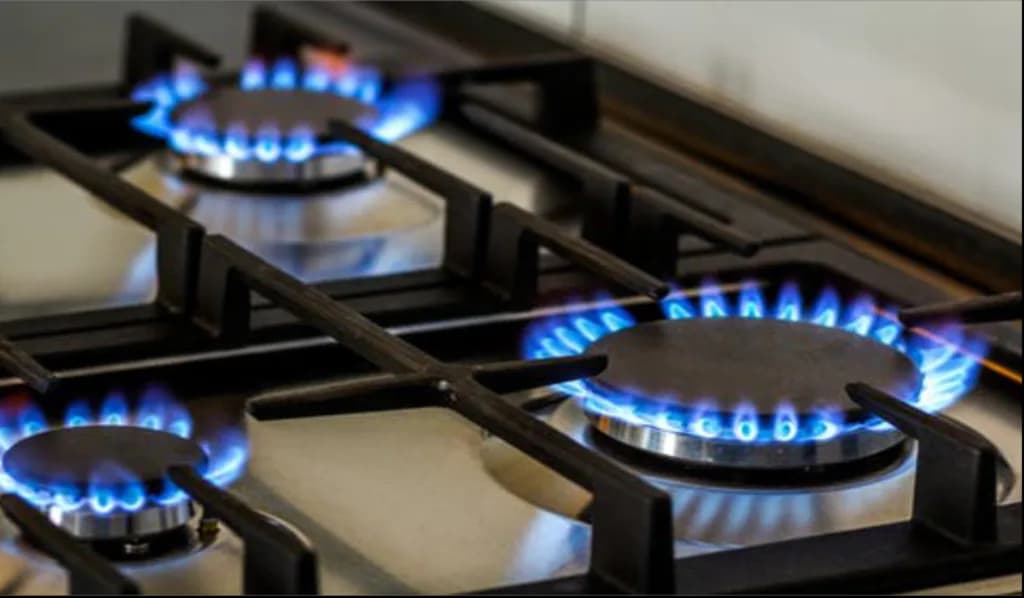
Scramble-for-Gas-Supply-in-Western-Cape-Amid-Corporate-Dispute
Background To Africa’s Energy Development Hurdle
The U.S. is exerting pressure on the International Energy Agency (IEA) to abandon its climate-focused agenda and return to its core mission of ensuring global energy security. U.S. Energy Secretary Chris Wright criticises the IEA’s modelling as ideologically driven, urging a pivot toward practical solutions like clean cooking access.
African leaders and the African Energy Chamber (AEC) echo this, accusing the IEA of politicising energy outlooks since 2021, which has restricted financing for African oil and gas projects, exacerbating energy poverty affecting over 900 million people without clean cooking.
A recent release details the IEA’s net-zero roadmap’s damaging effects, such as investment bans and assumptions unrealistic for Africa (e.g., universal energy access by 2030 amid 592 million lacking it). It praises recent steps like the IEA hosting the Clean Cooking Alliance and U.S. initiatives, but calls for deeper reforms to support African hydrocarbons as compatible with development and climate goals. AEC Chairman NJ Ayuk emphasises rejecting “financial apartheid” and prioritising partnerships over aid for genuine progress.
Africa’s Energy Challenge
Africa stands at a crossroads in the global energy landscape, trapped in a pressure cooker of conflicting priorities. On one side, international institutions like the International Energy Agency (IEA) and the European Union have aggressively pushed a climate agenda that prioritizes rapid transitions to renewables and net-zero emissions. On the other, stands the continent’s urgent need for economic growth, poverty alleviation, and basic energy access demands a pragmatic approach that should be leveraging its abundant natural resources.
This tension has real consequences: while Africa contributes just 2-4% of global CO2 emissions – far less than industrialised nations—it bears disproportionate climate impacts and development hurdles. The recent U.S. push to refocus the IEA on energy security, announced in February 2026, could signal a shift, but African leaders must seize the moment to prioritize their people’s needs over imposed ideologies. Without sufficient energy, Africa risks remaining sidelined as other regions surge ahead.
Energy Poverty Not Climate Fear the Real Killer
Consider the stark reality of energy poverty on the continent. As of early 2026, approximately 600 million Africans lack access to electricity, representing over 80% of the global electricity access deficit. Even more alarmingly, around 900 million people or nearly a billion people rely on traditional biomass like wood and charcoal for cooking, leading to indoor air pollution that causes millions of premature deaths annually, disproportionately affecting women and children.
These figures, drawn from reports by the IEA and World Health Organisation, indicate a crisis that’s not just about lights and stoves but about human dignity, health, and economic opportunity. In sub-Saharan Africa, where the problem is most acute, electrification rates hover around 50%, and clean cooking access is below 20% in many countries. This energy gap stifles industrialization, education, and healthcare: schools without power can’t run computers, hospitals struggle with unreliable grids, and businesses face crippling outages that cost economies billions in lost productivity.
Financial Apartheid
The global climate agenda, often framed as a moral imperative, has inadvertently, or perhaps even deliberately, intensified this pressure. Since the IEA’s 2021 net-zero roadmap (updated in 2025), financiers and multilateral banks have weaponized environmental concerns to restrict capital flows into African hydrocarbons. Major players like BNP Paribas, HSBC, and the World Bank have halted or curtailed funding for oil and gas projects, citing alignment with Paris Agreement goals.
This has led to “financial apartheid,” as AEC Chairman NJ Ayuk puts it, where African fields are deemed riskier than similar ones in Norway or the U.S. The result? Capital flight from a sector that could fund infrastructure, jobs, and social programs. For instance, projects like Mozambique’s LNG developments or Nigeria’s gas hubs have faced delays, not due to viability but because of punitive “clean energy” targets tied to loans. These mandates assume a seamless shift to renewables, ignoring Africa’s realities: intermittent solar and wind require massive storage and grid investments that the continent’s underfunded utilities can’t afford without fossil fuel revenues as a bridge.
Hypocrisy Highlighted by Emission Data
Yet Africa’s low emissions footprint—averaging just 0.8-1 metric ton per capita annually, compared to the global 4+ tons—exposes the hypocrisy in this approach. The continent emits less than 4% of global CO2 from fuel combustion, per IEA data, but suffers the most from climate change: droughts ravaging agriculture in the Sahel, floods displacing millions in East Africa, and rising sea levels threatening coastal cities.
Critics argue this “climate fear” narrative, amplified by Western institutions, overlooks how Africa’s emissions are negligible while its forests and ecosystems act as global carbon sinks, sequestering over 600 million tons of CO2 yearly. A 2025 study in Science Direct highlighted that deforestation-driven emissions in Africa stem more from poverty-fueled land use than industrial activity. Imposing blanket bans on fossil fuels doesn’t solve climate issues; it perpetuates underdevelopment, trapping nations in a “wasteland” where growth stagnates.
Giving Gas to African Development
Enter Africa’s untapped potential: vast natural gas reserves that could ignite social and economic transformation. The continent holds over 625 trillion cubic feet (Tcf) of proven gas reserves equaling about 8-9% of the global total, with sub-Saharan Africa accounting for 70% of that.
Countries like Nigeria (203 Tcf), Algeria, Egypt, and emerging players like Mozambique (100 Tcf) and Senegal-Mauritania possess resources that could power domestic electrification, industrial hubs, and exports. The Gas Exporting Countries Forum projects African gas demand rising 82% by 2050, with natural gas comprising 30% of the energy mix. This isn’t just about exports; it’s about local value. Gas can fuel power plants for reliable electricity, support fertilizer production to boost agriculture, and enable clean cooking via liquefied petroleum gas (LPG) or biogas.
Initiatives like Angola’s LNG, Equatorial Guinea’s Gas Mega Hub, and Namibia’s recent discoveries demonstrate how gas can create jobs—tens of thousands per project—and generate revenues for education and health. With proper infrastructure, these reserves could lift millions out of poverty, as seen in Qatar or Norway, where hydrocarbons funded welfare states.
Drive to Drop Harmful Policies
The U.S. intervention in February 2026 adds a critical layer to this debate. Energy Secretary Chris Wright, speaking at the IEA’s ministerial meeting in Paris, threatened U.S. withdrawal unless the agency drops its “destructive illusion” of net-zero by 2050 and refocuses on energy access. He highlighted how $10 trillion spent globally on climate efforts over 20 years yielded only 2.6% renewable penetration, mostly in rich countries, while diverting funds from hydrocarbons needed for clean cooking.
This resonates with African critiques: the IEA’s shift in 2020 to hypothetical emissions scenarios ignored demand realities in developing nations. OPEC’s response to the roadmap noted that without technical and financial support, net-zero paths are unclear for places like Africa. Wright’s push for $4 billion annually in clean cooking investments could accelerate solutions, potentially lifting two billion people globally out of energy poverty.
Encouragingly, the IEA has shown some adaptation. In February 2026, it announced integrating the Clean Cooking Alliance (CCA), launched in 2010, to enhance in-country support and coordination. The upcoming Clean Cooking Summit in Nairobi (July 9-10, 2026), co-chaired by leaders from Kenya, Norway, the U.S., and the IEA, builds on the 2024 Paris Summit’s $2.2 billion pledges. New initiatives like the U.S. Clean Cooking Accelerator Program and partnerships with the Rockefeller Foundation aim to scale modern technologies—electric stoves, biogas, LPG—in Africa. These efforts acknowledge that hydrocarbons can complement renewables: gas-fired plants provide baseload power for solar integration, while LPG offers immediate clean cooking bridges.
Clear African Leadership on Practical Energy Supply Needs to Rise
African leaders must now build sensibly, rejecting one-size-fits-all mandates. Prioritize people over ideology: invest in gas-to-power projects that electrify rural areas, foster public-private partnerships for infrastructure (e.g., pipelines and LNG terminals), and negotiate financing without punishing strings. Leaders like Nigeria’s Bola Tinubu or Mozambique’s Filipe Nyusi should champion “Africa-first” policies, using organizations like the AEC to hold banks accountable and attract investment. Aid isn’t the answer, meaningful partnerships are. Leaders should collaborate with willing players like the U.S., which under the Trump administration emphasises energy realism, to unlock $375 billion needed over the next decade for gas scaling, per the Society of Petroleum Engineers.
This isn’t about denying climate risks; it’s about equity. Africa can pursue low-emission gas development—capturing methane, flaring reductions—while expanding renewables, which grew 26% in installed capacity to 23.4 GW in 2025, leading global solar growth. A balanced path would be this: use gas revenues to fund solar mini-grids and storage, achieving energy security without sacrificing development.
Africa’s pressure cooker demands release through bold, sovereign choices. Leaders must look to harness gas wealth to empower citizens, challenge unfair agendas, and forge paths that uplift the continent. Without energy, progress stalls; with it, Africa can overtake the world, turning potential into prosperity for generations by choosing a sensible pathway to development.