African Ambitions for Production Need Appropriate Approach for Success
Across Africa, governments are increasingly refusing to remain mere exporters of raw minerals. Two recent cases illustrate this determination. In mid-March 2026, Guinea, the world’s largest bauxite producer, supplying roughly 40% of global output, announced plans to curb export volumes starting in early April. Mines Minister Bouna Sylla, described the step as a "flexible reduction
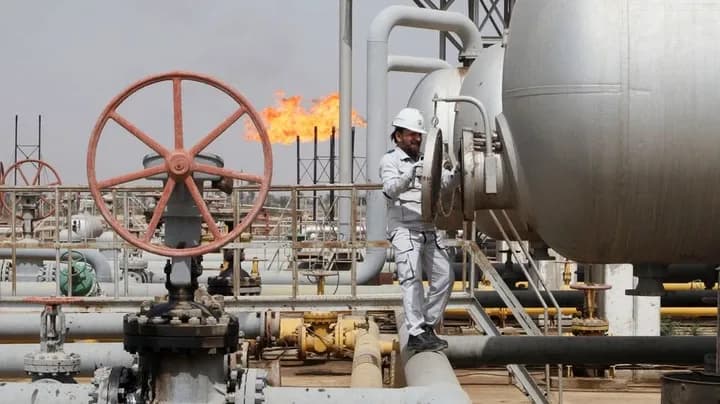
Nigerias-Crude-Oil-Production-Declines-Again-Prompting-Concerns-Over-Revenue-Loss
Across Africa, governments are increasingly refusing to remain mere exporters of raw minerals. Two recent cases illustrate this determination. In mid-March 2026, Guinea, the world’s largest bauxite producer, supplying roughly 40% of global output, announced plans to curb export volumes starting in early April. Mines Minister Bouna Sylla, described the step as a “flexible reduction in shipments to align with feasibility studies and licensed production levels”, however explicitly ruled out a total ban. The goal of the development is to stabilise prices that have fallen around 20-35% from 2025 peaks, particularly impacted by weak Chinese demand and rising freight costs, while shielding smaller local producers.
Just weeks earlier, on 25 February 2026, Zimbabwe imposed an immediate ban on exports of all raw minerals, including lithium concentrates, accelerating implementation of a policy originally scheduled for January 2027. The government cited malpractices by producers building reserve ore stocks in neighbouring states, alongside under-declaration, and a frantic pre-ban scramble by miners. Zimbabwe, Africa’s top lithium producer, shipped 1.128 million tonnes of spodumene concentrate in 2025 (about 7-10% of global supply), almost entirely to China. The explicit aim of the immediate ban was to force domestic processing and capture more value from the battery-metal boom.
Growing Focus on Local Value Building
These actions reflect a continent-wide surge in resource nationalism and downstream beneficiation ambitions. From cobalt in the Democratic Republic of Congo to gold in Ghana and critical minerals elsewhere, African states want to move beyond digging and shipping dirt.
The logic is compelling, with raw exports able to capture a fraction of final product value in global markets. Local refining, smelting, and manufacturing could create jobs, increase industrial skills, improve processing technologies, provide higher tax income for states, and build economic and employment multipliers. Yet analysts warn that Guinea’s volume curbs and Zimbabwe’s outright ban risk delivering the opposite effect with short-term revenue shocks, investor hurdles, and stalled growth as possible unseen outcomes, unless paired with a far more sophisticated strategy.
The economic intuition behind these policies is sound. Guinea exported 183 million tonnes of bauxite in 2025 (up 25%), but lower ore prices have already dented corporate-tax incomes, even as higher aluminium prices provide partial royalty relief. Zimbabwe’s lithium concentrate, priced far below battery-grade lithium hydroxide or carbonate, leaves the country with minimal upside from the global EV transition. Processing lithium locally could multiply value several-fold.
Botswana’s long-running diamond beneficiation partnership with De Beers offers a partial precedent: 50/50 ownership, revenue recycling into national development, and gradual movement into sorting and polishing helped transform the country from one of the world’s poorest at independence to upper-middle-income status.
Reality Paints a Sober Warning
Yet the track record of abrupt export restrictions across Africa is sobering. Past Guinea export halts in 2024 triggered price volatility that ultimately hurt producers and shippers. Panmure Liberum analyst Tom Price, has cautioned that new curbs could label Guinea an unreliable supplier, deterring long-term investment and ceding market share to Australia or Brazil. In Zimbabwe, the sudden lithium ban has already disrupted global supply chains, triggered short-term price spikes, and stranded shipments in transit. Mining companies face immediate cash-flow crises if they cannot pivot to domestic processing overnight.
The deeper problem is structural. Most African nations lack the industrial ecosystem to absorb redirected raw material volumes. Guinea currently operates one modest alumina refinery – Friguia, with around 600,000 tonnes capacity, while two more SPIC-Boffa (1.2 million tonnes) and others, are currently under construction or in early planning, with full ramp-up targeted only expected around 2027-2030. The government’s stated vision of five or six refineries delivering 7 million tonnes of alumina by 2030 is ambitious, but the timeline mismatch with immediate export curbs is a glaring contrast.
Zimbabwe has seen initial progress: Chinese firms Huayou and Sinomine have commissioned or announced lithium-sulphate plants with combined capacity in the tens of thousands of tonnes. Yet these facilities are dwarfed by the 1.1 million tonnes previously exported annually, and the country’s chronic power deficit with a supply of around 1,200 MW against demand exceeding 1,900 MW, making the potential of energy-intensive refining unreliable. Blackouts in the country are routine, while chemical inputs and skilled labour remain scarce. A similar study in Ghana projected that domestic lithium processing could cost the treasury up to $500 million in lost revenue because local costs exceed those in established hubs.
Dominance of China a Major Hurdle
China’s dominance compounds the challenge. Beijing controls roughly 70% of global lithium processing, 90% of graphite, and the overwhelming majority of aluminium refining capacity. Its integrated ecosystem of really cheap power, massive scale, established logistics, and vertically linked battery and EV factories, creates formidable barriers.
African ore often flows to Chinese ports for processing; even when Chinese investors build African refineries, the highest-value chemical and cathode steps frequently remain in China. Infrastructure gaps widen the gap: transport costs in Africa add 15-25% to processing economics compared with mature regions; unreliable electricity inflates operating expenses further. Governance issues such as illegal mining and smuggling networks, policy reversals, and overlapping regulations, all erode investor confidence.
Short Term Gain May Harm Longer Term Potential
These realities explain why analysts question whether export caps and bans will deliver the hoped-for economic lift. Short-term price support may materialise, but prolonged supply uncertainty risks reduced foreign direct investment and lower overall production. Without parallel investment in enabling infrastructure, countries risk swapping one dependency (raw exports) for another (idle mines and stranded concentrates). The Democratic Republic of Congo’s repeated cobalt export experiments have produced mixed results precisely because processing capacity and power supply lagged policy ambition.
Success demands a more appropriate, pragmatic approach – one that treats beneficiation as an industrialisation journey rather than a sudden decree. First, sequence the steps correctly. Build or guarantee reliable energy, ports, roads, and water before restricting exports. Zimbabwe’s power crisis and Guinea’s refinery timelines show the peril of reversing this order. Public-private partnerships with diverse investors (not solely Chinese) can accelerate infrastructure; the African Continental Free Trade Area (AfCFTA) offers a platform for building regional refining hubs which has as the potential to build regional cooperative solutions with multiple backers and investors.
An adopt phased development with harmonised regional targeted policies are a good starting point. Instead of blanket bans, use graduated incentives: tax breaks for local value-addition, mandatory local-content thresholds in new licences, and time-bound export windows tied to verifiable investment milestones. Botswana’s diamond model succeeded because it combined ownership stakes with gradual skill transfer, not overnight prohibitions. South Africa’s platinum-group-metal refining demonstrates selective focus on segments where competitive advantage exists rather than forcing every mineral through the full chain.
Human Capital Investments
Critically, focused investment in human capital, skills development and governance should be prioritised. Processing plants require engineers, chemists, and technicians; vocational programmes linked to new facilities are essential. Transparent licensing, anti-smuggling enforcement, and policy predictability reduce the risk premium that often deters investment capital. International technical assistance is available through bodies such as the African Development Bank, World Bank, or even trilateral arrangements with the EU and China, that can help design and deliver bankable regional projects.
It is Important for African Staes to recognise comparative advantage. Not every country can or should become a full-spectrum battery-chemicals producer. Guinea may excel in alumina and Zimbabwe in early-stage lithium sulphate. This is not necessarily a limit on future developments as regional clusters can specialise and build regional potential with supporting skills and required infrastructure over time. Competing head-on with China’s scale across every downstream stage is unrealistic in the near term. Strategic joint ventures that keep higher-value steps in Africa over time, backed by off-take agreements with Western and Asian battery makers, offer a more viable path to success.
Ambition Should be Paired with Sober Assessment
Finally, African States should pair ambition with fiscal realism. Export restrictions that collapse government revenue before new industries mature can trigger macroeconomic instability. Revenue stabilisation funds, sovereign wealth vehicles (as Botswana has used), and diversified taxation (royalties calibrated to processed volumes) can provide buffers.
The momentum for local production is understandable and, in principle, correct. Africa’s youth bulge, urbanisation, and the global green transition create a historic window. However, raw-material nationalism without the foundation of infrastructure, skills, and patient capital has repeatedly failed to deliver the longer term results desired. Guinea’s measured volume curbs and Zimbabwe’s accelerated lithium ban are wake-up calls, not because the goal is wrong, but because execution will determine whether they become catalysts for genuine industrial transformation or cautionary tales of good intentions undermined by inadequate preparation.
Done right, phased, an infrastructure-first, collaborative, and realistic, downstream beneficiation program can redefine Africa’s place in global value chains. Rushed or isolated, it risks entrenching the very marginalisation these policies seek to escape. The continent’s leaders now face a choice: pursue production ambitions with the discipline and partnerships that success demands, or watch another round of well-intentioned restrictions deliver limited uplift. The evidence from recent moves suggests the latter remains the default unless the approach itself evolves.