Africa Must Set its Own Agenda – Opinion
The past few months have seen increasing geopolitical instability across multiple countries in Africa combined with food shortages, unemployment and high energy costs, making the possibility of great African growth potential somewhat tenuous. While the average economic growth across Africa has been fairly good over the past few years, there was a slowdown in Africa's
Africa Must Set its Own Agenda – Opinion
The past few months have seen increasing geopolitical instability across multiple countries in Africa combined with food shortages, unemployment and high energy costs, making the possibility of great African growth potential somewhat tenuous.
While the average economic growth across Africa has been fairly good over the past few years, there was a slowdown in Africa’s real GDP growth, which dropped to 3.1 percent in 2023 from 4.1 percent in 2022. While economic growth is expected to increase to 3.7 percent in 2024 and 4.3 percent in 2025, Some of Africa’s largest economies such as South Africa and Nigeria have stalled and are facing extreme headwinds.
The African Condition
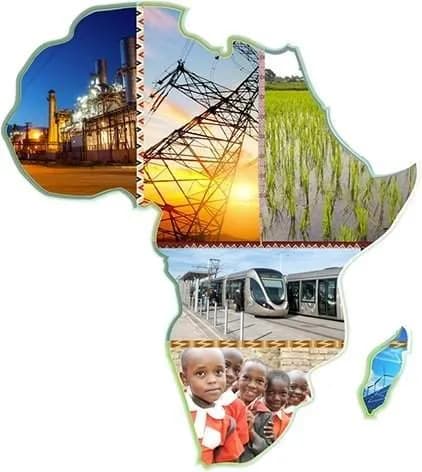
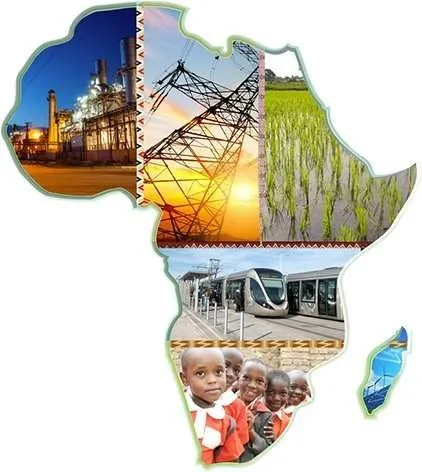
The irony of the “African Condition” is that despite vast natural resources, extensive mineral wealth, the world’s largest agricultural viable land area and the worlds youngest population group, Africa, that should be riding the crest of economic growth and prosperity is still encumbered with poverty, unemployment, food shortages and an almost negligible growth in new manufacturing developments.
Africa faces several large hurdles in achieving sustainable economic and social transformation. Historical growth rates have not been of sufficient calibre to offset against population increases, leading to minimal gains in per capita GDP. Economic growth has traditionally been focussed on Agriculture and mineral extraction that has never translated into major industrialised developments in energy, technology, road & transport and textiles that would derive greater value from the natural wealth of the region.
Structural Problems
Structural issues, remain a major obstruction in unlocking this potential with a lack of rail, road, energy and communications developments all providing a self-imposed handicap that is choking the growth out of the continent.
As a clear example, the global growth in Ai and related digital technology industries has been almost completely lost on Africa, due to poor energy, ISP and data centre development, despite Africa having several great centres of IT skills and no lack of potential entrepreneurs. As a result, Africa has only received a tiny portion of Ai investments literally thrown in every direction all over the globe. The only major tech investments in Africa are mostly concentrated in the Fin-tech environment due to large-scale payment issues experience widely across the continent.
Africa must be Unified
The other great hurdle facing Africa is escaping the global influence grinding wheel and setting a unified agenda of African focussed developments. This opportunity has for decades been missed due to regional conflicts and a lack of cohesion among African countries.
This has led to large global powers often exploiting African wealth and leaving Africa worse off in their wake.
A Unified African Dream
This week 50 of Africa’s leaders set off to China to seek assistance and grow co-operation – with China and not each other. Bejing, has granted a massive $51 Billion in funding to these countries, and while the countries will hopefully benefit from the funding, the question must be asked – “at what cost”.
Bismark is famously quoted saying that “nations have no friends; they only have strategic interests”. This could not be more pertinent than right now for Africa. Widespread global fragmentation across the globe in the past few years may well be the perfect opportunity for African countries to set their own agenda and not have it set for them by global powers.
African countries must choose, who they do business with more selectively and under what conditions, but furthermore they need to start doing way more business among themselves and develop joint industrial developments that will benefit Africa and not a world financial complex with its own profits and developments in mind.
What Africa Needs to Build Sustainable Economic Growth:
The African development bank has stated that to achieve substantial structural transformation, Africa will require an enormous, estimated US$402 billion annually until 2030.
In addition to that Africa requires the following to start setting its own agenda:
- Greater regional cohesion and co-operation in developments and investment.
- Africa Needs to invest more in growth related infrastructure and maintenance and provide other African countries to participate in these developments.
- Leaders should be more open to major companies wanting to invest in providing better connectivity.
- Policies across African countries should be aligned and best practice adopted to ensure greater attractiveness for investors.
- Digital and data infrastructure must be improved
- A much stronger and unified African Leadership that holds themselves accountable and are more forward thinking is a key requirement for development and growth on the continent
- Financial discipline and the eradication of corruption has to be a priority
- Education and skills development should sit as a key priority in all African states.
- Longer term financial independence is achievable with the possibility of developing an African version of BRICS providing its own financing and possibly even a common currency
Other regions such as the UAE and Europe have shown what regional co-operation can lead to and African must take this moment to pause and reset and build its own agenda if there is to be any hope of achieving the dream of a unified and prosperous African continent.