2024 Elections: SA Financial Markets Brace for Uncertainty Amid Coalition Talks
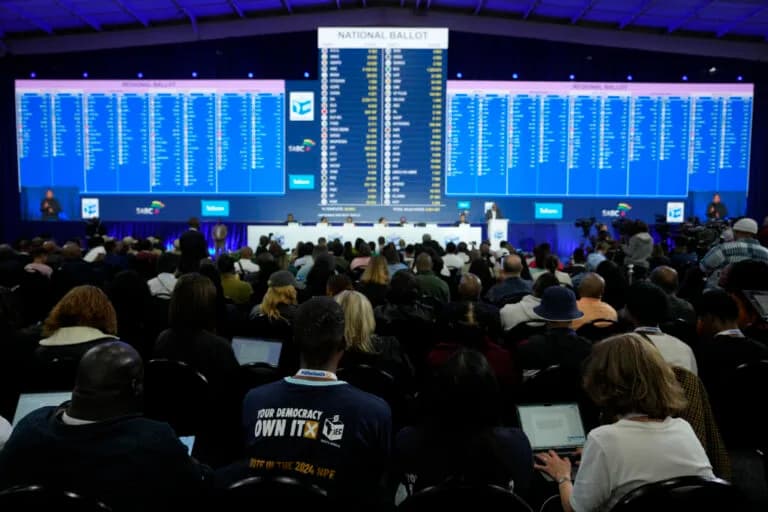
Investors are preparing for potential turmoil in South Africa's financial markets following the recent elections, which ended without a clear winner. The resulting uncertainty in coalition talks is causing concern among market participants. For the first time since gaining power nearly three decades ago, the African National Congress (ANC) failed to secure a parliamentary majority.
2024 Elections: SA Financial Markets Brace for Uncertainty Amid Coalition Talks
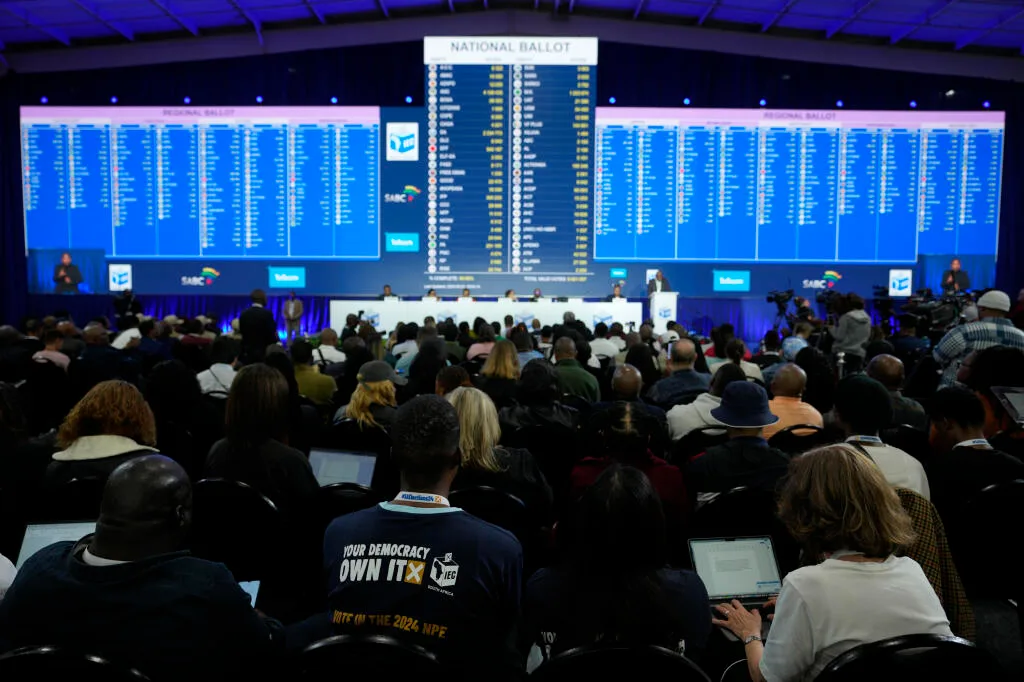
Investors are preparing for potential turmoil in South Africa’s financial markets following the recent elections, which ended without a clear winner. The resulting uncertainty in coalition talks is causing concern among market participants.
For the first time since gaining power nearly three decades ago, the African National Congress (ANC) failed to secure a parliamentary majority. Discontent among its supporters over persistent poverty, unemployment, and crime led to either boycotting the polls or voting for rival parties. The ANC garnered 40.2% of the votes cast on May 29, according to results released late Sunday.
The Democratic Alliance (DA), a centrist party, received 21.8% of the vote, while the new uMkhonto weSizwe Party (MKP) founded by former President Jacob Zuma secured 14.6%. The leftist Economic Freedom Fighters (EFF) obtained 9.5%. Both MKP and EFF advocate for increased state spending and the nationalization of mines and the central bank, raising concerns about the potential for populist policy changes affecting South Africa’s currency and debt.
“Investors should be very worried because South Africa is at a fork in the road,” said Anne Frühauf, managing director of risk advisory firm Teneo. “Right now, almost any coalition outcome is possible.”
The rand has depreciated by 2.7% against the dollar since voting began on May 29, as the extent of the ANC’s losses became evident. It was trading around R18.75/US$ at 7:25 am in Johannesburg on Monday. The cost of insuring the nation’s debt has increased by approximately 18 basis points, reaching 240.7 basis points. The yield on local-currency bonds due in 2035 closed the week at 12.25%, the highest level in a month.
A coalition with the DA is seen as the most favourable outcome for the market. However, “getting there won’t be easy and will undoubtedly exert pressure on ANC cohesion,” said Mark Bohlund, senior credit research analyst at REDD Intelligence.
“I think the uncertainty will continue to weigh on the rand, with a record breach of R20/$ a distinct possibility,” he added. “The weaker rand is likely to trigger some repatriation of overseas funds in the near term. But the expectations of more constrained policymaking going forward will increase the incentives for South African investors.”
Ongoing Negotiations
Leaders of the main parties met over the weekend to discuss a path forward, but substantial negotiations have yet to begin. It is likely to take several days before any agreement is reached. The national assembly must convene to elect a president within 14 days of the election results being declared, although an extension is possible if no candidate is agreed upon.
All major parties have expressed openness to forming a coalition, but Zuma’s MKP has stipulated that any partnership with the ANC is contingent upon ousting President Cyril Ramaphosa, a condition ANC Secretary-General Fikile Mbalula has firmly rejected.
While Ramaphosa’s allies prefer a coalition with the DA, this option faces significant opposition within the ANC, according to sources familiar with the internal discussions.
“Opposition parties like the DA, MKP, and EFF will push hard to secure a deal, but equally important will be the ANC’s internal dynamics,” Frühauf noted. “This could be a big internal fight.”
Even if a power-sharing agreement is reached, its durability is uncertain. Previous coalition deals at the municipal level have often collapsed, leading to frequent changes in control and significant disruptions in service delivery, such as water and refuse collection.
Zuma’s allegations of vote count inconsistencies and his party’s threat to demand a recount add another layer of uncertainty. Although the electoral commission has denied any material discrepancies, a contested outcome could undermine stability, particularly in KwaZulu-Natal, where the MKP received almost half the vote.
Zuma, who served nearly nine scandal-plagued years as president before being forced to step down by the ANC to halt declining electoral support, remains a contentious figure. His arrest for refusing to testify before a corruption inquiry triggered the worst rioting and looting since the end of apartheid, resulting in 354 deaths.
As South Africa navigates this uncertain political landscape, the financial markets remain on edge, with investors closely monitoring developments in coalition negotiations.
Picture Cred: